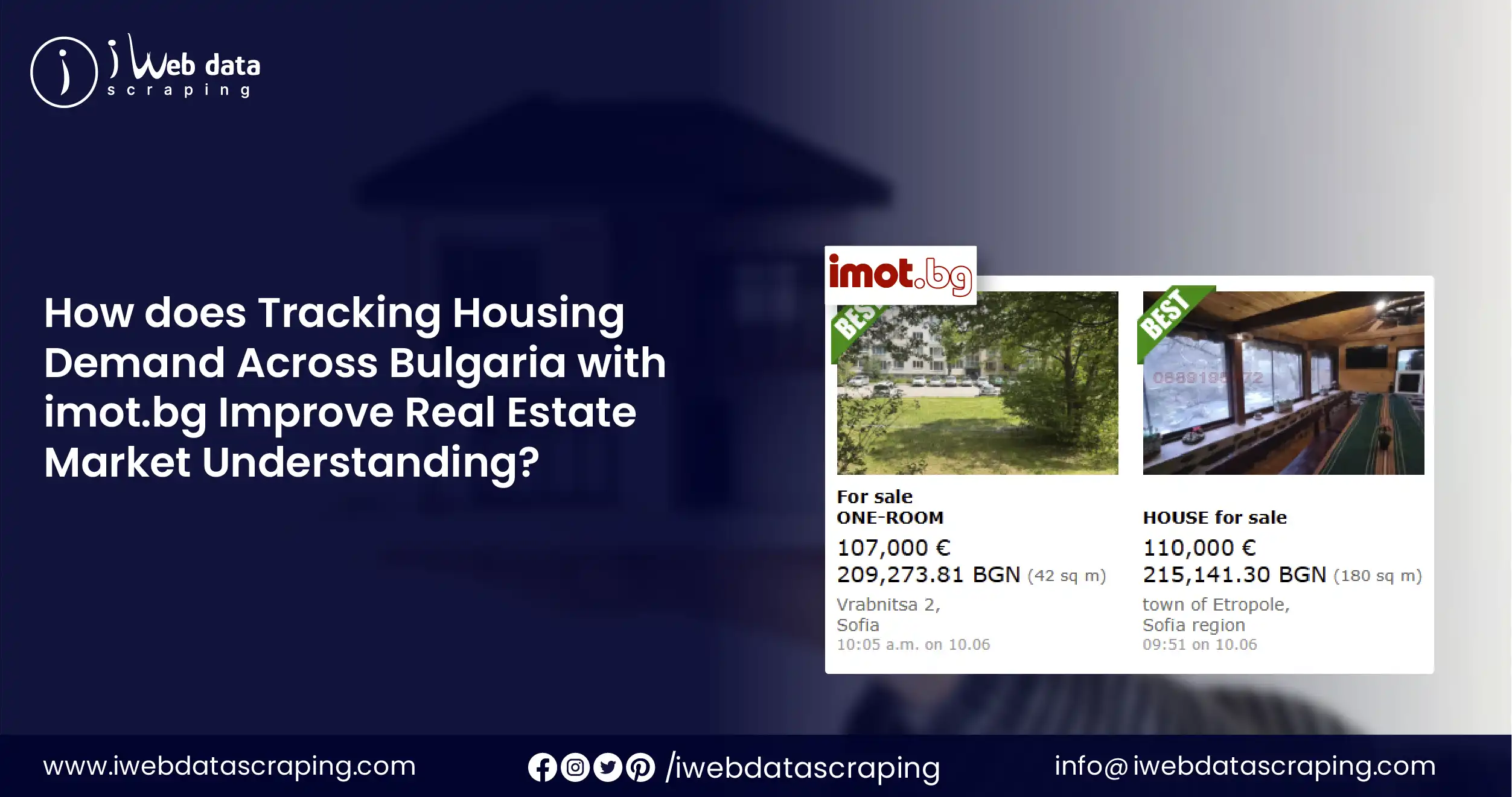
How does Tracking Housing Demand Across Bulgaria with imot.bg Improve Real Estate Market
Understanding?
Introduction
Tracking housing demand in Bulgaria has become increasingly important as the country
experiences shifting urbanization patterns, foreign investment inflows, and evolving buyer
preferences. Cities like Sofia, Plovdiv, Varna, and Burgas are witnessing fluctuating demand
levels influenced by employment opportunities, infrastructure development, tourism, and
lifestyle migration. Understanding these shifts requires structured access to real estate
listings and market signals, which is where data-driven approaches play a critical role.
In this context, data provides a powerful foundation for analyzing how property
interest varies across regions and time periods. By systematically observing listing activity,
price movements, and engagement patterns, analysts can gain a clearer picture of real estate
demand cycles in both urban and coastal regions.
The process of Housing demand data scraping from imot.bg allows structured
collection of property listings, pricing details, and availability trends. This makes it
possible to identify which regions are gaining traction among buyers and which areas are
experiencing slower demand.
Similarly, imot.bg City-wise housing demand data Extraction enables segmentation of
real estate interest by geography. This is particularly useful in Bulgaria, where demand
patterns differ significantly between capital cities, resort towns, and rural regions.
Understanding Housing Demand Dynamics in Bulgaria
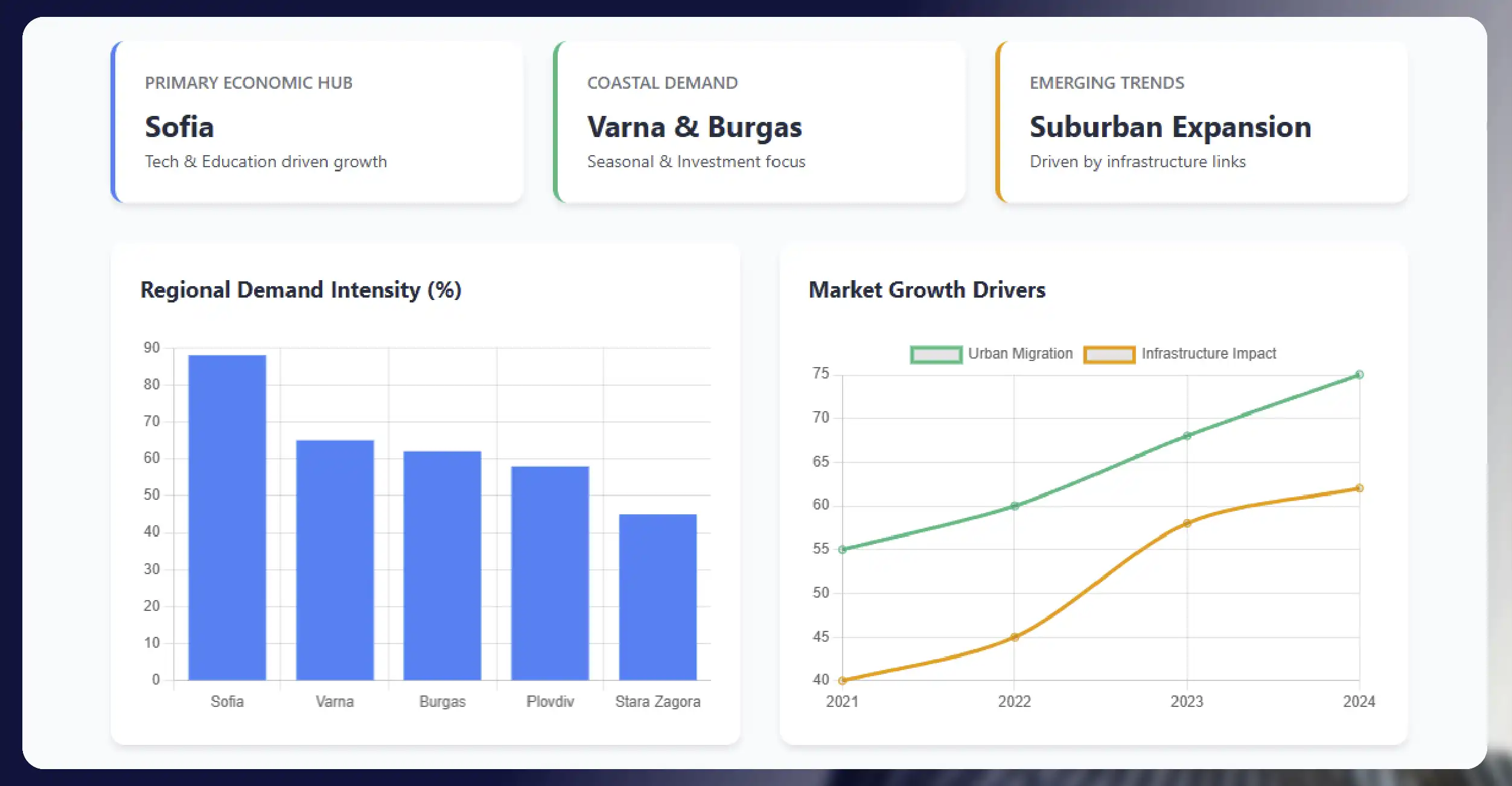
The Bulgarian real estate market is shaped by multiple economic and demographic
factors. Sofia remains the dominant hub due to its concentration of business activity, tech
industries, and educational institutions. Meanwhile, coastal cities like Varna and Burgas
attract seasonal buyers and foreign investors seeking holiday properties.
Housing demand is not static; it shifts based on affordability, interest rates,
infrastructure projects, and migration trends. For example, improved transportation links often
increase demand in suburban or previously less popular areas. Similarly, tourism growth can
significantly impact coastal property markets.
To understand these movements, analysts rely on structured datasets derived from
real estate platforms. These datasets help identify patterns such as rising demand corridors,
declining neighborhoods, and emerging investment hotspots.
Property Trends and Market Behavior
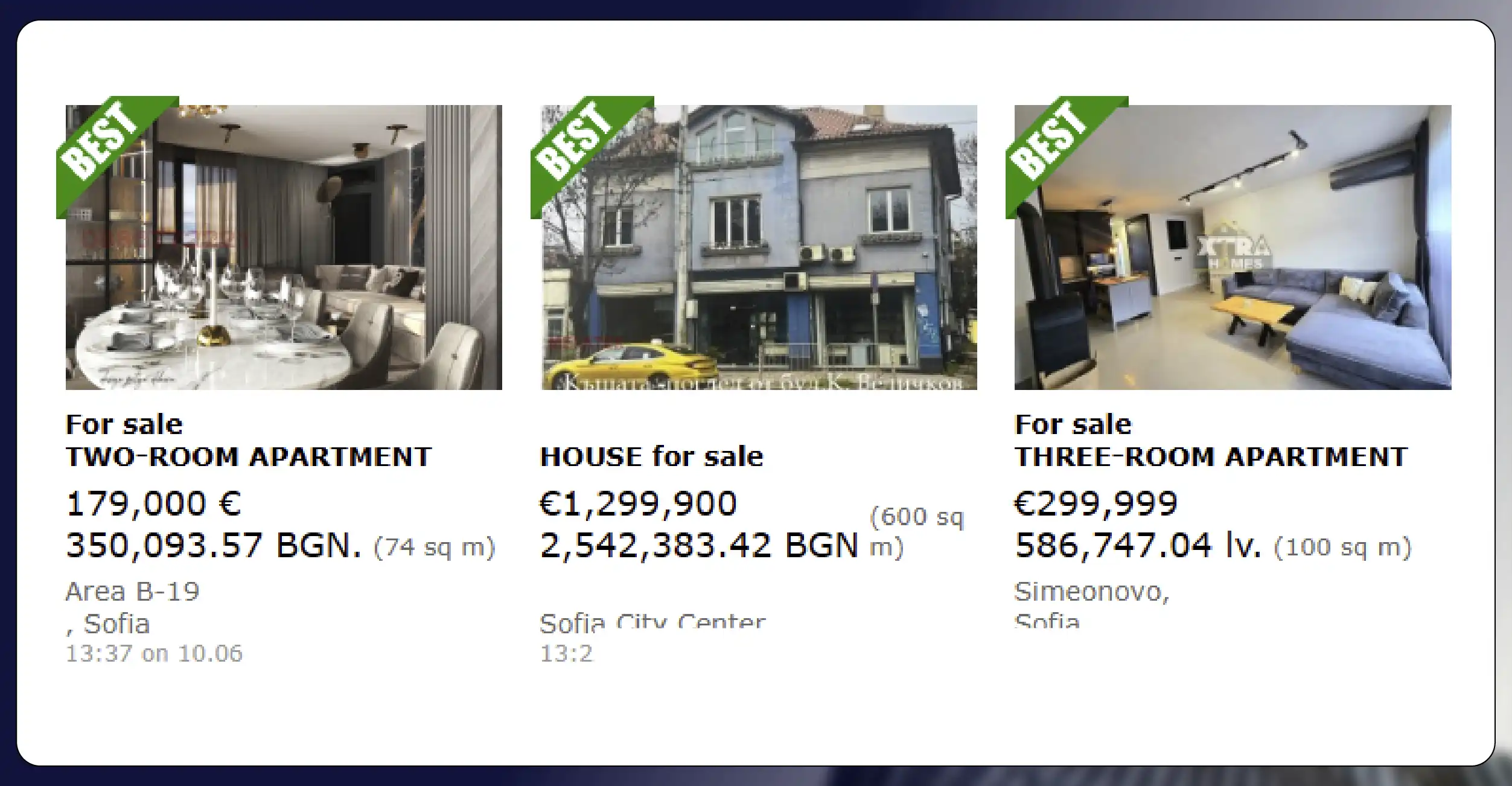
One of the most important aspects of real estate analysis is identifying long-term
property purchase behavior. In Bulgaria, buyers are increasingly focused on energy efficiency,
modern construction, and proximity to urban infrastructure. At the same time, foreign investors
often look for coastal and vacation properties.
imot.bg property purchase trend analysis helps reveal how buyer preferences evolve
over time. By examining listing frequency, price changes, and property type distribution,
analysts can determine whether the market is leaning toward apartments, houses, or investment
properties.
These insights are valuable for developers planning new residential projects and
investors evaluating market entry strategies. Understanding demand cycles also helps prevent
overinvestment in saturated areas.
Real-Time Housing Demand Monitoring
Real estate markets change rapidly, especially in urban centers. Listings may be
added or removed within days, and pricing adjustments can reflect immediate shifts in demand.
This makes real-time monitoring essential for accurate analysis.
imot.bg housing demand analytics in Bulgaria provides continuous insights into how
the market behaves across different cities and property categories. By tracking listing volume
and engagement patterns, analysts can measure demand intensity in real time.
Such monitoring helps identify sudden spikes in interest, often triggered by
infrastructure developments, policy changes, or economic shifts. It also supports rental and
purchase market comparisons, offering a complete view of housing dynamics.
Data Collection and Structuring Techniques

Raw real estate data is often unstructured and requires significant processing
before it can be used for analysis. Listings may contain inconsistent formats, incomplete
information, or varying descriptions.
To address this, structured extraction techniques are used to convert listings into
standardized datasets. This includes fields such as location, price, property size, type, and
availability status.
Extract imot.bg property data API to enable automated collection of real estate
information, ensuring that datasets remain up to date without manual intervention. These APIs
support continuous data flow into analytics platforms and business intelligence systems.
Importance of Real Estate Datasets
High-quality Real Estate Property
Datasets are essential for building predictive models and market analysis tools. In the
context of Bulgaria’s housing market, structured datasets allow analysts to compare regional
performance and identify investment opportunities.
imot.bg Properties Dataset provides a comprehensive view of listings across multiple
cities and property categories. This dataset can be used to analyze price trends, demand
density, and property distribution patterns.
Such datasets are also valuable for academic research, urban planning, and financial
forecasting. They help stakeholders understand how housing demand evolves in response to
economic and social factors.
Large-Scale Real Estate Intelligence Systems
Modern real estate analysis increasingly depends on automation and scalable data
pipelines. Instead of manual research, organizations use automated systems to continuously
gather and process property data.
Imotbg Real Estate Data
Scraping services support large-scale extraction of structured listing information,
enabling businesses to monitor market conditions efficiently. These services help transform raw
listings into actionable insights for investors, developers, and analysts.
By integrating automation, organizations can track market movements across multiple
cities simultaneously, improving decision-making speed and accuracy.
Unlock powerful real estate insights today with our advanced
data scraping solutions and make smarter, faster, and more informed housing
market decisions.
Advanced Market Applications
Once structured data is available, it can be used for various advanced applications
such as predictive modeling, demand forecasting, and investment analysis. Machine learning
models can estimate future price movements based on historical trends and current demand
signals.
Real estate platforms can also use this data to recommend properties to users based
on behavioral patterns and market conditions. Developers can identify underserved markets and
plan new housing projects accordingly.
The growing use of structured data has significantly improved transparency in the
Bulgarian housing market, making it easier for stakeholders to make informed decisions.
Automation and API-Driven Systems
Automation plays a crucial role in scaling real estate analytics. APIs allow
continuous access to updated listings without manual scraping or data collection delays.
Web Scraping API Services enable seamless integration of real estate data into
internal systems, ensuring that businesses always work with the latest market information. This
improves efficiency and reduces operational costs.
At the same time, Web Scraping Services provide end-to-end solutions for
organizations that require customized data pipelines tailored to specific analytical needs.
These services ensure data accuracy, consistency, and scalability across different regions and
property categories.
Strategic Value of Housing Demand Insights
Understanding housing demand in Bulgaria provides significant strategic advantages.
Investors can identify high-growth areas before prices peak, while developers can align projects
with real market demand.
Tenants and buyers benefit from better transparency in pricing and availability.
Policymakers can also use housing demand insights to guide infrastructure planning and urban
development strategies.
Overall, structured housing data supports a more efficient and transparent real
estate ecosystem.
How iWeb Data Scraping Can Help You?
City-Wise Housing Demand Intelligence
Our data scraping services help you collect structured real estate listings from
imot.bg, enabling clear visibility into city-wise housing demand trends, pricing differences,
and regional buyer behavior across Bulgaria.
Real-Time Market Monitoring
We enable continuous tracking of new listings, price updates, and demand
fluctuations, helping you stay informed about real-time housing market movements and make
faster, data-driven investment or business decisions.
Structured Data Transformation
Our services convert unstructured property listings into clean, standardized
datasets including price, location, size, and property type, making analysis easier and
integration into analytics tools and dashboards highly efficient.
Predictive Trend Analysis Support
We help you build reliable forecasting models by providing historical and real-time
housing data, allowing identification of demand shifts, price trends, and emerging investment
opportunities across Bulgarian real estate markets.
Scalable API-Based Data Access
Our API-driven solutions ensure automated, scalable, and continuous access to real
estate data, reducing manual effort while improving accuracy, consistency, and speed of housing
market intelligence operations.
Conclusion
Tracking housing demand across Bulgaria through structured real estate data has
transformed how market analysis is conducted. With access to continuous, standardized, and
scalable datasets, stakeholders can now understand regional trends, buyer behavior, and pricing
dynamics with greater accuracy.
Real Estate Property Data
Extraction plays a foundational role in converting raw listings into actionable
intelligence, enabling predictive analytics and market forecasting.
When combined with Web Scraping Services,
organizations can build powerful real estate intelligence systems that enhance transparency,
improve efficiency, and support strategic decision-making across the Bulgarian housing market.
When combined with Web Scraping API Services,
organizations can further automate data collection pipelines, ensuring real-time updates,
scalable processing, and more accurate real estate market intelligence.
Experience top-notch web scraping service
and mobile app scraping solutions with iWeb Data
Scraping. Our skilled team excels in extracting various data sets, including retail store locations and beyond. Connect with us
today to learn how our customized services can address your unique project needs, delivering the
highest efficiency and dependability for all your data requirements.