
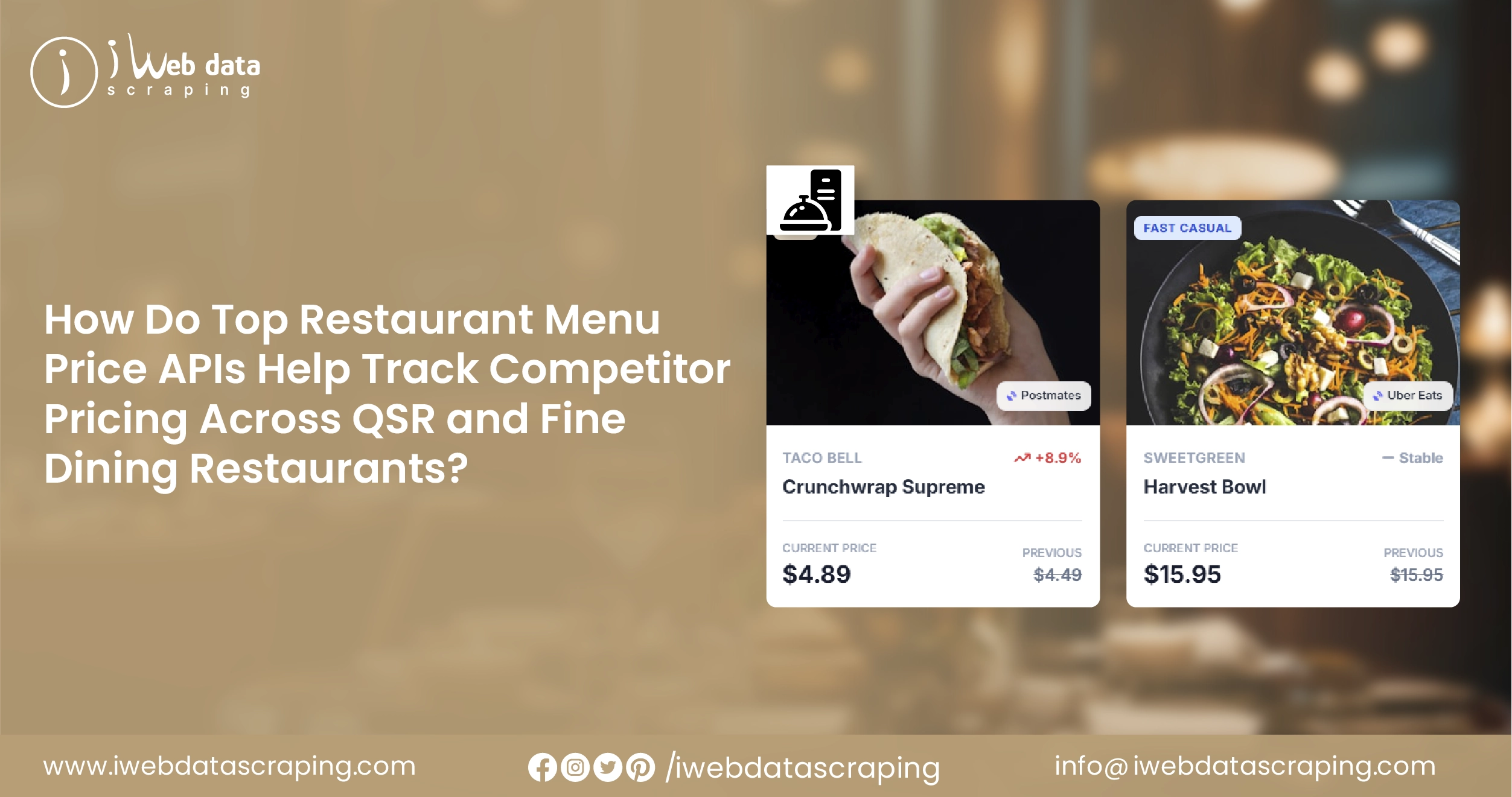
The restaurant industry has entered a highly data-driven era where menu pricing changes happen continuously across food delivery platforms, restaurant apps, and online ordering systems. Restaurants no longer rely only on traditional pricing models because consumer demand, delivery commissions, inflation, and competitor strategies influence pricing almost daily. To stay competitive, restaurant brands now depend heavily on Top Restaurant Menu Price APIs that provide continuous access to live pricing information from multiple restaurant channels.
Businesses today must Track Competitor Pricing Across QSR, Fast Casual & Fine Dining environments to understand how competing brands position their menus in different markets. From global burger chains to luxury dining restaurants, pricing intelligence helps companies identify market trends, customer spending patterns, and profitable menu opportunities.
The demand for automated restaurant intelligence has also increased the adoption of QSR menu pricing Data Scraping API solutions that gather structured menu data from online platforms in real time. These APIs allow restaurants, aggregators, and market researchers to monitor pricing fluctuations, promotional campaigns, item availability, and customer-facing menu updates instantly.
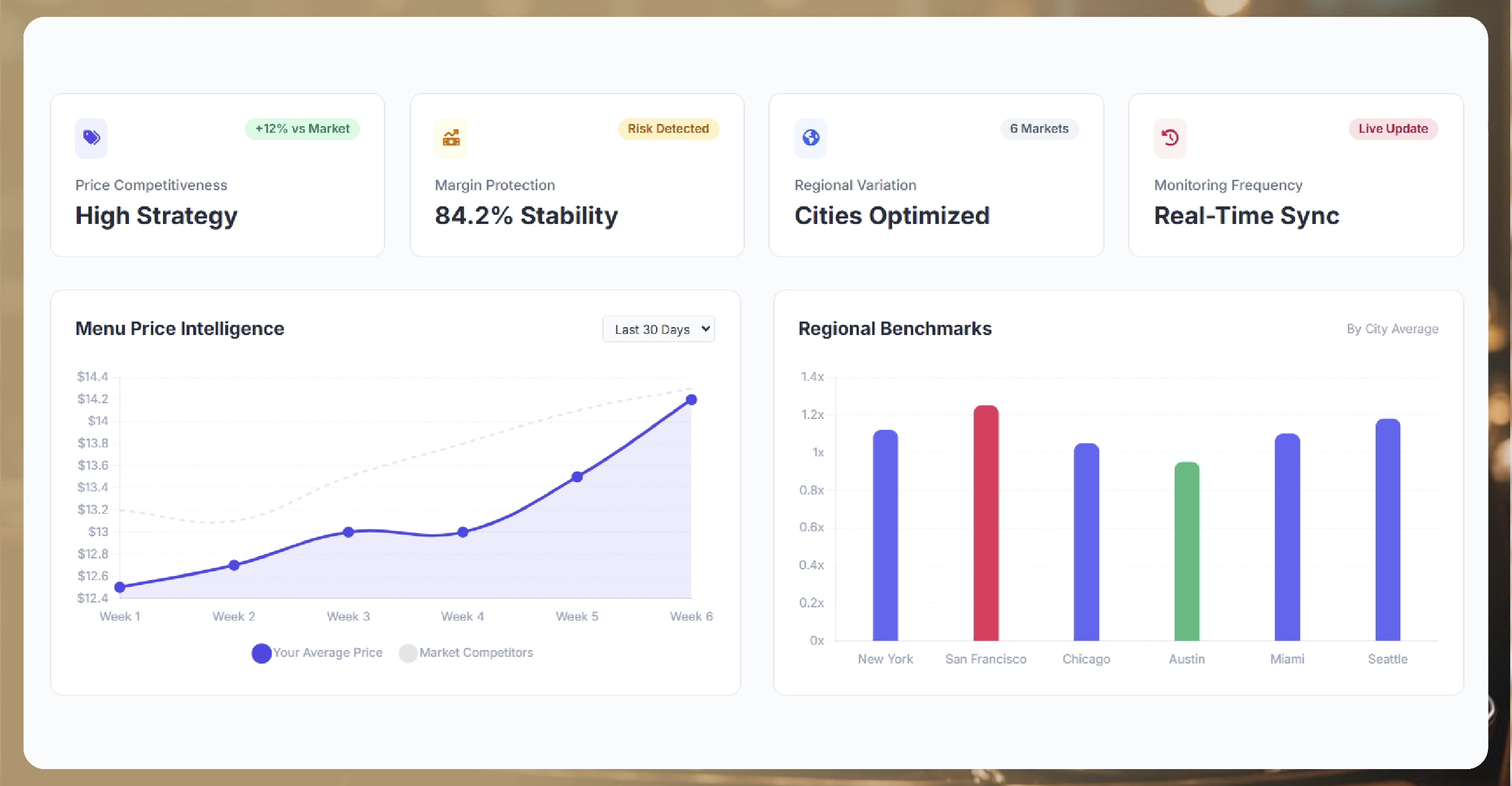
Restaurant pricing has become one of the most important competitive factors in the digital food economy. Customers today compare menu prices across multiple apps before placing orders, making transparency and competitive positioning essential for restaurant growth.
As ingredient costs and operational expenses continue rising, restaurants frequently revise their prices to protect margins without losing customers. Real-time menu intelligence allows businesses to monitor these changes immediately and adapt their pricing strategies faster than competitors.
For restaurant chains operating in multiple cities, understanding regional pricing behavior is equally important. A menu item priced competitively in one city may appear overpriced in another market. Pricing APIs help businesses identify these regional variations and optimize local pricing accordingly.
Restaurant intelligence platforms are now widely used by food-tech startups, consultants, cloud kitchens, and enterprise restaurant brands to improve decision-making and maintain stronger market positioning.
Modern pricing APIs eliminate the need for manual menu tracking. Instead of visiting restaurant websites individually, businesses can access centralized datasets containing thousands of updated menu records from multiple sources.
These APIs continuously collect information such as item names, menu descriptions, category structures, delivery fees, taxes, combo pricing, promotional discounts, and availability status. Once extracted, the data is cleaned, structured, and delivered through scalable API systems for analytics and reporting.
The ability to process restaurant data in real time allows companies to react quickly to competitor pricing changes. If a competing QSR chain launches a discounted combo meal, businesses can immediately evaluate pricing gaps and launch counter-promotions without delay.
Restaurant pricing APIs have become especially valuable for brands that manage large-scale operations where monitoring menus manually would be operationally impossible.
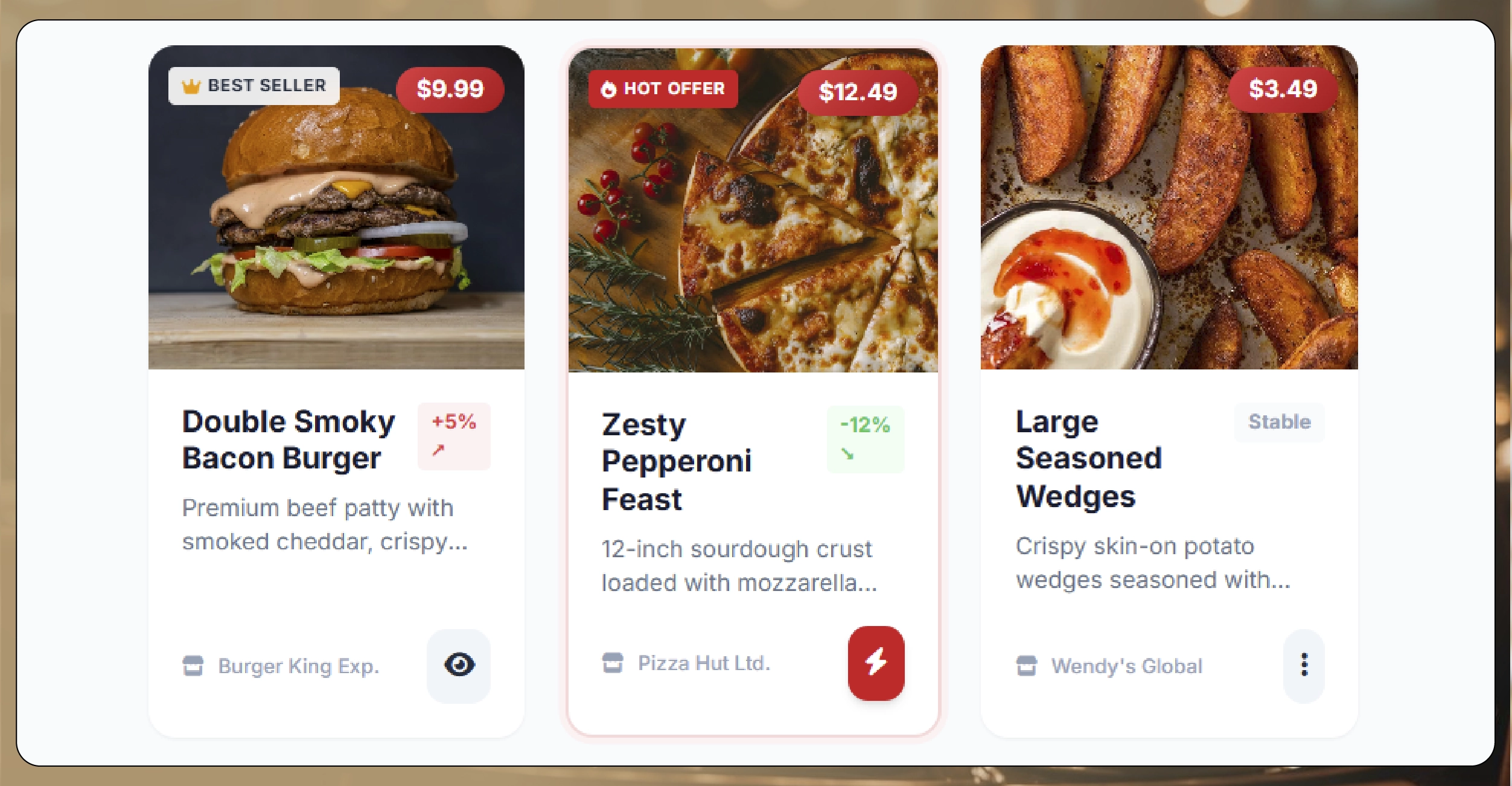
Quick-service restaurants operate in one of the most aggressive pricing environments in the food industry. Fast food brands constantly compete through limited-time offers, bundled meals, and delivery-exclusive pricing strategies.
Restaurant operators now rely on Restaurant Pricing APIs for Real-Time Menu Monitoring to track how competitors adjust menu pricing during peak hours, festivals, weekends, and promotional campaigns. This visibility helps QSR brands maintain competitive pricing without sacrificing profitability.
Real-time tracking also enables businesses to identify consumer response patterns associated with discounts and meal combinations. Many global restaurant chains use these insights to optimize menu engineering strategies and maximize high-margin sales.
As delivery competition intensifies, menu intelligence has become essential for retaining customer loyalty and increasing order frequency.
Fast casual restaurants face a different competitive challenge because they balance affordability with premium dining experiences. These brands often introduce healthier ingredients, customizable meals, and premium menu positioning while still maintaining accessible pricing.
Businesses increasingly use Competitor Menu Price Tracking API systems to compare fast casual pricing structures across cuisines and regional markets. This intelligence helps operators understand where they stand in relation to competing brands offering similar experiences.
Restaurant data intelligence also provides insights into portion sizes, add-on pricing, and premium upgrades that influence customer purchasing decisions. By analyzing competitor pricing strategies, fast casual brands can identify opportunities to increase average order value while maintaining strong consumer perception.
The growing popularity of online ordering has further accelerated the importance of automated pricing intelligence in the fast casual segment.
Luxury dining establishments rely heavily on market positioning, exclusivity, and curated customer experiences. Pricing decisions in fine dining are influenced by ingredient sourcing, chef reputation, wine pairings, and seasonal offerings.
Advanced restaurant intelligence systems now support Fine Dining Menu Price Monitoring by tracking premium menu trends across upscale dining establishments. This allows luxury restaurants to benchmark tasting menus, signature dishes, and specialty beverages against competing restaurants within their target markets.
Fine dining operators also use pricing analytics to study customer behavior during holiday seasons, tourism periods, and regional events. Access to historical pricing data enables restaurants to forecast demand and optimize revenue strategies during high-traffic periods.
As digital visibility becomes more important in premium dining, restaurants increasingly depend on automated menu tracking systems to maintain strategic pricing advantages.
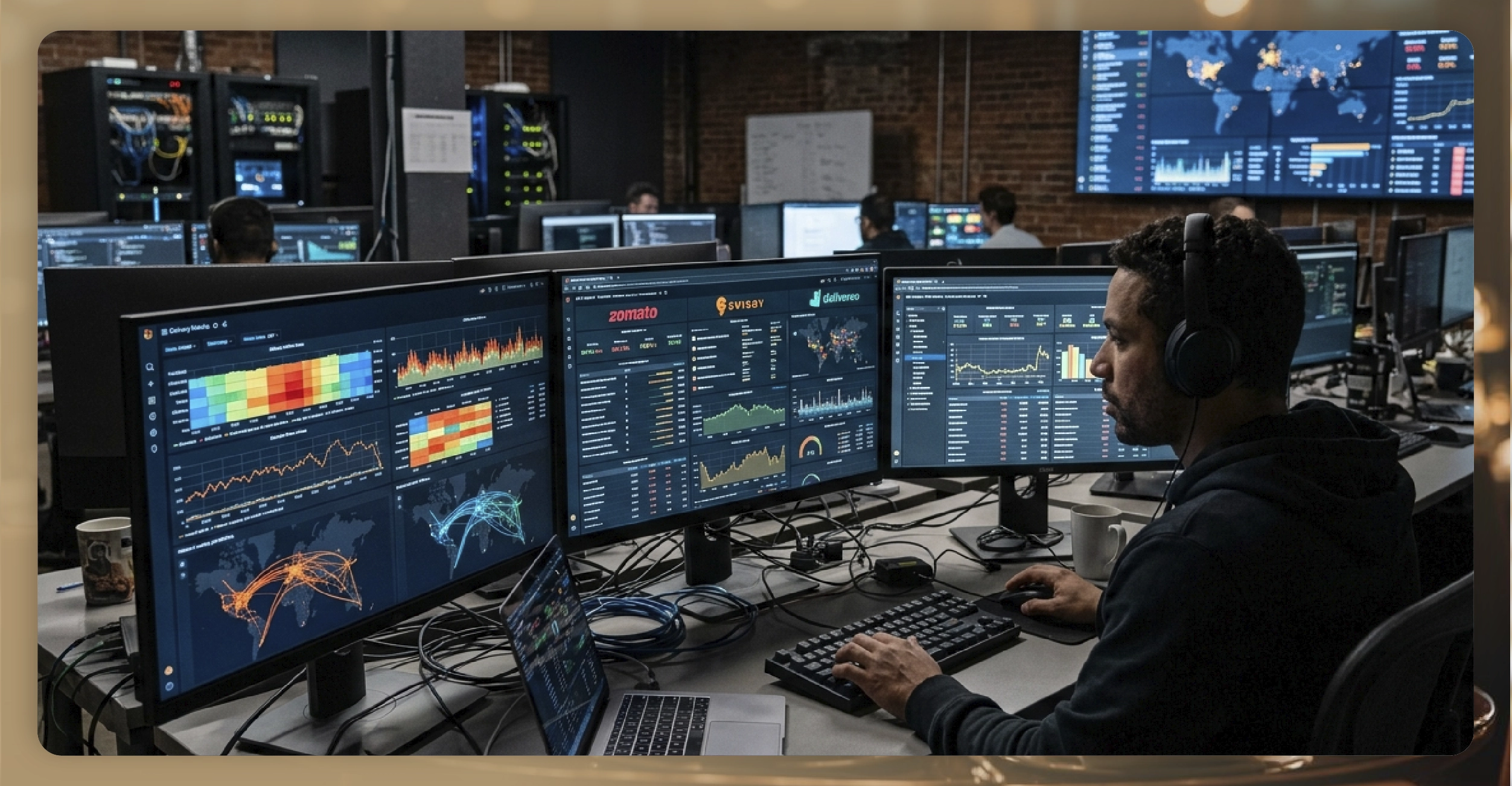
Food delivery platforms have become central to restaurant pricing strategies. Many restaurants now display different prices across dine-in menus, mobile apps, and third-party delivery platforms due to commission structures and dynamic pricing models.
This complexity has increased the need for Fast Casual Restaurant Pricing Data Scraping technologies capable of monitoring delivery platforms continuously. Businesses now analyze pricing data from Uber Eats, DoorDash, Grubhub, Zomato, Swiggy, Deliveroo, and other aggregator platforms to understand competitor behavior.
Delivery intelligence helps restaurants identify hidden discounts, surge pricing, and platform-exclusive promotions that influence customer ordering behavior. These insights are especially important for cloud kitchens and delivery-first restaurant brands operating in highly competitive urban markets.
As online food ordering continues growing globally, delivery platform intelligence will remain a major driver of restaurant analytics investments.
Artificial intelligence has significantly improved the accuracy and efficiency of restaurant menu intelligence systems. AI-powered platforms now process massive volumes of restaurant data automatically while identifying pricing trends, anomalies, and customer behavior patterns.
Machine learning algorithms can detect pricing inconsistencies, predict future menu adjustments, and forecast promotional outcomes based on historical datasets. These systems also help restaurants identify which pricing strategies generate the highest customer engagement and profitability.
Businesses increasingly rely on Real Time QSR Menu Price Intelligence platforms that combine AI-driven analytics with live restaurant datasets. This integration enables automated reporting, predictive analysis, and strategic pricing recommendations across large restaurant networks.
AI-based restaurant analytics is expected to become even more advanced as food delivery ecosystems continue expanding globally.
Unlock real-time restaurant pricing intelligence with our advanced data scraping solutions tailored for competitive menu monitoring and analytics.
Restaurant pricing APIs provide substantial operational and strategic advantages for food businesses. Access to live pricing intelligence enables restaurants to respond faster to market shifts and improve competitive positioning.
Businesses can optimize promotional campaigns by studying competitor discount patterns and identifying the best timing for customer acquisition offers. Real-time menu monitoring also helps operators maintain pricing consistency across multiple sales channels.
Historical menu datasets further support long-term market research and demand forecasting. Restaurants can analyze seasonal trends, regional price fluctuations, and customer purchasing behavior to improve revenue planning.
Menu intelligence systems also reduce manual workload by automating large-scale restaurant data collection processes. This improves operational efficiency while delivering highly accurate competitive insights.
The future of restaurant pricing analytics will focus heavily on predictive intelligence, hyperlocal analysis, and automation. Restaurant APIs are expected to become more sophisticated with deeper integrations into delivery ecosystems and business intelligence platforms.
Future systems may include image-based menu extraction, voice-enabled ordering analysis, and AI-powered customer sentiment tracking. Hyperlocal pricing intelligence will also help restaurants analyze neighborhood-specific competition more accurately.
As restaurant ecosystems become increasingly digital, businesses that invest in advanced pricing intelligence will gain stronger competitive advantages in both online and offline dining markets.
The demand for scalable restaurant analytics solutions is expected to rise significantly as food-tech innovation continues accelerating globally.
Real-Time Menu Monitoring
Our data scraping services continuously track restaurant menu prices, discounts, availability, and promotional updates across multiple delivery platforms daily.
Competitor Pricing Intelligence
We help businesses analyze competitor pricing strategies across QSR, fast casual, and fine dining restaurants using structured real-time datasets.
Multi-Platform Data Collection
Our advanced scraping systems collect accurate menu data from restaurant websites, mobile applications, and third-party food delivery marketplaces efficiently.
Customized Restaurant Datasets
We deliver tailored restaurant pricing datasets based on cuisine types, locations, brands, promotions, customer preferences, and business requirements accurately.
Scalable API Integration
Our scalable APIs integrate seamlessly with dashboards, analytics platforms, and enterprise systems for automated restaurant pricing intelligence and reporting.
Restaurant pricing intelligence has become essential for brands operating across QSR, fast casual, and fine dining markets. Real-time menu monitoring helps businesses analyze competitor behavior, optimize pricing strategies, and improve profitability in increasingly competitive food ecosystems.
Modern restaurants and analytics firms now rely heavily on Food Delivery Data Scraping Services to collect structured menu intelligence from food delivery apps and restaurant platforms. Access to accurate Food Delivery App Menu Datasets enables businesses to study pricing patterns, promotional activity, and customer-facing menu changes more effectively.
As competition grows across digital food ordering platforms, companies are increasingly adopting Web Scraping API Services to automate large-scale restaurant data extraction and market intelligence workflows. Investing in reliable Web Scraping Services will continue playing a critical role in helping restaurants achieve faster decision-making, stronger pricing strategies, and long-term business growth.
Experience top-notch web scraping service and mobile app scraping solutions with iWeb Data Scraping. Our skilled team excels in extracting various data sets, including retail store locations and beyond. Connect with us today to learn how our customized services can address your unique project needs, delivering the highest efficiency and dependability for all your data requirements.
Restaurant Menu Price APIs are automated solutions that collect real-time menu prices, offers, and availability data from restaurant websites and food delivery platforms.
Businesses use competitor pricing data to compare menu rates, monitor discounts, optimize pricing strategies, and improve market positioning across restaurant categories.
QSR chains, fast casual brands, fine dining restaurants, cloud kitchens, aggregators, and food-tech companies all benefit from real-time menu monitoring solutions.
Yes, advanced APIs can monitor delivery-exclusive offers, combo deals, promotional discounts, surge pricing, and seasonal campaigns across food delivery apps.
Real-time pricing data helps businesses react quickly to competitor changes, improve customer retention, optimize profits, and maintain competitive menu strategies.