
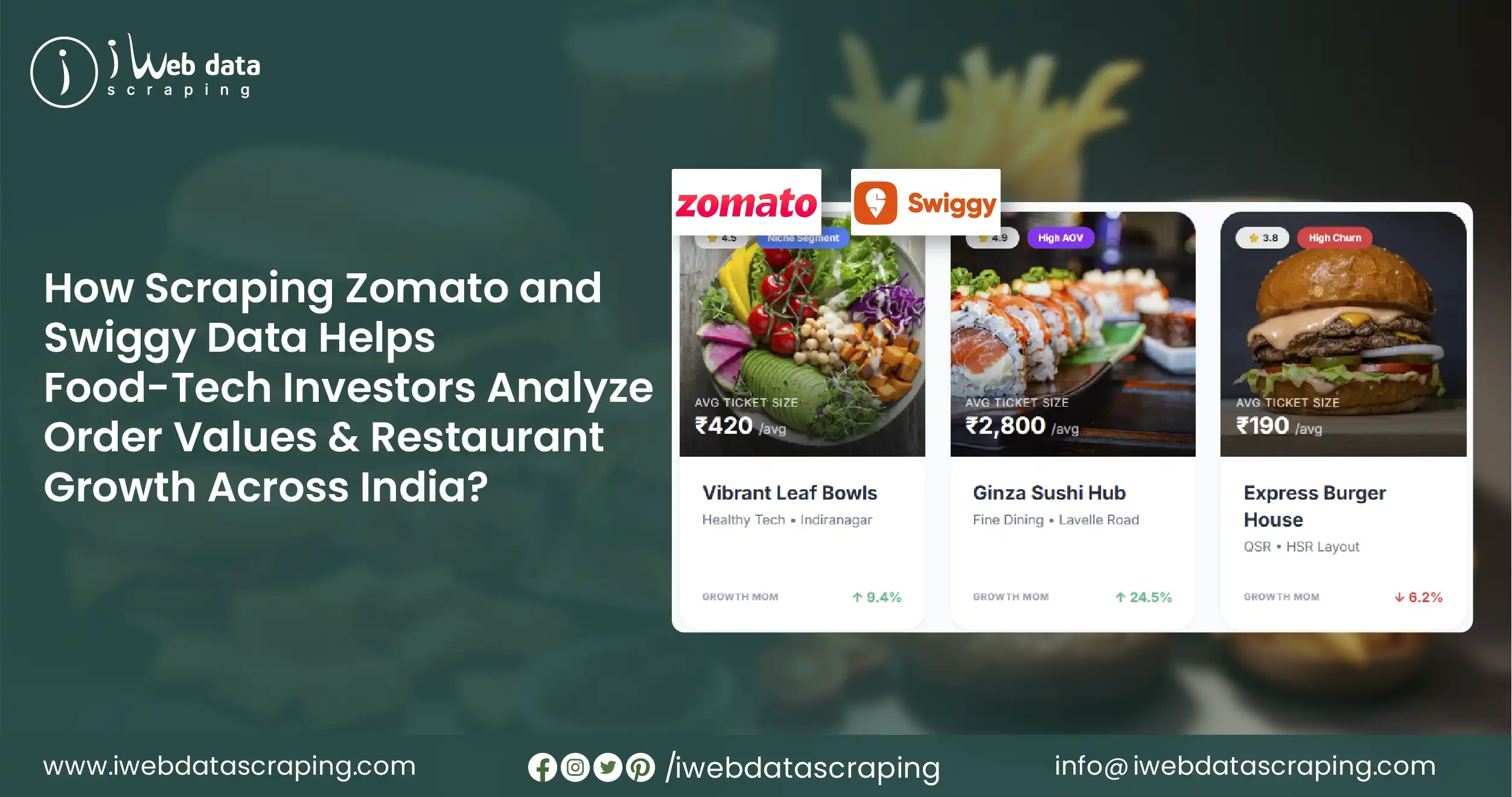
India’s online food delivery sector has transformed into one of the country’s fastest-growing digital industries. Rising smartphone usage, rapid urbanization, changing eating habits, and expanding restaurant networks have accelerated the adoption of food delivery platforms across metro cities as well as Tier-2 and Tier-3 regions. Platforms like Zomato and Swiggy now generate massive volumes of restaurant and consumer data every day, creating valuable opportunities for investors looking to understand market trends and business performance.
Scraping Zomato and Swiggy Data allows investors to access real-time intelligence related to restaurant pricing, customer demand, cuisine trends, delivery operations, and regional growth across India.
Restaurant pricing analytics From Zomato & Swiggy Across India helps businesses and investors evaluate how pricing differs across cities, cuisines, restaurant categories, and delivery zones.
Swiggy and Zomato Restaurant order value analytics provides deeper visibility into customer spending behavior, average order values, premium dining trends, and restaurant revenue potential.
Food-tech investors increasingly depend on data-driven insights to identify scalable restaurant brands, high-growth cuisines, emerging cloud kitchen businesses, and untapped regional opportunities. Continuous monitoring of food delivery platforms helps investors understand how restaurants perform in competitive markets and how consumer behavior evolves over time.
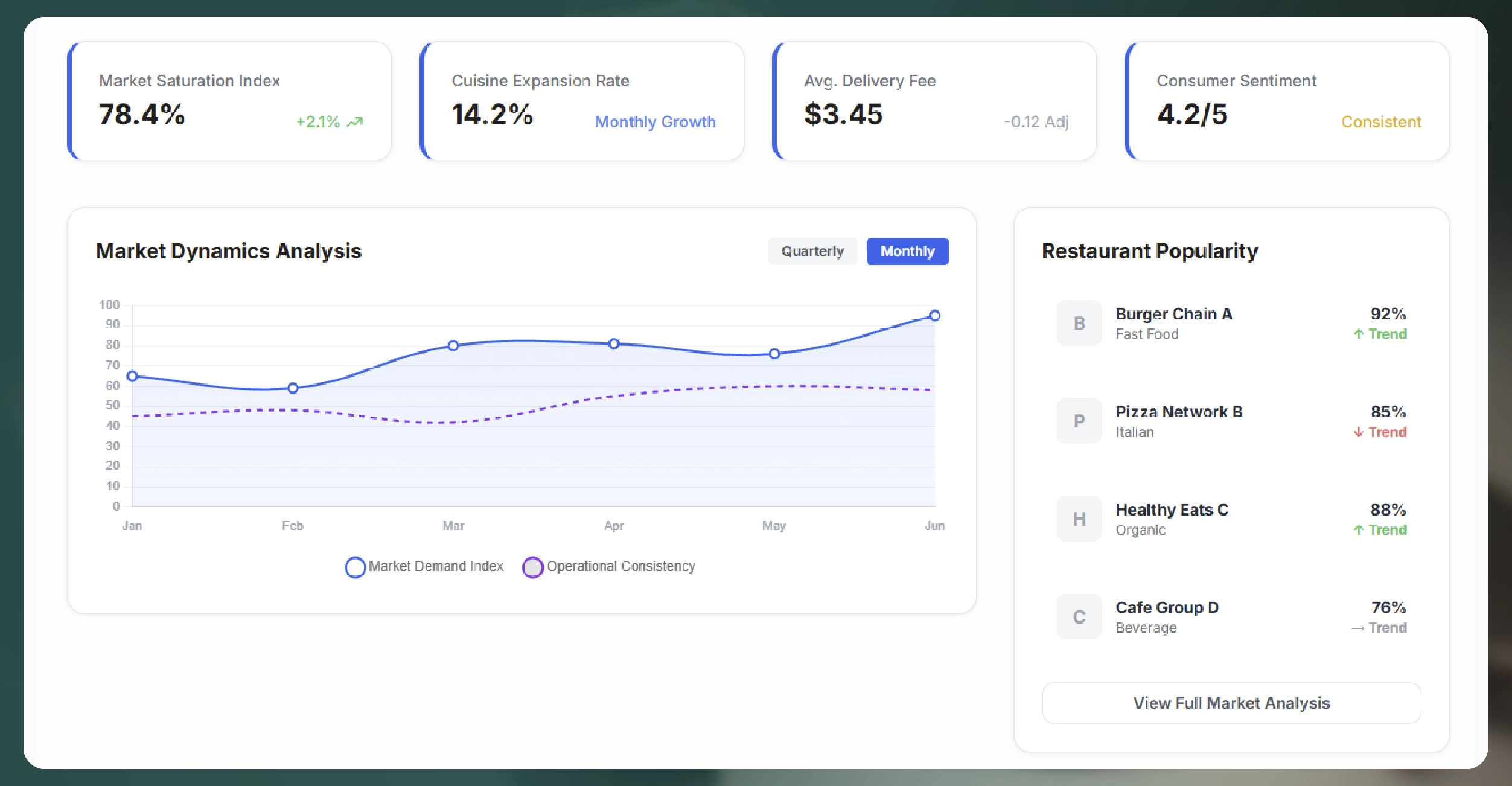
The food delivery ecosystem produces enormous quantities of operational and consumer-generated information every minute. Every menu update, discount campaign, delivery fee adjustment, customer rating, or cuisine expansion reflects changing market dynamics. Investors use this information to measure business performance and evaluate long-term growth opportunities.
Traditional market research methods often fail to provide real-time visibility into the food-tech industry. Surveys and manual research usually become outdated quickly because restaurant pricing, menu offerings, and customer demand change continuously. Automated scraping solves this challenge by providing constantly updated datasets that reflect actual market behavior.
Food delivery data helps investors analyze restaurant popularity, market saturation, customer affordability, operational consistency, and regional demand patterns. It also allows businesses to compare competing restaurant brands across different cities and delivery zones.
Average order value is one of the most important indicators for evaluating food delivery businesses. It reflects how much customers spend per transaction and helps investors estimate revenue potential across different restaurant categories.
Premium restaurants generally achieve higher order values because customers purchase expensive meals, desserts, beverages, or family combos. Budget-focused restaurants may generate lower order values but often compensate through higher order frequency and larger customer bases.
By analyzing pricing patterns and menu structures, investors can identify restaurants with strong monetization strategies. Restaurants that maintain stable order values without relying heavily on discounts are often considered financially healthier and operationally sustainable.
In cities like Mumbai, Bengaluru, and Delhi, higher disposable income and premium dining preferences frequently contribute to stronger average order values. Meanwhile, smaller cities may show faster growth in order frequency and customer acquisition, making them attractive long-term expansion markets.
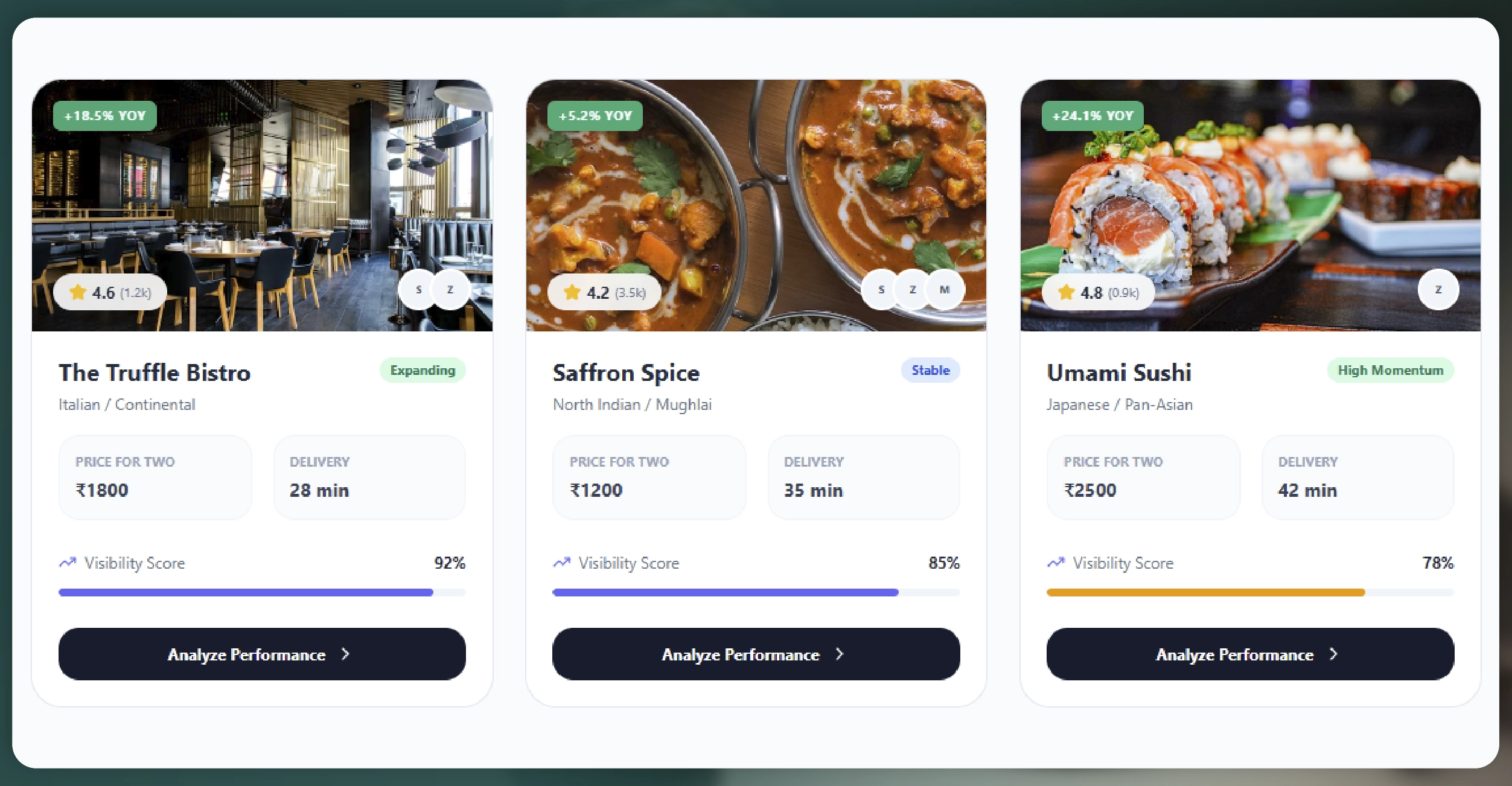
Restaurant-level analytics provide investors with a clearer understanding of business performance across food delivery platforms. Scraping restaurant data enables continuous monitoring of menu pricing, ratings, customer reviews, delivery speed, cuisine categories, and operational availability.
Food-tech YoY growth analysis Using Swiggy and Zomato Data helps investors compare historical restaurant performance trends and identify businesses experiencing consistent expansion.
Restaurants showing increasing customer ratings, expanding menus, wider delivery coverage, and improved visibility on delivery apps often indicate strong growth momentum. Investors closely track these indicators to evaluate whether restaurant chains are strengthening their market position.
Monitoring restaurant statistics also helps identify underperforming businesses. Declining ratings, excessive discounts, poor delivery performance, or shrinking menus may indicate operational inefficiencies or reduced customer satisfaction.
India’s food delivery market is highly regionalized. Consumer preferences vary significantly between states, cities, and even local neighborhoods. This makes regional performance analysis extremely important for investors seeking location-specific growth opportunities.
Regional restaurant performance data From Swiggy and Zomato allows investors to understand how restaurants and cuisines perform across different geographic regions.
For instance, North Indian cities may demonstrate stronger demand for Mughlai and Punjabi cuisine, while South Indian markets often show higher breakfast ordering frequency and stronger demand for regional meals. Western India may exhibit greater premium café culture and dessert consumption, whereas Eastern India could show rapid growth in affordable quick-service meals.
These regional insights help investors identify high-demand cuisines, underserved markets, and potential expansion zones for restaurant chains and cloud kitchens.
Regional analysis also helps determine market saturation levels. Highly competitive metro cities may offer slower growth due to intense competition, while emerging Tier-2 cities may provide stronger long-term scalability with lower operating costs and rising consumer demand.
Food delivery scraping helps investors detect emerging food trends before they become mainstream. Rapid increases in restaurant listings, menu diversity, or customer engagement often indicate growing demand within a specific category.
Healthy meals, protein-focused diets, gourmet burgers, specialty beverages, vegan foods, and premium desserts are examples of categories that have experienced strong growth in recent years. Cloud kitchens and late-night delivery brands have also expanded significantly due to changing urban lifestyles and convenience-focused consumer behavior.
Investors use food delivery intelligence to monitor how quickly these categories grow across different cities and demographics. Historical menu and pricing data also helps determine whether certain food trends demonstrate sustainable demand or temporary popularity spikes.
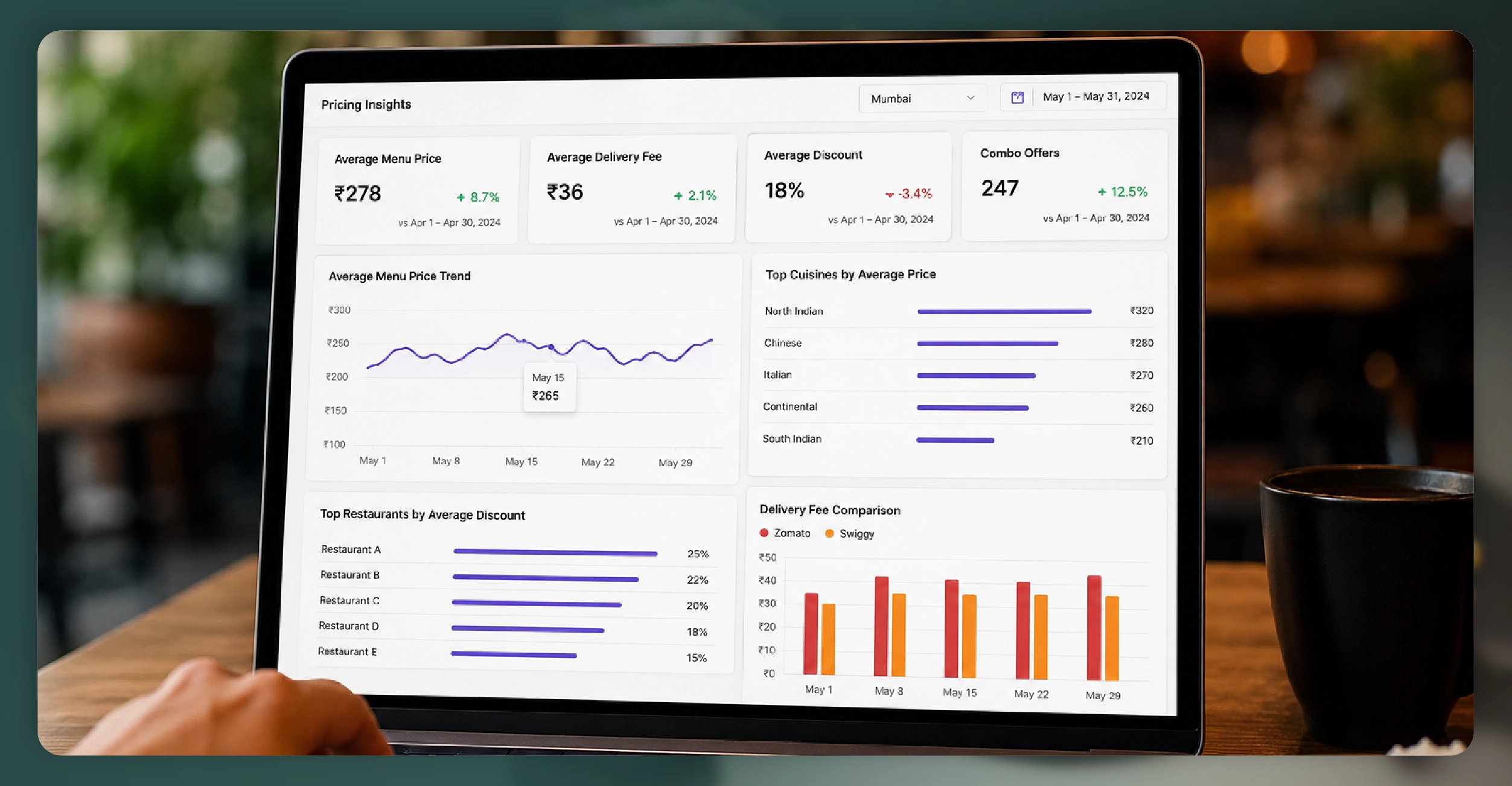
Pricing remains one of the most influential factors in food delivery competition. Restaurants continuously adjust menu pricing, delivery charges, and promotional offers to attract customers and maintain visibility on delivery platforms.
Zomato and Swiggy Restaurant Statistics Data Analytics enables investors to compare restaurant pricing strategies and evaluate competitive positioning within local markets.
Restaurants that rely excessively on discounts may achieve temporary customer growth but struggle with profitability over time. On the other hand, restaurants capable of maintaining customer loyalty despite premium pricing often demonstrate stronger brand value and operational efficiency.
Pricing analytics also helps investors understand customer affordability patterns. Changes in menu prices, delivery fees, and combo offers often reflect broader economic conditions and consumer purchasing behavior.
Transform real-time food delivery data into powerful investment insights with our advanced restaurant and pricing data scraping solutions.
Food delivery data provides valuable insights into how consumers interact with restaurants and delivery apps. Customer ordering behavior changes according to time, season, festivals, work schedules, and regional preferences.
Swiggy and Zomato pricing Data insights reveal trends related to meal affordability, weekend spending, office lunch demand, late-night ordering activity, and seasonal consumption patterns.
For example, office meal providers may experience stronger weekday afternoon demand, while dessert brands often see increased evening orders. Festival seasons may drive spikes in family meal combinations and premium food purchases.
Understanding these patterns allows investors to evaluate restaurant scalability and customer retention potential more effectively.
Large-scale scraping becomes significantly more valuable when the extracted data is organized into structured analytical datasets.
Swiggy Food Delivery App Datasets help businesses analyze restaurant performance, menu expansion, customer engagement, pricing evolution, and regional growth at scale.
Similarly, Zomato Food Delivery App Datasets provide detailed visibility into cuisine popularity, ratings, operational patterns, and restaurant competition across Indian cities.
These datasets typically include restaurant names, cuisine categories, menu items, prices, ratings, reviews, delivery charges, location details, operating hours, and promotional activities. Structured datasets help investors build forecasting models, performance dashboards, and market intelligence systems.
The scale and complexity of India’s food delivery market make manual monitoring nearly impossible. Restaurant menus, pricing structures, customer reviews, and delivery operations change constantly throughout the day.
Automated extraction systems enable businesses to collect large volumes of food delivery intelligence efficiently and accurately. Swiggy Food Data Extraction Services help organizations continuously monitor restaurant performance, menu updates, delivery trends, and customer engagement metrics across multiple cities. Similarly, Zomato Food Data Extraction Services allow businesses to track real-time pricing changes, restaurant rankings, cuisine popularity, and operational expansion patterns. Automation improves data accuracy, scalability, monitoring frequency, and long-term historical tracking capabilities while reducing manual research costs.
India’s digital food economy will continue expanding rapidly as internet penetration and online ordering adoption increase across smaller cities. Investors increasingly rely on advanced analytics and automated data intelligence to make informed investment decisions.
Artificial intelligence combined with food delivery scraping will further enhance demand forecasting, customer segmentation, restaurant success prediction, and regional market analysis. Businesses will gain deeper visibility into changing consumer behavior and evolving restaurant ecosystems.
As competition intensifies, access to reliable and real-time food delivery intelligence will become a major advantage for investors, restaurant chains, cloud kitchens, and market research firms operating within India’s growing food-tech industry.
Real-Time Restaurant Monitoring
Our data scraping services help you monitor restaurant pricing, menu updates, ratings, discounts, and delivery trends from Zomato and Swiggy across multiple Indian cities in real time daily.
Advanced Pricing Intelligence
We deliver structured pricing intelligence datasets that help businesses analyze competitor pricing strategies, customer affordability trends, promotional activity, premium dining demand, and average order value patterns across food delivery platforms efficiently.
Regional Market Performance Analysis
Our scraping solutions provide region-wise restaurant analytics, helping investors identify high-growth cities, emerging cuisine trends, underserved markets, and expansion opportunities through accurate location-based food delivery intelligence across India continuously.
Scalable Structured Data Delivery
We provide scalable and customized datasets including restaurant listings, menu items, customer reviews, cuisine categories, delivery fees, and operational insights formatted for dashboards, forecasting systems, business intelligence, and investment analysis platforms.
Automated Food-Tech Intelligence Solutions
Our automated scraping infrastructure ensures continuous real-time food delivery data extraction with higher accuracy, faster updates, historical tracking, and seamless integration support for analytics, research, competitive benchmarking, and decision-making requirements.
Food delivery platforms like Zomato and Swiggy generate valuable operational and consumer data that can significantly improve food-tech investment strategies. From restaurant order values and pricing trends to regional growth and cuisine popularity, scraping these platforms provides deep visibility into India’s rapidly evolving food delivery ecosystem.
Modern Food Delivery Data Scraping Services help businesses gather real-time restaurant intelligence for competitive analysis, demand forecasting, and investment planning.
Comprehensive Food Delivery App Menu Datasets enable investors to study menu evolution, pricing strategies, and customer demand across multiple restaurant categories and geographic regions.
Advanced Web Scraping API Services simplify automated large-scale extraction of restaurant and food delivery data for analytics and forecasting applications.
Reliable Web Scraping Services ultimately help food-tech stakeholders convert raw food delivery data into actionable market intelligence and long-term business growth opportunities across India.
Experience top-notch web scraping service and mobile app scraping solutions with iWeb Data Scraping. Our skilled team excels in extracting various data sets, including retail store locations and beyond. Connect with us today to learn how our customized services can address your unique project needs, delivering the highest efficiency and dependability for all your data requirements.
Food-tech investors scrape data from Zomato and Swiggy to analyze restaurant performance, customer demand, pricing trends, average order values, regional growth, and competitive positioning across India.
Businesses can extract restaurant names, menu items, prices, ratings, reviews, delivery charges, cuisine categories, operational timings, discounts, delivery coverage, and customer engagement insights from food delivery platforms.
Food delivery datasets help compare historical restaurant performance, order trends, pricing changes, customer ratings, and regional expansion patterns to measure year-over-year growth and identify high-performing restaurant brands.
Restaurant pricing analytics helps investors understand customer affordability, premium dining demand, discount dependency, competitor pricing strategies, and profitability trends across different cities and cuisine categories.
Automated food data extraction services enable real-time monitoring of restaurant and delivery platform data at scale, ensuring faster data collection, higher accuracy, continuous updates, and better market intelligence for investment decisions.