
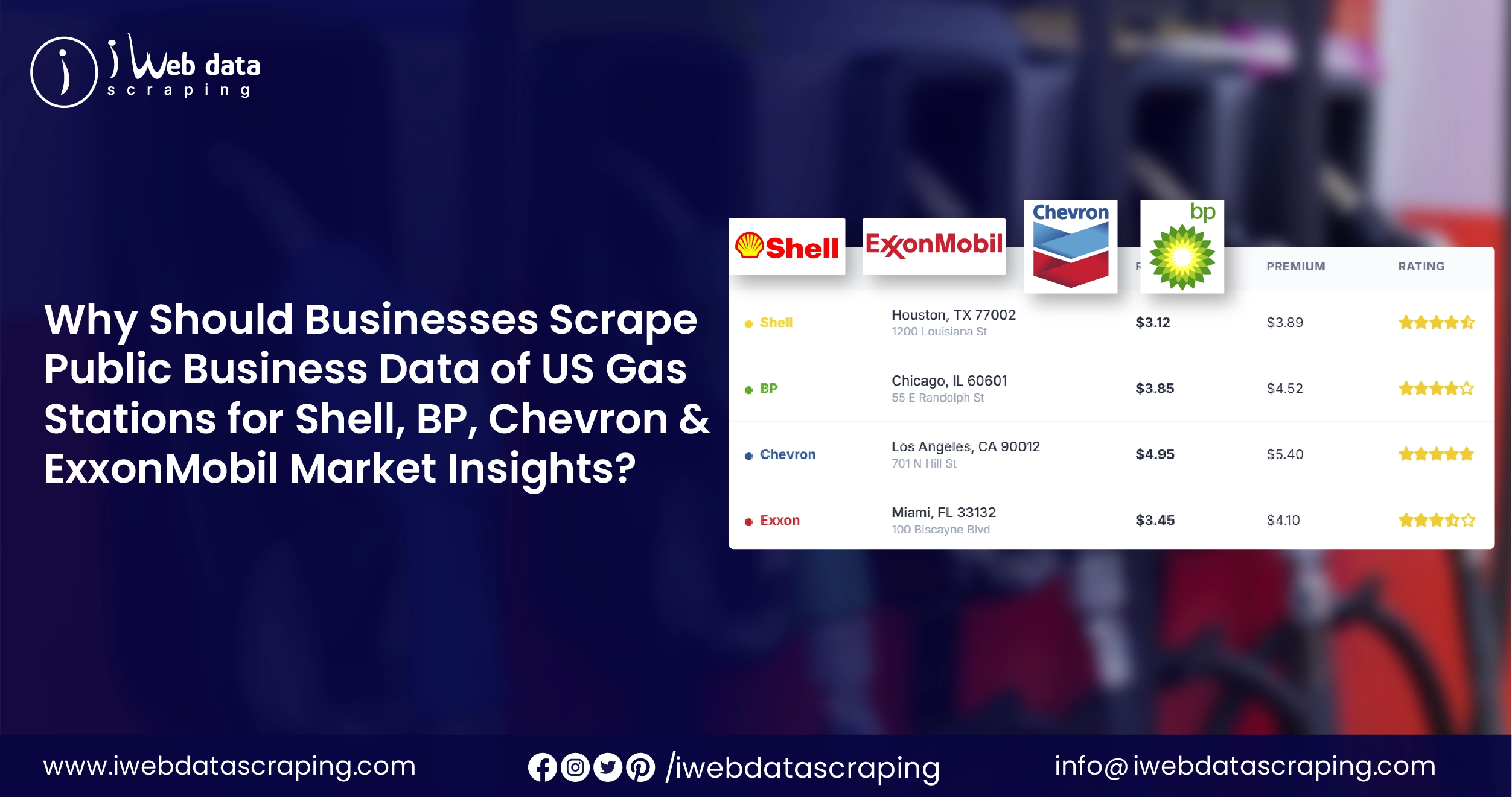
The fuel retail industry in the United States is evolving rapidly as fuel prices, consumer preferences, supply chain disruptions, and regional competition continue shaping the market. Thousands of fuel stations operate across the country under major brands and independent ownership models, creating massive volumes of publicly accessible business information. Companies now rely on automated data collection systems to monitor pricing, station expansion, operational trends, and competitive intelligence in real time.
Businesses across logistics, transportation, energy, retail analytics, and investment sectors increasingly Scrape Public Business Data of US Gas Stations strategies to monitor changing fuel markets. Accurate business intelligence allows enterprises to evaluate station performance, optimize routes, benchmark competitors, and identify emerging regional opportunities.
Modern fuel analytics solutions enable organizations to perform public business data Extraction of US gas stations efficiently by collecting information such as station locations, fuel prices, customer ratings, operating hours, amenities, and promotional offers from public sources.
With the rise of automation technologies, enterprises are also adopting Web scraping gas station business data from USA platforms to create scalable fuel intelligence ecosystems capable of supporting dynamic market forecasting and pricing strategies.
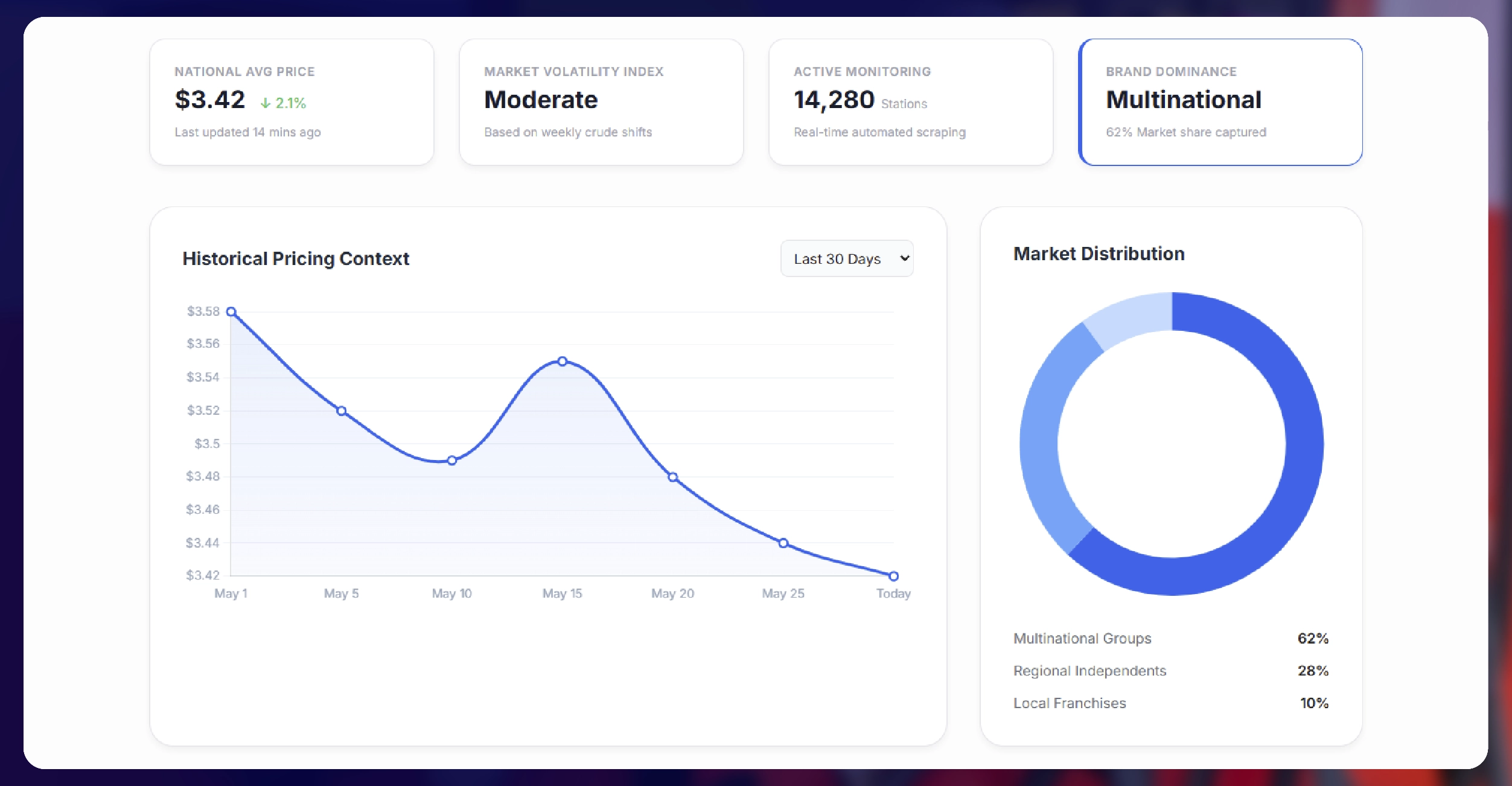
The US fuel retail market contains a mix of multinational fuel corporations and independently owned operators. Major brands like Shell, BP, Chevron, and ExxonMobil maintain nationwide networks, while regional and local stations compete aggressively on pricing and convenience offerings.
Fuel retailers continuously modify prices based on crude oil fluctuations, taxes, local demand, and competitive conditions. Monitoring these changes manually is nearly impossible due to the scale and frequency of updates. Automated scraping solutions help businesses gather real-time market intelligence from thousands of fuel outlets simultaneously.
Companies use gas station datasets for:
Publicly available gas station business information exists across multiple digital sources including:
Businesses collect structured datasets from these platforms using automated extraction systems. Data pipelines process large-scale information into usable formats for dashboards, reporting systems, and predictive analytics platforms.
The collected information often includes:
| Data Type | Description |
|---|---|
| Station Name | Fuel outlet branding |
| Address | Exact station location |
| Fuel Prices | Gasoline and diesel pricing |
| Contact Information | Phone numbers and emails |
| Business Hours | Operating schedules |
| Amenities | Car wash, ATM, EV charging |
| Ratings & Reviews | Consumer feedback |
| Geo Coordinates | Latitude and longitude |
| Franchise Type | Corporate or independent |
| Service Availability | Fuel types and convenience services |
Shell operates one of the largest fuel station networks across the United States. Businesses frequently monitor Shell stations to track premium fuel pricing trends, convenience store performance, and geographic expansion.
Organizations often deploy systems to Scraping public business data of Shell, BP, Chevron & ExxonMobil gas stations for large-scale market intelligence and operational benchmarking.
Many analytics providers also Scrape Shell gas station business data to identify high-performing retail corridors, pricing variations, and customer engagement patterns across states.
Shell station datasets often include:
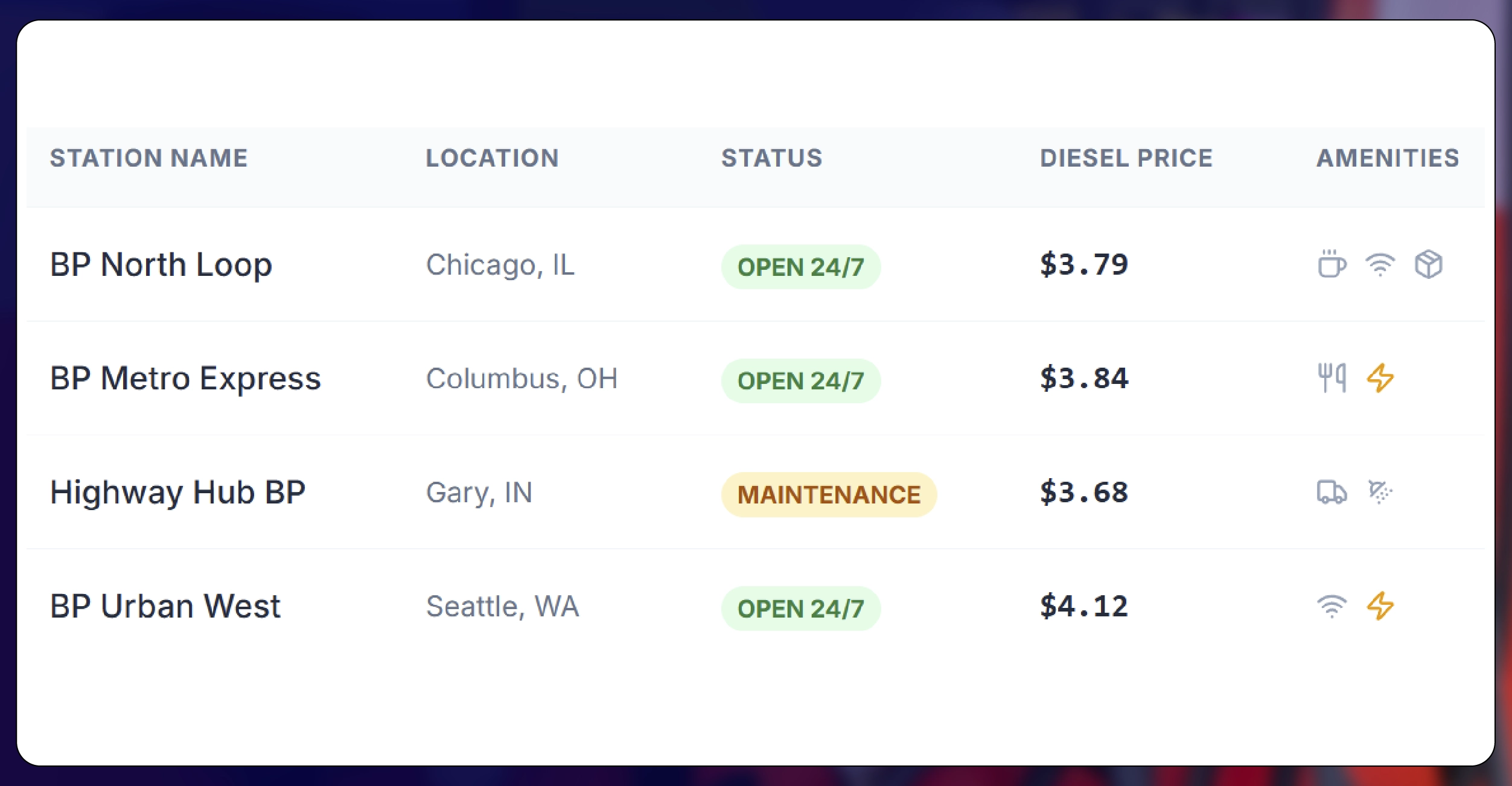
BP maintains an extensive fuel retail network serving urban and highway transportation markets throughout the country. Fuel distributors and logistics firms monitor BP locations to compare diesel and gasoline pricing trends.
Advanced BP gas station data scraping solutions help enterprises collect structured intelligence regarding fuel availability, operating schedules, station amenities, and competitor positioning.
BP data intelligence supports:
Chevron fuel stations represent a major segment of the western and southern US fuel retail market. Chevron business intelligence plays a critical role in understanding premium fuel pricing and regional retail strategies.
Companies increasingly rely on Chevron gas station data extraction platforms to monitor pricing changes, store operations, customer reviews, and fuel availability across geographic regions.
Chevron datasets provide insights into:
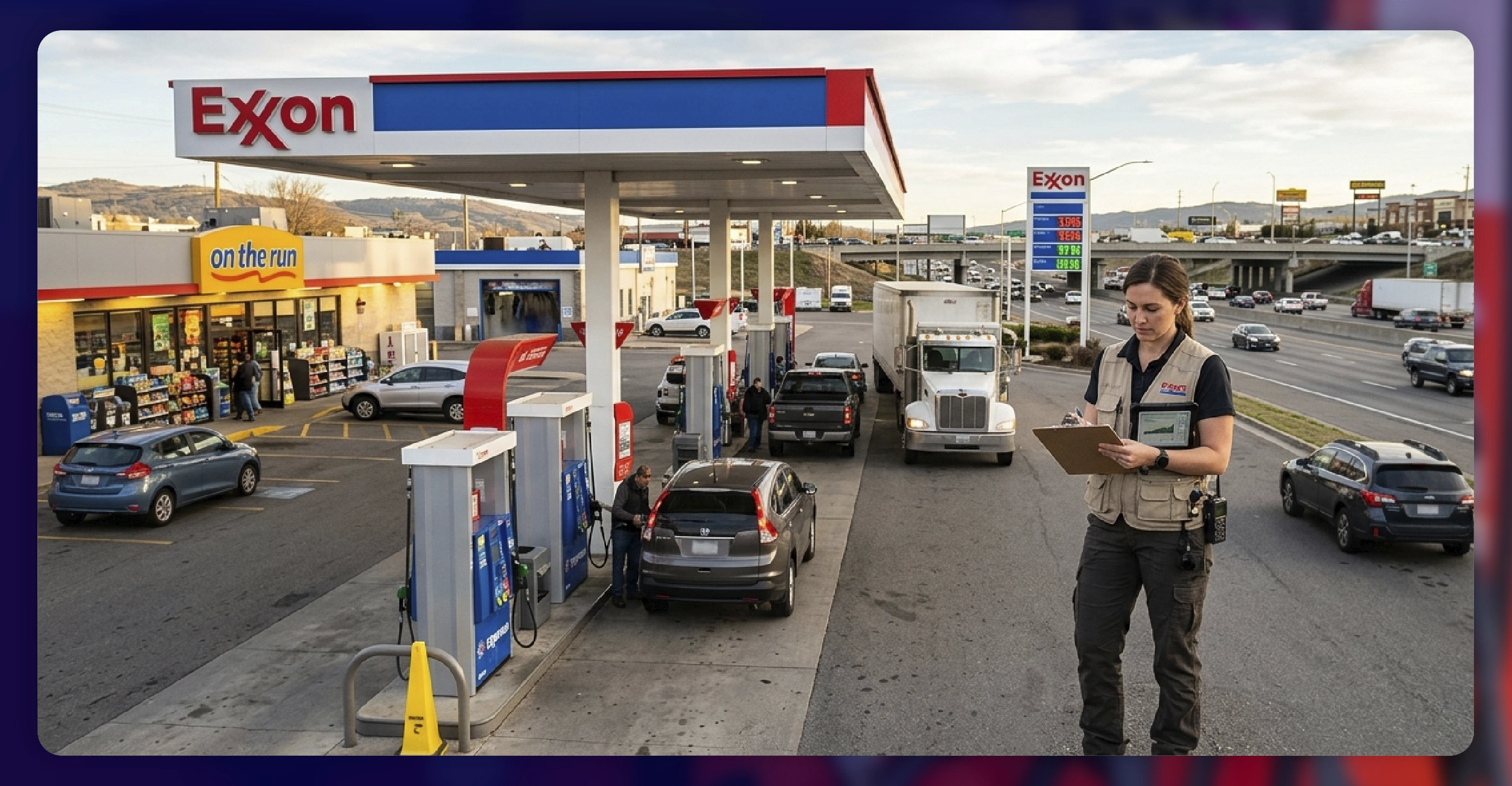
ExxonMobil operates through Exxon and Mobil branded stations across multiple states. The brand maintains strong presence in urban, suburban, and interstate transportation corridors.
Organizations use ExxonMobil fuel station data scraping frameworks to track station operations, monitor competitive pricing, and evaluate retail demand fluctuations.
ExxonMobil intelligence helps businesses analyze:
Independent fuel operators form a substantial portion of the US gas station ecosystem. These stations often compete aggressively on local pricing and customer convenience.
Unlike branded chains, independent stations may frequently adjust pricing based on neighborhood competition and supply fluctuations. Businesses therefore invest heavily in Independent gas station business data collection systems to obtain localized market intelligence.
Independent station datasets help organizations identify:
Monitoring independent operators is especially useful for fleet management companies, delivery platforms, and regional fuel distributors.
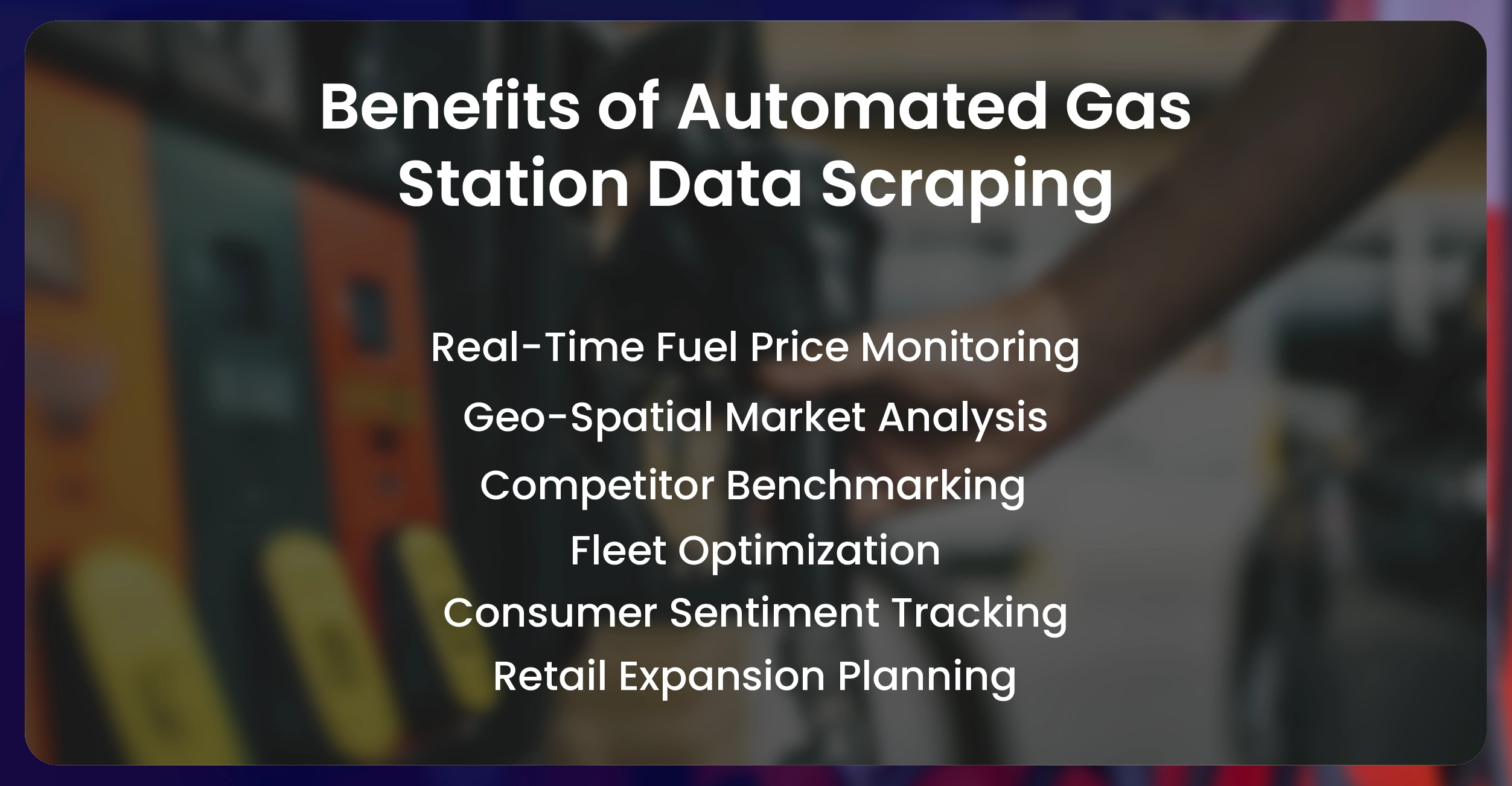
Web scraping technologies automate the collection of public business data from thousands of fuel stations across multiple platforms simultaneously. Automated systems reduce manual workload while improving data accuracy and update frequency.
Modern scraping frameworks support:
Transform public gas station data into actionable fuel pricing intelligence with our scalable, accurate, and fully automated scraping solutions.
Several industries depend on accurate fuel station intelligence for operational efficiency and market analysis.
Although public data scraping provides valuable intelligence, businesses often encounter technical and operational challenges.
Overcoming these challenges requires scalable extraction infrastructure, intelligent parsers, and automated validation systems.
The fuel retail sector is rapidly moving toward digital transformation driven by EV charging adoption, smart mobility systems, and AI-powered retail analytics.
Future gas station intelligence platforms will likely include:
As transportation ecosystems evolve, fuel business intelligence will become increasingly essential for operational planning and competitive strategy.
Real-Time Fuel Price Monitoring
Our scraping services collect accurate fuel pricing updates from US gas stations, helping businesses monitor competitors and market fluctuations daily.
Nationwide Station Data Collection
We extract large-scale gas station business datasets across Shell, BP, Chevron, ExxonMobil, and independent operators throughout United States markets.
Competitor Benchmarking Intelligence
Our automated solutions track station amenities, customer reviews, operational hours, and regional pricing strategies for advanced competitor benchmarking insights.
Customized Data Delivery Solutions
We deliver structured gas station datasets through APIs, dashboards, CSV files, and cloud integrations tailored for enterprise business operations.
Scalable Market Intelligence Automation
Our scalable scraping infrastructure supports continuous fuel station monitoring, enabling faster decisions, improved forecasting, and smarter retail expansion strategies.
The US fuel retail market generates massive volumes of publicly accessible business intelligence valuable for transportation, retail, logistics, energy, and investment sectors. Automated data extraction technologies enable enterprises to monitor pricing trends, analyze regional competition, and optimize business operations efficiently.
Businesses leveraging fuel station intelligence can make smarter decisions regarding pricing, expansion, logistics optimization, and customer engagement. The growing demand for real-time fuel analytics is driving adoption of advanced scraping frameworks and automated intelligence platforms across industries.
Organizations seeking scalable Fuel Pricing Intelligence capabilities increasingly depend on enterprise-grade Web Scraping API Services and customized Web Scraping Services to transform public fuel station data into actionable market insights.
Experience top-notch web scraping service and mobile app scraping solutions with iWeb Data Scraping. Our skilled team excels in extracting various data sets, including retail store locations and beyond. Connect with us today to learn how our customized services can address your unique project needs, delivering the highest efficiency and dependability for all your data requirements.
Businesses can collect publicly available data including fuel prices, station locations, operating hours, amenities, ratings, reviews, and contact information.
Gas station data scraping helps companies monitor pricing trends, analyze competitors, optimize logistics operations, and improve retail market strategies.
Major brands commonly monitored include Shell, BP, Chevron, ExxonMobil, Marathon, Circle K, Speedway, and independent fuel station operators.
Automated scraping systems can collect and update fuel pricing information hourly, daily, or in real time depending on business requirements.
Transportation, logistics, retail analytics, energy research, fleet management, mapping platforms, and investment firms benefit significantly from fuel station intelligence.