
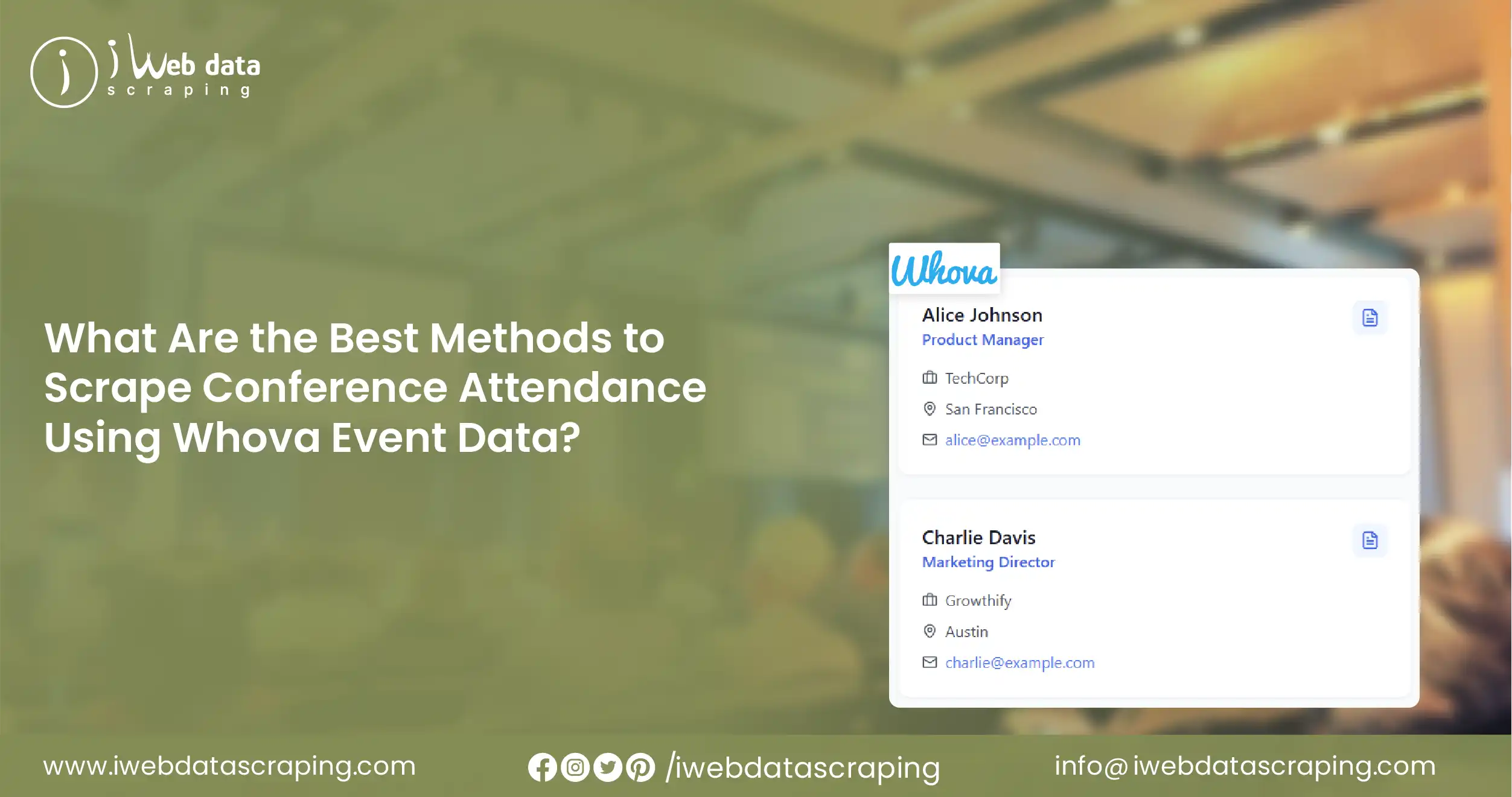
The event industry has become increasingly data-driven as organizers, exhibitors, sponsors, and market researchers seek actionable insights from attendee behavior and engagement trends. Businesses today rely on event analytics to understand audience preferences, evaluate event performance, and identify emerging opportunities across industries. This growing demand for event intelligence has accelerated interest in method to Scrape conference attendance using Whova event data to uncover valuable patterns hidden within large-scale conference ecosystems.
Organizations are leveraging event platforms to conduct Whova Conference demand analysis that helps them assess attendee interest, forecast participation levels, and optimize future event strategies. At the same time, Whova conference platform Data insights provide detailed visibility into attendee demographics, session engagement, networking activities, and event popularity metrics.
Whova has become one of the leading event management platforms used by conferences, trade shows, professional associations, educational institutions, and corporate events worldwide. The platform generates extensive datasets that can help organizations make informed decisions regarding sponsorship opportunities, event planning, audience targeting, and market expansion strategies.
Conferences have evolved far beyond simple networking gatherings. Today, they serve as critical business ecosystems where organizations launch products, generate leads, establish partnerships, and monitor industry trends.
Understanding conference attendance patterns can provide valuable insights into:
By analyzing attendance data across multiple events, organizations can identify which sectors are experiencing rapid growth and where investment opportunities may exist. Event intelligence also enables businesses to understand how audience preferences change over time and which conference formats attract the highest engagement levels.
As event platforms continue digitizing attendee interactions, the amount of available behavioral data continues expanding, creating new opportunities for sophisticated analytics and business intelligence.
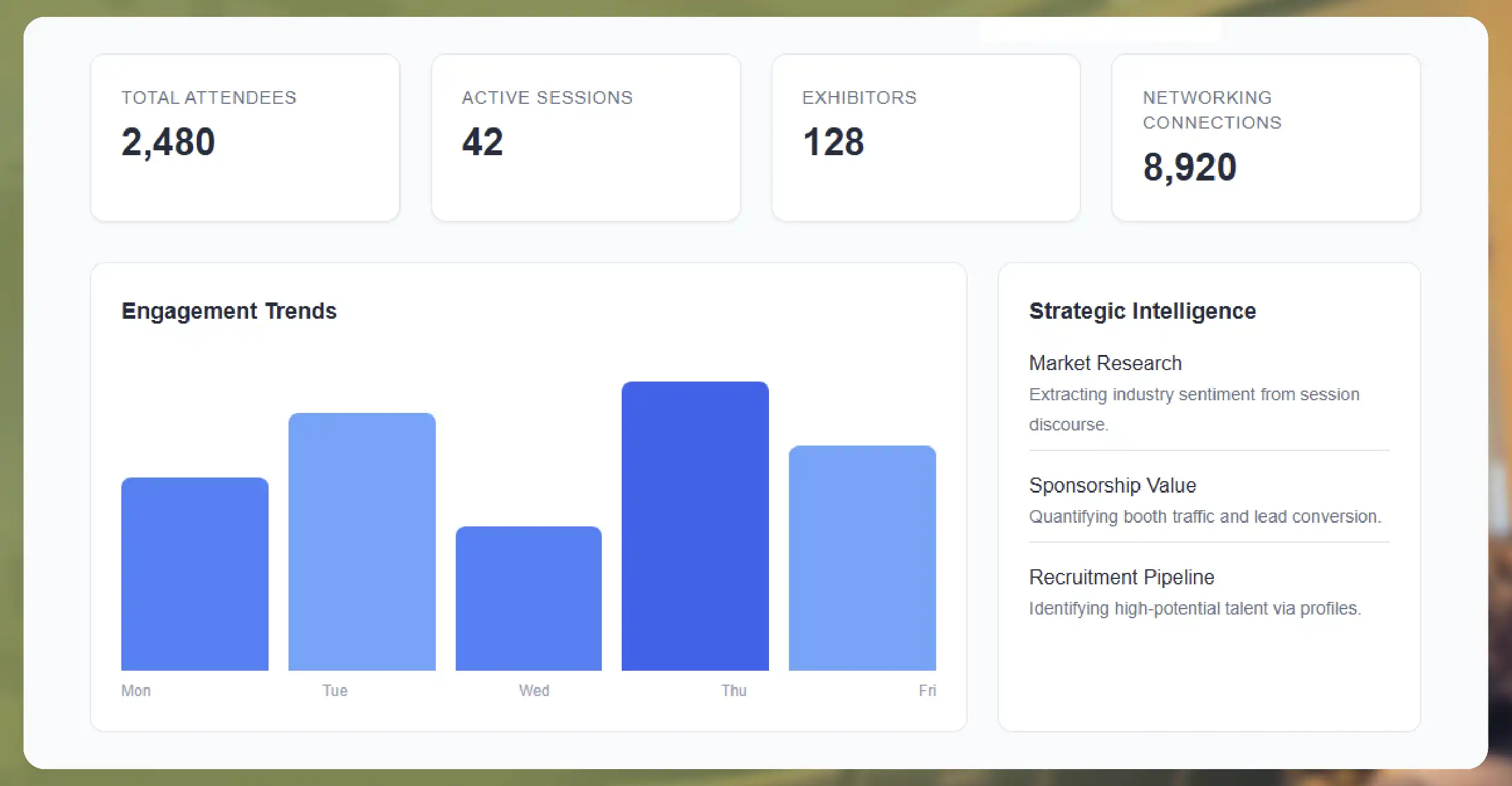
Whova is widely adopted because it centralizes event management, attendee networking, agenda planning, exhibitor engagement, and communication workflows into a single platform.
The platform captures a broad range of event-related information, including:
These datasets provide a comprehensive view of conference ecosystems and participant behavior.
For businesses involved in market research, recruitment, professional networking, sponsorship evaluation, or event planning, Whova-generated information offers a rich source of intelligence that can support strategic decision-making across multiple industries.
Organizations utilize conference attendance intelligence for numerous operational and strategic purposes.
Recruitment teams often analyze conference participation trends to identify talent-rich events and understand professional community engagement levels. Marketing departments examine attendee interests and session popularity to refine messaging strategies and identify high-value audience segments.
Technology companies monitor conference attendance to gauge industry interest in emerging technologies, while investors may use event participation metrics to assess market momentum in specific sectors.
Many organizations also use historical attendance data to benchmark event performance and compare participation levels across competing conferences.
The ability to analyze attendee engagement patterns helps organizations identify which events generate the greatest return on investment and which audiences are most likely to convert into customers or partners.
Organizations increasingly seek to Extract Whova Event Management Data because it provides a structured view of conference operations and participant engagement.
Event management intelligence can reveal:
These insights contribute to improved event planning, stronger attendee experiences, and more effective sponsorship strategies.
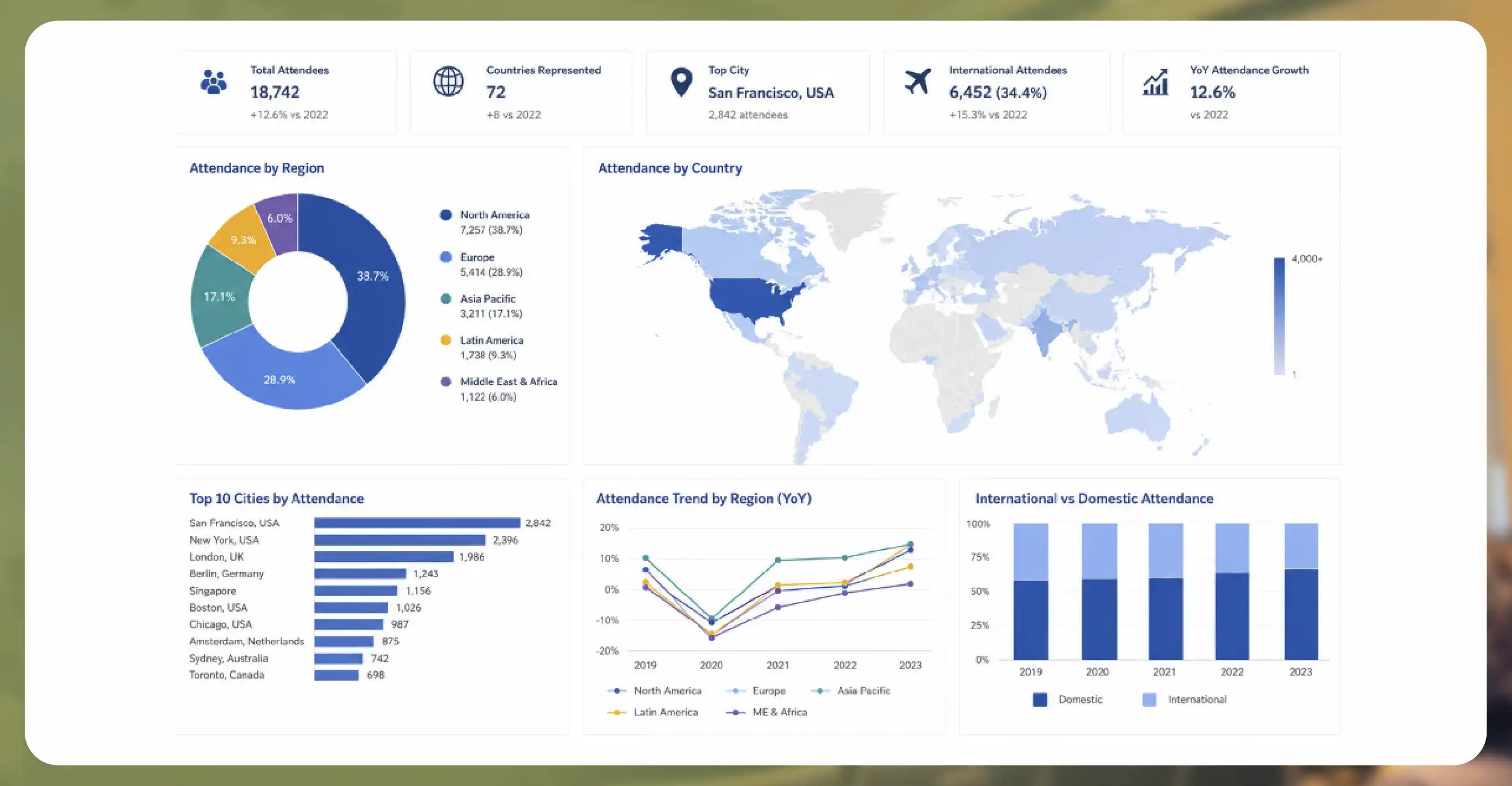
Location plays a major role in conference participation. Businesses frequently analyze location-based attendance insights From Whova to understand regional demand patterns and market opportunities.
Geographic attendance intelligence helps organizations answer critical questions such as:
By examining attendee locations across multiple conferences, organizations can identify underserved markets, optimize event locations, and allocate resources more effectively.
Regional participation trends can also reveal broader economic and industry developments that influence professional engagement and conference attendance behavior.
One of the most powerful applications of event intelligence is forecasting future participation trends.
Organizations increasingly utilize Whova conference attendance prediction using data to estimate attendance levels, optimize resource allocation, and improve event planning accuracy.
Predictive models can incorporate various factors, including:
By combining these variables, organizations can create more accurate attendance forecasts and reduce uncertainty associated with event planning.
Predictive analytics also helps sponsors evaluate potential investment opportunities and estimate audience reach before committing marketing budgets.
Get started today with our advanced data scraping solutions and turn Whova conference insights into smarter, faster business decisions.
Modern analytics initiatives often rely on a centralized Whova Event dataset that aggregates information from multiple conferences and event categories.
Comprehensive datasets may include:
When combined with external business intelligence sources, these datasets provide powerful analytical capabilities that support market research, competitive analysis, and strategic planning initiatives.
Organizations can uncover long-term attendance trends, evaluate conference ecosystems, and identify influential communities within specific industries.
As demand for event intelligence grows, many businesses explore automated methods to Scrape Whova event data API workflows for efficient and scalable data acquisition.
API-driven collection approaches offer several advantages:
Automated data pipelines reduce manual effort while ensuring organizations maintain access to current event information for ongoing analysis and decision-making.
For large-scale research projects involving multiple conferences, API-based collection methods provide significant operational efficiencies.
Conference attendance intelligence delivers value across numerous sectors.
These diverse applications demonstrate the growing strategic importance of event data intelligence in modern business environments.
While conference analytics provides substantial value, organizations must also consider data quality, platform changes, compliance requirements, and ethical data practices.
Successful event intelligence initiatives typically focus on:
Organizations that prioritize data governance are better positioned to generate reliable insights and maximize the value of event intelligence investments.
1. Accurate Conference Attendance Tracking
Our data scraping services help you capture precise conference attendance data from Whova, enabling you to monitor participant numbers, engagement levels, and event popularity trends for reliable business intelligence insights.
2. Real-Time Event Intelligence Access
We deliver real-time data extraction from Whova events, helping you stay updated with ongoing conferences, attendee behavior, and session participation trends to support faster and smarter decision-making processes.
3. Location-Based Market Insights
Our solutions provide detailed geographic insights by analyzing attendee locations from Whova events, helping you identify high-demand regions, target markets, and expansion opportunities for better strategic planning.
4. Competitive Conference Analysis
We help you compare multiple conferences by extracting structured Whova data, enabling you to evaluate competitor events, speaker impact, and audience engagement for stronger positioning and marketing strategies.
5. Scalable Data Integration Solutions
Our scraping services offer scalable integration of Whova event datasets into your analytics systems, ensuring seamless reporting, automation, and long-term business intelligence development for improved operational efficiency and insights.
Conference platforms continue generating valuable information that can transform how organizations understand markets, audiences, and industry trends. By leveraging Web Scraping API Services, attendance analytics, engagement metrics, and event participation data, businesses can improve strategic planning, enhance sponsorship decisions, optimize event experiences, and uncover emerging opportunities.
As organizations increasingly embrace advanced analytics, event intelligence will become an even more important component of business decision-making. Combined with modern Digital Shelf Analytics Solutions, conference attendance intelligence can provide the actionable insights needed to stay competitive in rapidly evolving markets.
Businesses that effectively harness enterprise-grade Web Scraping Services and Whova event data will be better equipped to identify trends, forecast demand, understand audience behavior, and make data-driven decisions that drive long-term growth and success.
Experience top-notch web scraping service and mobile app scraping solutions with iWeb Data Scraping. Our skilled team excels in extracting various data sets, including retail store locations and beyond. Connect with us today to learn how our customized services can address your unique project needs, delivering the highest efficiency and dependability for all your data requirements.
Whova event data includes attendee registrations, session participation, speaker engagement, networking activity, and exhibitor interactions. It is useful because it helps organizations understand conference performance, audience behavior, and industry demand trends for better decision-making.
It helps businesses analyze attendee patterns, measure event popularity, identify high-value locations, and evaluate industry interest. This information supports marketing strategies, sponsorship planning, recruitment insights, and event optimization.
Organizations can extract insights such as attendee demographics, session popularity, geographic participation trends, networking behavior, and engagement levels. These insights help in understanding market demand and improving future event planning.
Yes, historical Whova data can be used with analytics models to forecast future attendance trends. Factors like past participation, industry growth, speaker popularity, and event location help improve prediction accuracy.
Challenges include data consistency, platform changes, compliance requirements, and ensuring accurate extraction. Proper data governance and reliable analytics systems are essential to generate meaningful and trustworthy insights.