
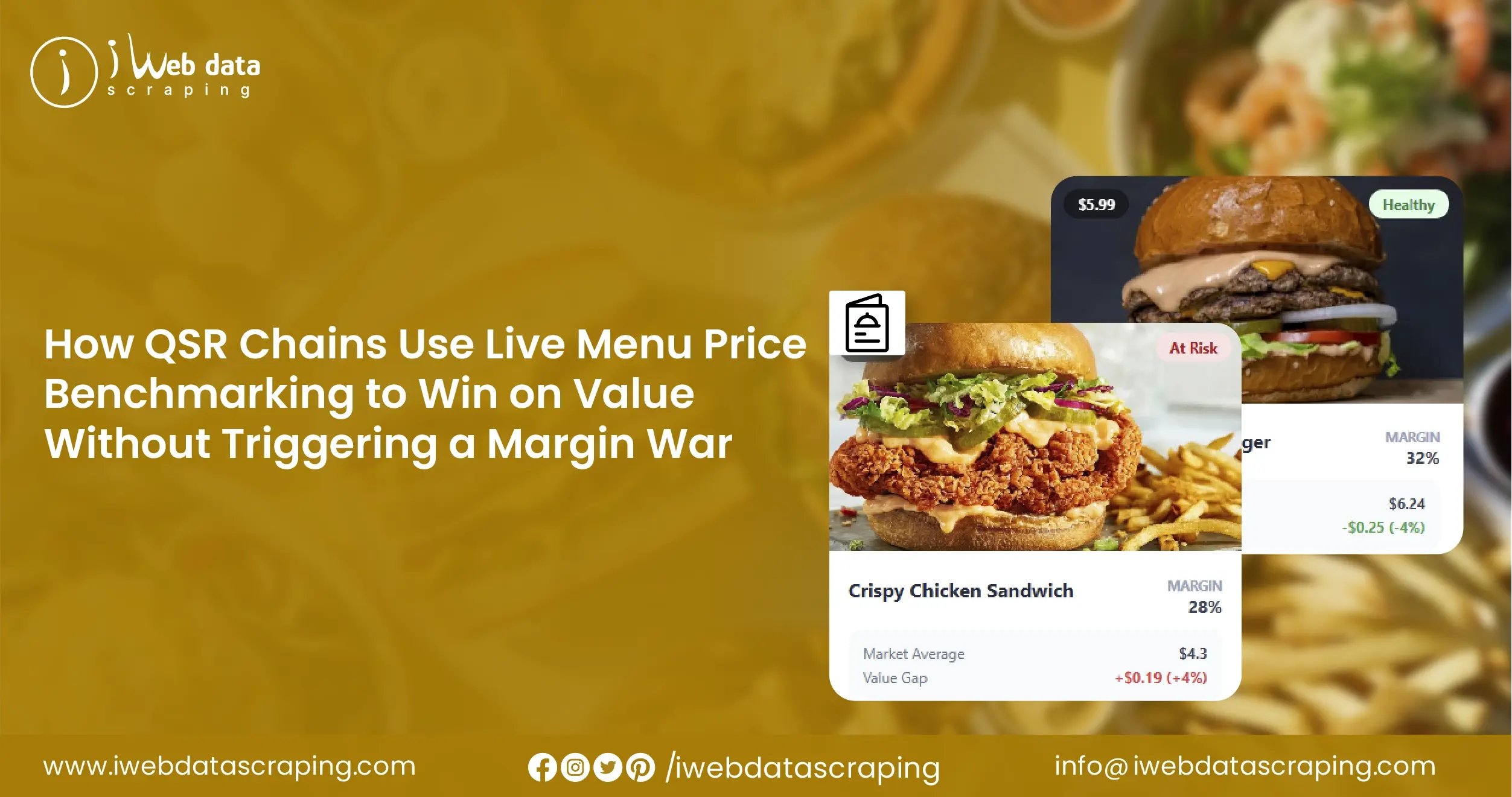
Quick-service restaurant brands operate in one of the most competitive pricing environments in the food industry. Consumers compare meal prices across apps, delivery platforms, loyalty programs, and nearby competitors within seconds. A slight increase in combo pricing or delivery fees can redirect customer demand instantly. To survive in this dynamic environment, many brands now depend on QSR Chains Use Live Menu Price Benchmarking strategies to maintain competitiveness while protecting profitability.
Modern restaurant operators increasingly rely on Live menu price benchmarking for QSR chains to monitor changing prices across regions, platforms, and competitors in real time. Through advanced analytics and Web scraping QSR menu pricing data, brands gain visibility into how rivals price meals, bundle offers, delivery markups, and limited-time promotions. Instead of reacting blindly to market shifts, chains can make calculated pricing decisions backed by continuously updated intelligence.
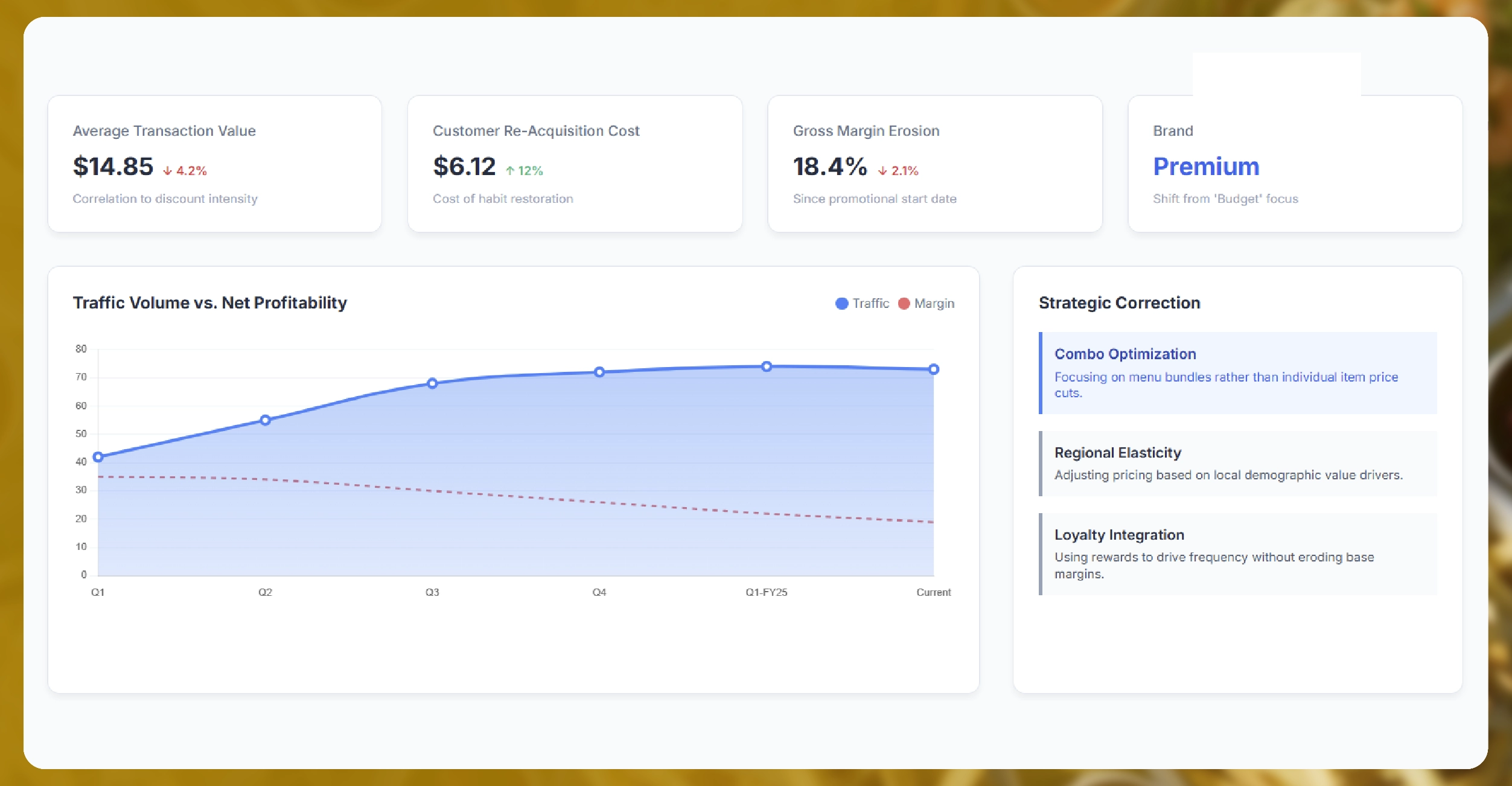
Many restaurant brands assume lowering prices is the fastest way to gain market share. While temporary discounts may increase traffic, constant undercutting often damages long-term profitability. Once customers become conditioned to low prices, restoring margins becomes extremely difficult.
A margin war also affects supplier negotiations, labor planning, and operational efficiency. If one national chain aggressively discounts burgers or combo meals, competitors may feel pressured to respond immediately. Over time, this creates industry-wide profitability erosion rather than sustainable growth.
Live price benchmarking changes this dynamic. Instead of competing solely on the cheapest price, QSR chains can identify where customers perceive value differently. Some markets respond better to combo optimization, while others prioritize portion size, convenience, loyalty rewards, or free delivery.
By analyzing competitor pricing patterns continuously, brands can strategically adjust specific items rather than cutting prices across entire menus.
Traditional restaurant pricing relied heavily on quarterly reviews, manual competitor checks, and regional market assumptions. That approach no longer works in an ecosystem where food delivery platforms update prices hourly.
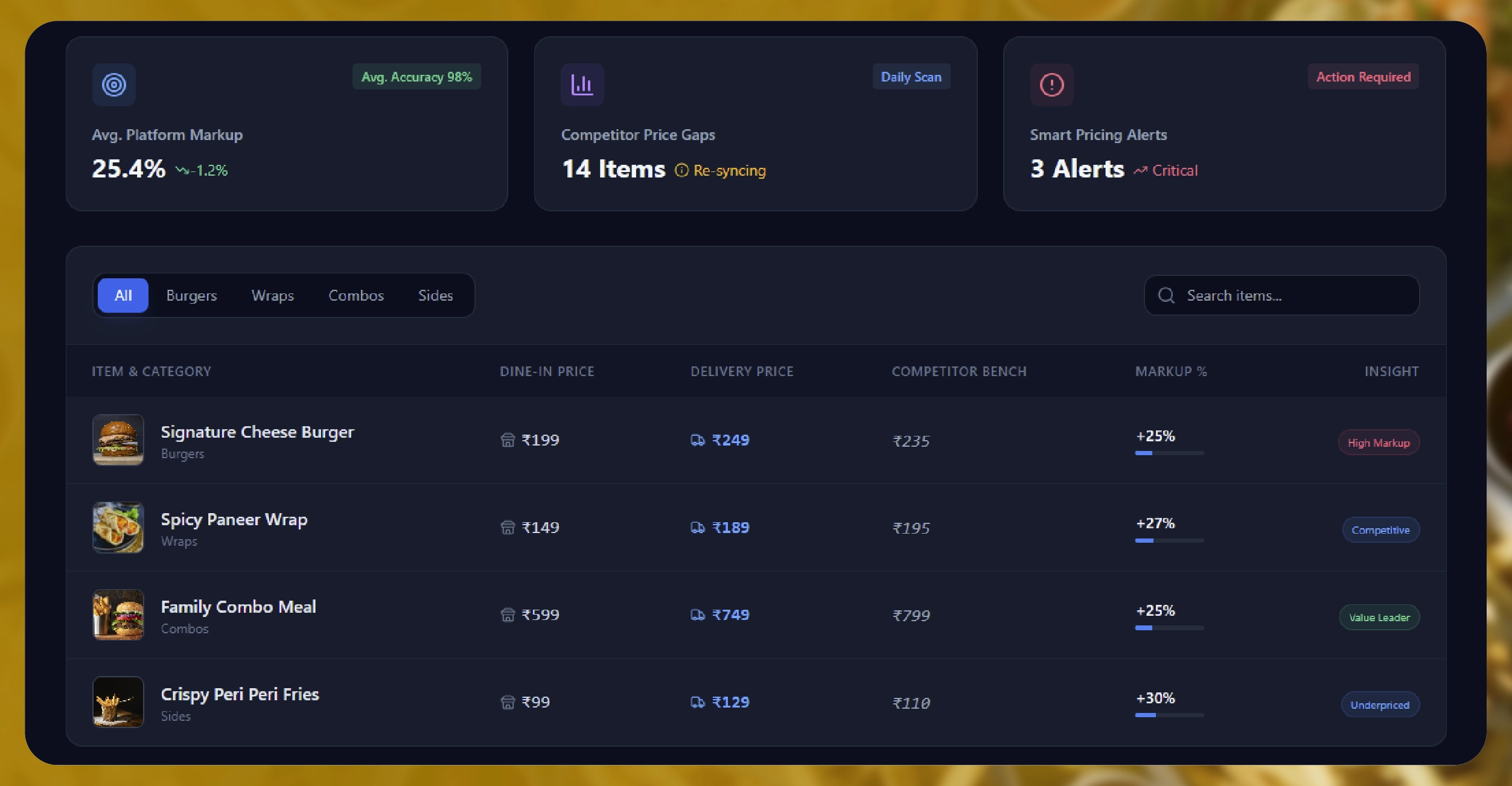
Delivery marketplaces introduce additional complexity because menu prices often vary between dine-in, pickup, and delivery channels. A burger priced at ₹199 in-store may appear at ₹249 on a delivery app after commissions and platform adjustments. Competitors continuously test these pricing differences.
This is where real-time monitoring becomes essential. Restaurant operators now collect data from food delivery apps, restaurant websites, and aggregator platforms to evaluate:
With continuous benchmarking, QSR brands can identify whether competitors are genuinely lowering prices or simply restructuring value perception through bundles and add-ons.
Customers rarely evaluate menu prices in isolation. They assess perceived value using multiple signals, including quantity, convenience, speed, delivery experience, and promotional offers.
For example, two competing chicken sandwich meals may differ by only ₹20. However, if one includes free fries or a discounted beverage, consumers may view it as significantly better value even if the total profit margin remains healthy.
Live benchmarking enables brands to understand these psychological pricing patterns more effectively. Instead of reacting emotionally to competitor discounts, operators can redesign menu architecture to maximize perceived affordability.
A chain may discover that consumers are highly sensitive to beverage pricing but less concerned about side item markups. Another brand may learn that family meal bundles drive higher retention than standalone discounts.
Such insights help restaurants compete intelligently rather than aggressively.
Pricing consistency across all markets is increasingly difficult for national and international QSR brands. Urban delivery-heavy markets behave differently from suburban dine-in-focused regions.
Real-time benchmarking helps chains localize pricing without losing brand positioning. Restaurants can study regional pricing elasticity and identify where premium pricing remains acceptable.
For example:
Localized intelligence allows operators to maintain competitive positioning without reducing margins everywhere simultaneously.
Modern restaurant intelligence systems gather large volumes of menu and pricing information from multiple digital sources. Brands increasingly use automated tools to Scrape live QSR menu pricing data for competitive benchmarking across delivery apps and restaurant websites.
These systems capture:
| Data Category | Benchmarking Purpose |
|---|---|
| Base menu prices | Competitor comparison |
| Combo meal pricing | Value analysis |
| Delivery charges | Platform competitiveness |
| Promotional offers | Campaign tracking |
| Availability windows | Demand forecasting |
| Add-on pricing | Upselling strategies |
| Regional variations | Local market positioning |
| Loyalty discounts | Retention optimization |
This continuous data pipeline allows restaurant chains to detect pricing shifts before they impact customer behavior significantly.
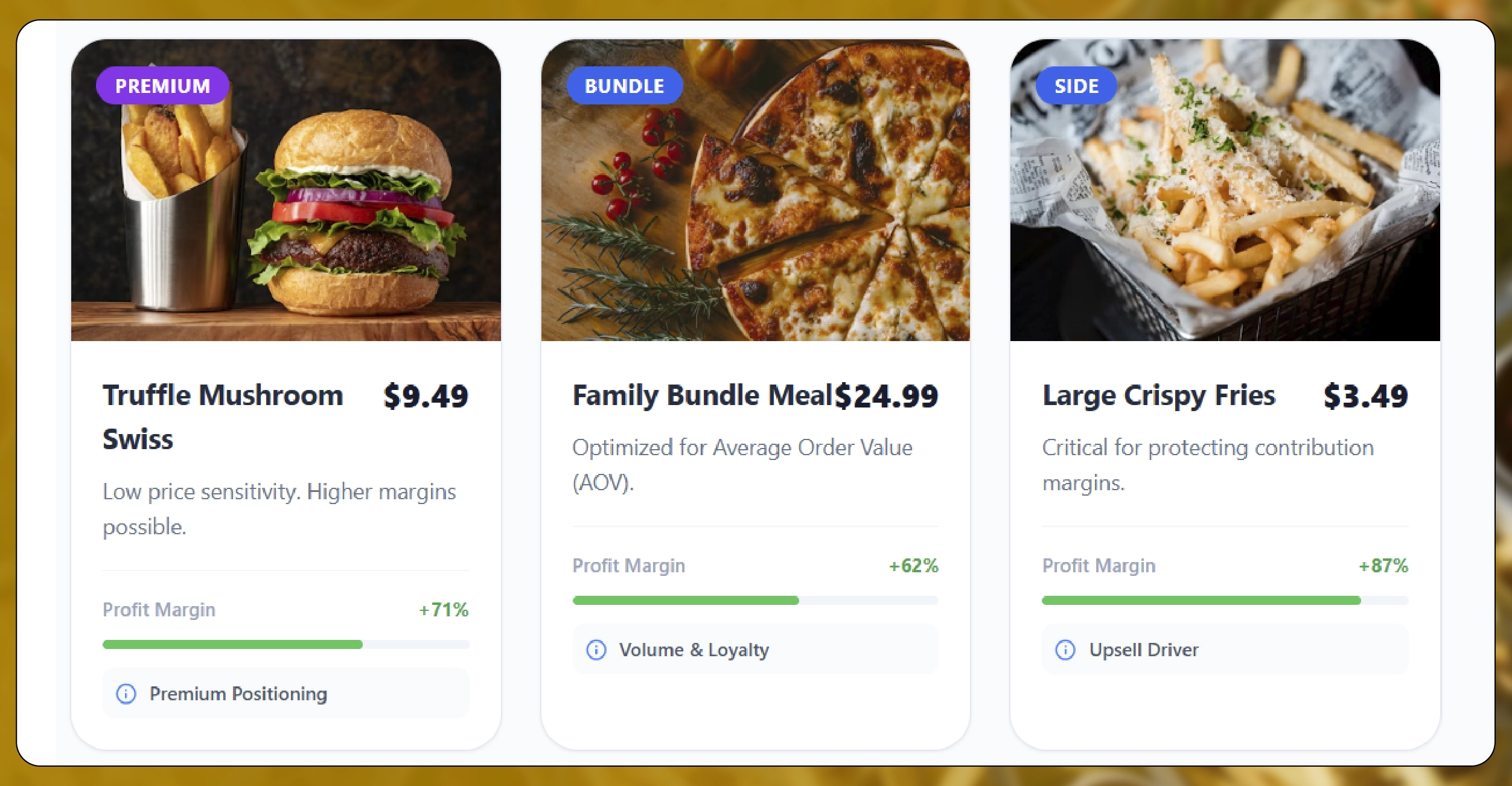
One of the biggest misconceptions in the QSR industry is that value always requires lower prices. In reality, successful brands optimize value perception while protecting contribution margins.
For instance, increasing portion size slightly may create stronger customer satisfaction than offering deep discounts. Similarly, restructuring combo pricing may improve average order value without reducing profitability.
Using Menu price intelligence for QSR brands, operators can identify pricing thresholds where customer demand changes sharply. These thresholds help determine:
This precision reduces unnecessary discounting and helps brands avoid destructive price competition.
Food delivery marketplaces have dramatically changed restaurant pricing transparency. Consumers can now compare multiple brands instantly, making competitive monitoring essential.
However, delivery platforms also create hidden challenges:
Through QSR Competitive menu Pricing Data Extraction, brands can track how competitors structure pricing differently across delivery channels.
Some restaurants intentionally keep lower item prices while increasing delivery charges. Others use premium combo packaging to justify higher prices. Certain brands rely heavily on platform-sponsored promotions to gain temporary visibility.
Benchmarking helps restaurants distinguish between sustainable strategies and temporary traffic-generation tactics.
Transform your restaurant pricing strategy with real-time competitive intelligence powered by our advanced data scraping solutions.
Leading QSR operators rarely adjust entire menus simultaneously. Instead, they use selective optimization based on real-time demand and competitive data.
This strategy protects profitability while maintaining value leadership.
Common selective pricing approaches include:
Hero Item Stabilization
Brands keep signature products competitively priced to maintain customer trust while adjusting secondary items gradually.
Bundle Optimization
Restaurants redesign meal combinations to improve perceived savings without dramatically lowering margins.
Time-Based Pricing
Chains experiment with breakfast, late-night, or off-peak pricing strategies to maximize operational efficiency.
These targeted methods allow restaurants to remain competitive without initiating broad industry-wide price reductions.
The next evolution of menu benchmarking involves predictive intelligence. Instead of simply monitoring current competitor prices, brands increasingly forecast future pricing behavior.
By analyzing historical trends, seasonal demand, event-driven spikes, and competitor campaign timing, QSR chains can prepare pricing strategies proactively.
For example, a burger chain may predict that rival brands typically launch discount campaigns during sports tournaments or holiday weekends. Instead of matching discounts directly, the chain could emphasize premium bundles or loyalty rewards.
This proactive strategy reduces reactive pricing decisions and strengthens long-term profitability.
Menu benchmarking supports more than competitive pricing strategy. The collected intelligence also improves operational planning.
Restaurant brands use pricing datasets to support:
| Operational Area | Strategic Impact |
|---|---|
| Supply chain forecasting | Better inventory management |
| Promotion planning | Campaign optimization |
| Product innovation | Gap identification |
| Regional expansion | Market positioning |
| Loyalty program design | Customer retention |
| Delivery strategy | Platform optimization |
| Franchise guidance | Pricing consistency |
| Revenue forecasting | Margin protection |
The integration of pricing intelligence into broader operational systems creates a more adaptive and data-driven restaurant business model.
As AI-driven analytics continue evolving, menu benchmarking will become increasingly predictive and automated. Future systems may adjust prices dynamically based on demand fluctuations, weather conditions, inventory availability, and local competitor activity.
Brands will also likely combine customer sentiment analysis with pricing intelligence to understand how consumers emotionally respond to pricing changes.
Personalized pricing through loyalty ecosystems may further reshape QSR competition. Instead of universal discounts, chains could deliver individualized value offers based on customer ordering behavior.
In this environment, access to high-quality competitive data becomes a strategic necessity rather than an optional advantage.
Real-Time Competitor Tracking
Our Food Delivery Data Scraping Services monitor live restaurant pricing, promotions, and menu updates, helping businesses respond faster to market fluctuations.
Regional Market Intelligence
We collect location-specific pricing insights across delivery platforms, enabling smarter regional strategies, optimized offers, and improved competitive positioning nationwide.
Automated Data Collection
Our automated scraping solutions eliminate manual research efforts, delivering structured, accurate, and continuously updated datasets for faster decision-making processes.
Better Pricing Optimization
We help businesses analyze competitor pricing patterns, bundle structures, and discount trends to maximize profitability without unnecessary margin reductions consistently.
Scalable Data Solutions
Our scalable scraping infrastructure supports multi-platform monitoring, large restaurant networks, and enterprise-level analytics for long-term business intelligence growth.
The modern QSR industry is no longer driven by simple discount battles. Sustainable growth depends on understanding customer value perception, regional pricing behavior, and competitor positioning in real time. Restaurant operators increasingly rely on advanced benchmarking systems to optimize pricing intelligently without sacrificing profitability.
Through continuous market monitoring, brands can respond strategically instead of emotionally to competitor actions. Access to accurate Food Delivery App Menu Datasets helps operators evaluate market conditions with far greater precision than traditional manual analysis methods.
Advanced Web Scraping API Services now enable scalable monitoring of pricing, promotions, and delivery platform activity across thousands of restaurant locations simultaneously. Combined with enterprise-grade Web Scraping Services, these technologies help QSR brands maintain competitive positioning while protecting long-term margins in an increasingly transparent marketplace.
Experience top-notch web scraping service and mobile app scraping solutions with iWeb Data Scraping. Our skilled team excels in extracting various data sets, including retail store locations and beyond. Connect with us today to learn how our customized services can address your unique project needs, delivering the highest efficiency and dependability for all your data requirements.
Live benchmarking helps restaurant brands monitor competitor pricing, promotions, and delivery strategies in real time. This allows operators to make informed pricing decisions while maintaining profitability and customer competitiveness.
Successful chains focus on selective pricing optimization, bundle restructuring, and value perception rather than reducing prices across entire menus. This protects margins while maintaining customer appeal.
Brands typically analyze item prices, combo offers, delivery fees, promotional campaigns, regional variations, add-on pricing, and platform-specific discounts across multiple food delivery ecosystems.
Regional benchmarking reveals local pricing sensitivity, consumer preferences, and competitive intensity. This allows brands to customize pricing and promotions according to specific market conditions.
Automation enables continuous monitoring of restaurant pricing across thousands of locations and platforms. It improves speed, accuracy, scalability, and strategic responsiveness for restaurant operators.