
In today’s hyper-competitive digital marketplace, pricing is no longer a static decision—it is a dynamic, data-driven strategy. Businesses that rely solely on historical sales data risk missing real-time market signals that directly influence demand. This is where Price Elasticity Modeling Using Scraped Competitor Data becomes a game-changing approach. By integrating competitor pricing intelligence with internal demand data, organizations can uncover how sensitive their customers are to price changes and adjust strategies accordingly.
Alongside this, Price Elasticity Analysis Using Scraped Market Data enables businesses to capture broader market trends, seasonal fluctuations, and competitor responses. Combined with Dynamic Pricing Optimization Using Elasticity Models, companies can move beyond reactive pricing and implement predictive, automated decision-making frameworks that maximize both revenue and market share.
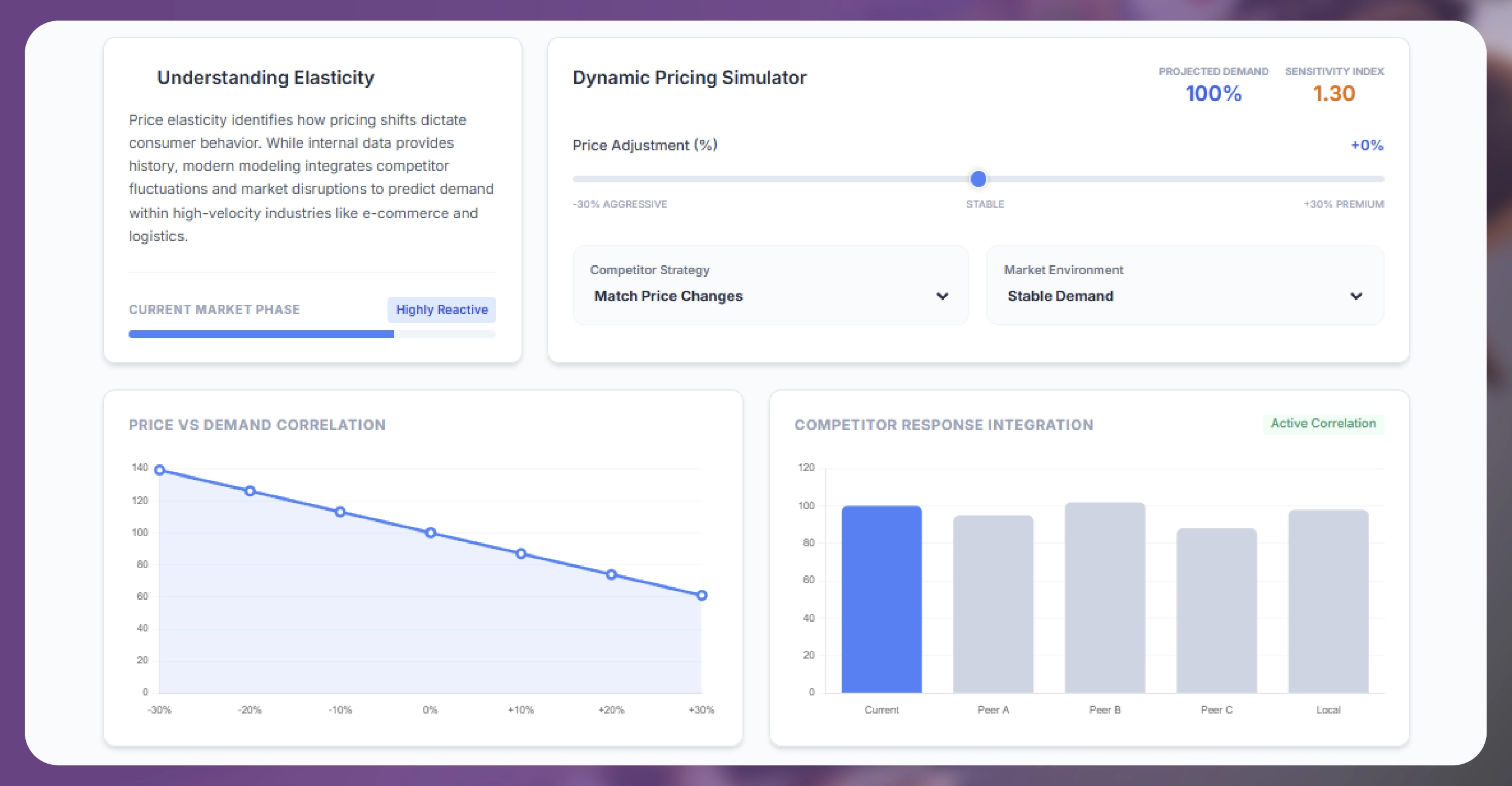
Price elasticity of demand measures how a change in price impacts customer demand. If a small price increase leads to a large drop in demand, the product is considered elastic. Conversely, if demand remains stable despite price changes, it is inelastic.
Traditionally, elasticity modeling relied on internal sales and historical pricing data. However, this approach is limited because it ignores external factors such as competitor pricing, promotional campaigns, and market disruptions. In industries like travel, e-commerce, and food delivery, competitor actions can significantly influence demand within hours.
By integrating external data streams, particularly competitor pricing data, businesses gain a holistic understanding of demand behavior. This allows for more accurate elasticity modeling and better pricing decisions.
Competitor pricing is one of the most critical external variables affecting demand. When a competitor lowers prices, it can shift demand away almost instantly. Conversely, if competitors raise prices, there may be an opportunity to increase margins without losing customers.
This is where competitor price data scraping for elasticity analysis plays a crucial role. By continuously collecting pricing data from competitor websites, marketplaces, and aggregators, businesses can:
With this data, companies can incorporate external price signals into their elasticity models, making them far more robust and predictive.
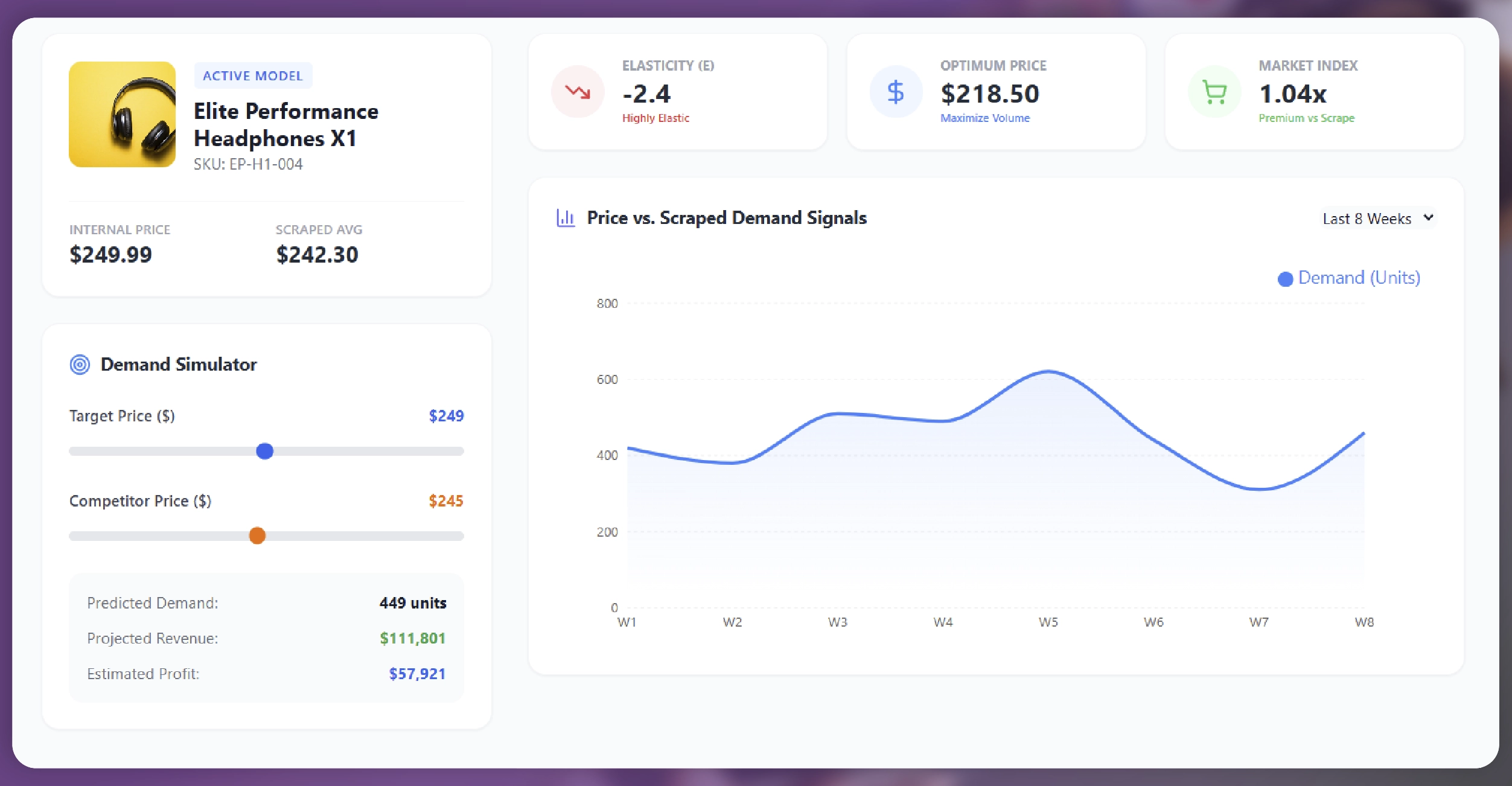
Creating a price elasticity model using scraped competitor data involves several key steps:
1. Data Collection
The foundation of any elasticity model is
high-quality data. Businesses must gather:
To achieve this, companies often rely on method to Scrape pricing data for elasticity modeling using automated pipelines that collect data at regular intervals.
2. Demand Signal Extraction
Once the data is collected, the next
step is to identify how demand changes relative to price movements. This includes analyzing:
Businesses also Scrape demand changes based on price variations by correlating scraped competitor prices with their own sales performance.
3. Data Cleaning and Normalization
Raw scraped data is often
unstructured and noisy. It must be cleaned and standardized before analysis:
This ensures that the elasticity model is based on consistent and reliable data.
4. Model Development
Statistical and machine learning techniques
are used to estimate elasticity:
These models quantify the relationship between price and demand, incorporating both internal and competitor pricing data.
5. Model Validation and Testing
Before deploying the model, it
must be validated:
This step ensures that the model delivers accurate and actionable insights.
Elasticity modeling powered by scraped competitor data has wide-ranging applications across industries:
E-commerce
Online retailers can dynamically adjust prices based
on competitor activity and demand elasticity. For example, if a product is highly elastic, even
a small price reduction can significantly boost sales.
Travel and Hospitality
Airlines and hotels use elasticity models
to adjust pricing in real time based on competitor rates, booking patterns, and demand
fluctuations.
Food Delivery Platforms
Restaurants and aggregators can optimize
menu pricing by analyzing competitor pricing and customer sensitivity to price changes.
Retail Chains
Brick-and-mortar retailers can align in-store
pricing with online competitors to maintain competitiveness and maximize revenue.
Integrating scraped competitor data into elasticity models offers several advantages:
Real-Time Insights
Traditional models rely on historical data,
which may not reflect current market conditions. Scraped data provides real-time visibility into
competitor pricing.
Improved Accuracy
Including external variables improves the
predictive accuracy of elasticity models.
Competitive Advantage
Businesses can respond quickly to
competitor price changes, gaining a strategic edge.
Revenue Optimization
By understanding elasticity, companies can
identify the optimal price point that maximizes revenue without sacrificing demand.
While the benefits are significant, there are challenges to consider:
Data Quality Issues
Scraped data can be inconsistent or
incomplete. Robust data validation processes are essential.
Legal and Ethical Considerations
Businesses must ensure
compliance with website terms of service and data privacy regulations when scraping data.
Infrastructure Requirements
Building and maintaining data
pipelines requires technical expertise and resources.
Model Complexity
Elasticity models can become complex when
incorporating multiple variables, requiring skilled data scientists for implementation.
Turn real-time data into smarter pricing decisions—partner with us to unlock actionable insights and outperform your competition today.
To streamline the process, many organizations use Web Scraping API Services that automate data collection at scale. These APIs can:
Automation ensures that elasticity models are continuously updated with fresh data, enabling dynamic pricing strategies.
The future of price elasticity modeling lies in advanced analytics and AI-driven decision-making. Emerging trends include:
As markets become more competitive and data-driven, businesses that leverage scraped competitor data will have a significant advantage.
1. Market Visibility
Gain complete visibility into competitor pricing, promotions, and availability across platforms, helping you stay informed, react faster to shifts, and align your pricing strategies with evolving market dynamics.
2. Pricing Precision
Our scraping solutions enable precise pricing decisions by delivering accurate, up-to-date datasets that reduce guesswork and support data-backed adjustments to maximize profitability and customer retention.
3. Trend Identification
We uncover hidden pricing and demand trends by continuously collecting and analyzing large-scale data, allowing you to anticipate market movements and proactively adjust strategies ahead of competitors.
4. Automation Efficiency
Eliminate manual data collection with automated scraping pipelines that run continuously, saving time, reducing errors, and ensuring your business always operates with fresh and reliable market intelligence.
5. Strategic Advantage
Transform raw competitor data into a strategic asset, enabling smarter decision-making, optimized pricing models, and sustained competitive advantage in fast-changing and highly competitive digital marketplaces.
Price elasticity modeling has evolved from a theoretical concept into a practical tool for real-time pricing optimization. By integrating competitor pricing data through advanced scraping techniques, businesses can gain a deeper understanding of demand behavior and make smarter pricing decisions.
The use of Web Scraping Services enables organizations to collect and process large volumes of competitor data efficiently. Combined with Price Monitoring Services, businesses can track market changes in real time and respond proactively.
Finally, leveraging Price Tracking Services ensures continuous visibility into pricing dynamics, allowing companies to refine their elasticity models and maintain a competitive edge in an ever-changing marketplace.
In a world where pricing can make or break profitability, combining elasticity modeling with scraped competitor data is no longer optional—it is essential for sustained growth and success.
Experience top-notch web scraping service and mobile app scraping solutions with iWeb Data Scraping. Our skilled team excels in extracting various data sets, including retail store locations and beyond. Connect with us today to learn how our customized services can address your unique project needs, delivering the highest efficiency and dependability for all your data requirements.
Price elasticity modeling measures how customer demand responds to changes in price. It helps businesses identify the optimal pricing point to maximize revenue while maintaining demand, making it a critical tool for competitive and data-driven pricing strategies.
Scraped competitor data provides real-time insights into market pricing trends. By incorporating competitor price movements into elasticity models, businesses can better understand external influences on demand and make more accurate pricing decisions.
An effective model requires internal sales data, historical pricing, competitor pricing (scraped data), and external factors like seasonality, promotions, and demand trends. Combining these datasets ensures a more reliable and comprehensive analysis.
The frequency depends on the industry. In fast-moving sectors like e-commerce or travel, data should be scraped multiple times a day or in real time. For slower markets, daily or weekly scraping may be sufficient.
Yes, even small businesses can leverage elasticity modeling to optimize pricing. With the availability of affordable scraping tools and analytics platforms, smaller companies can compete effectively by making smarter, data-backed pricing decisions.