
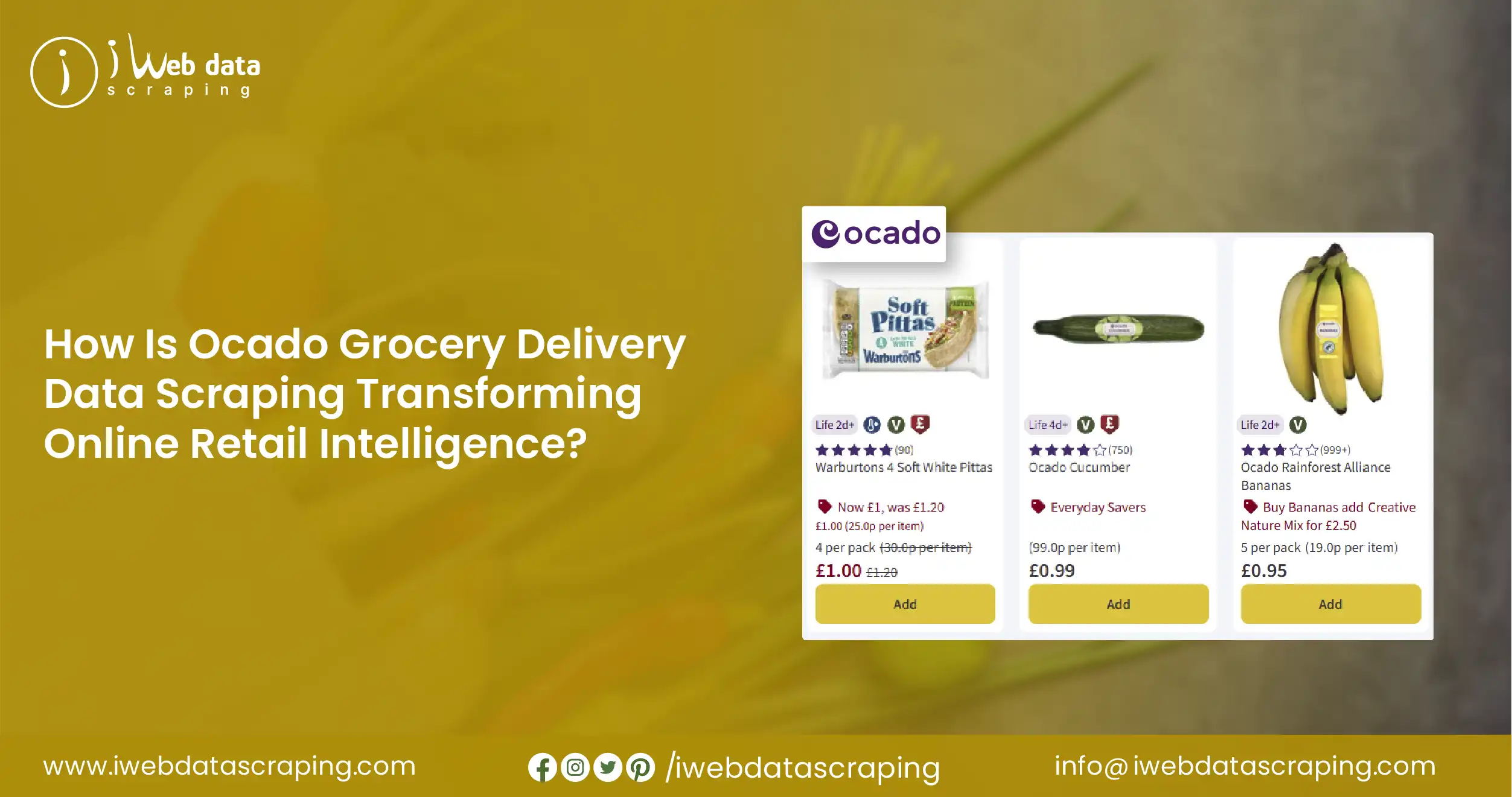
The digital grocery ecosystem has evolved rapidly, with online supermarkets transforming how consumers purchase food, beverages, household essentials, and fresh produce. Among the leading online grocery retailers in the UK, Ocado has become a major player through advanced logistics, AI-powered fulfillment, and extensive digital product catalogs. Businesses, researchers, and analytics firms increasingly rely on Ocado Grocery Delivery data scraping to monitor product pricing, inventory fluctuations, consumer demand, and delivery trends in real time.
Modern retailers and FMCG brands now use automated systems to Scrape Online Ocado Grocery Delivery App Data for building dynamic pricing strategies, demand forecasting models, and market intelligence dashboards. The growing importance of Real-Time Ocado Pricing Data Scraping enables businesses to react quickly to price changes, promotional campaigns, seasonal trends, and stock availability across thousands of grocery SKUs.
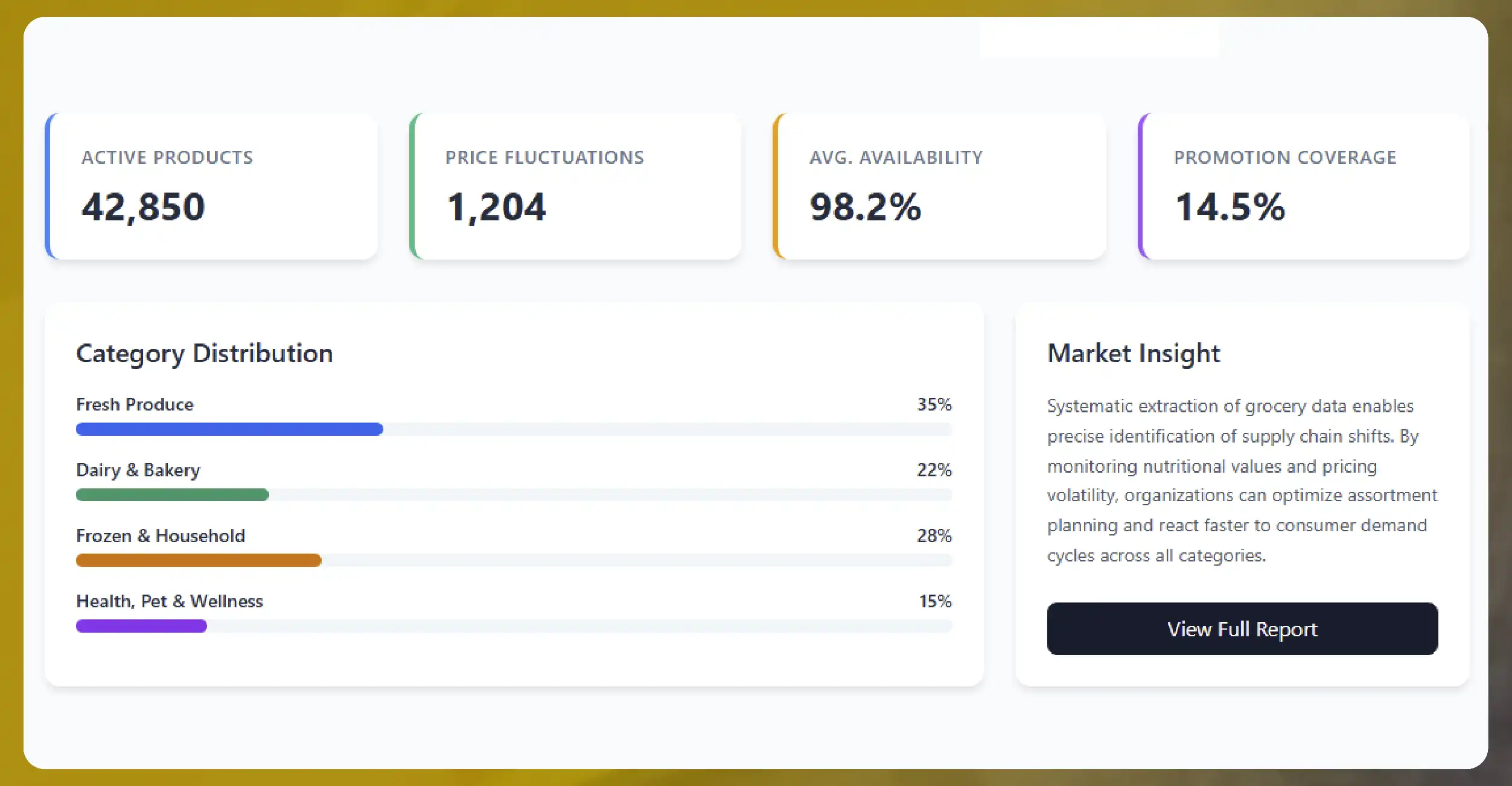
Online grocery marketplaces generate enormous volumes of structured and unstructured data daily. Product titles, nutritional details, pricing, discounts, bundle offers, availability status, ratings, and customer reviews continuously change depending on market demand and supply chain conditions.
Ocado provides extensive digital grocery listings across categories such as:
Extracting this information systematically helps companies understand how grocery trends evolve over time. Data-driven organizations analyze grocery intelligence to improve pricing accuracy, optimize assortment planning, and strengthen promotional performance.
Retailers operate in highly competitive environments where price sensitivity directly influences consumer purchasing decisions. Businesses now actively Scrape competitor grocery pricing from Ocado to identify market gaps and pricing opportunities.
By monitoring competitor grocery pricing daily or hourly, businesses can:
This level of visibility helps grocery brands make informed operational and strategic decisions.
Dynamic pricing has become one of the most important components of e-commerce grocery management. Grocery retailers frequently adjust prices based on inventory pressure, demand surges, holidays, supplier costs, and competitor movements.
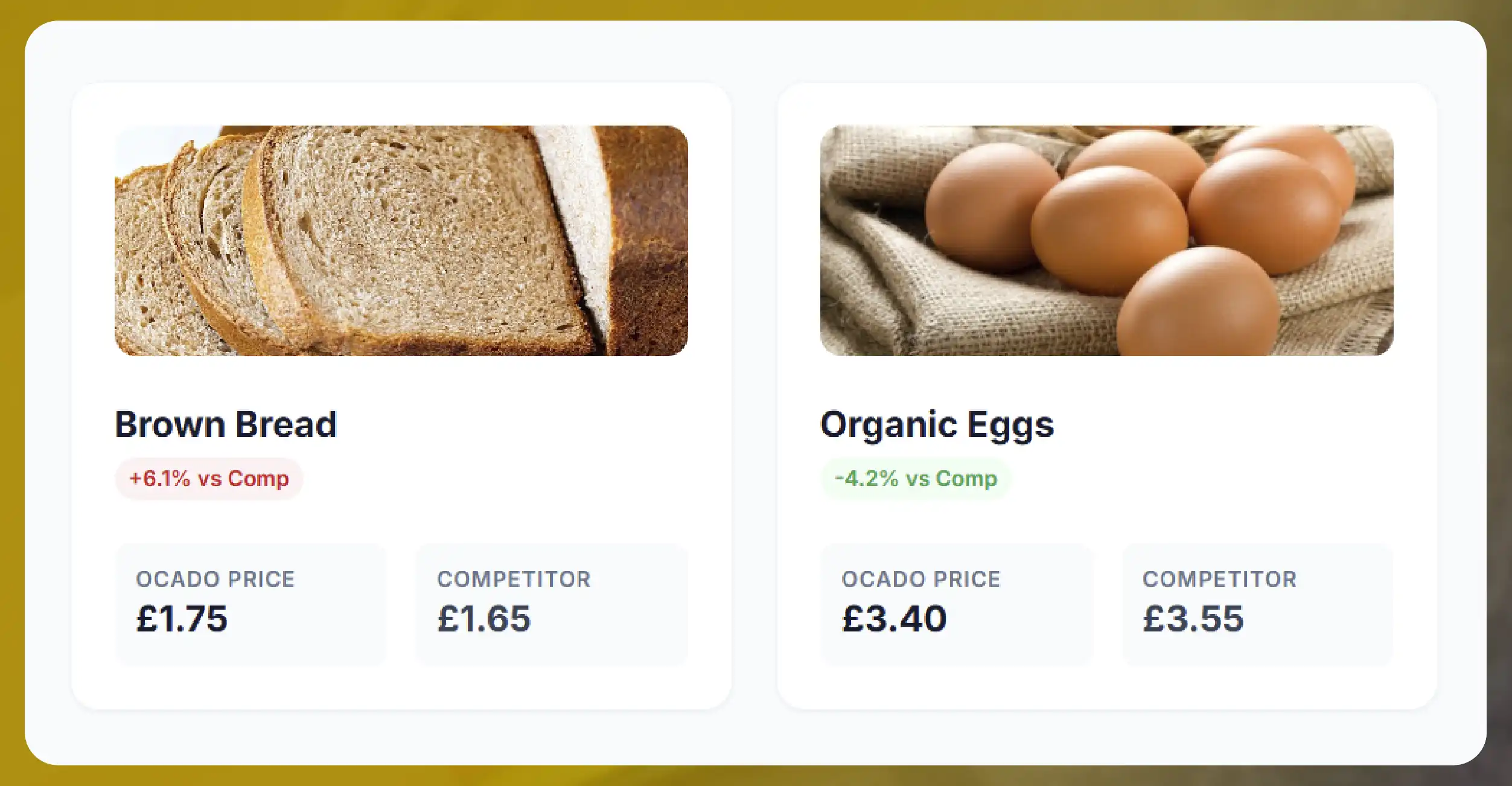
An effective Ocado supermarket price comparison framework allows businesses to evaluate product pricing across multiple grocery platforms simultaneously. Analysts compare equivalent SKUs, packaging sizes, brand variations, and promotional offers to determine pricing competitiveness.
For example, companies may compare:
| Product Category | Ocado Price | Competitor Price | Difference |
|---|---|---|---|
| Whole Milk 2L | £2.20 | £2.10 | +4.7% |
| Brown Bread | £1.75 | £1.65 | +6.1% |
| Organic Eggs | £3.40 | £3.55 | -4.2% |
| Frozen Pizza | £4.25 | £4.00 | +6.3% |
| Breakfast Cereal | £3.95 | £4.20 | -5.9% |
Such comparative datasets support pricing optimization, discount strategy planning, and competitor benchmarking initiatives.
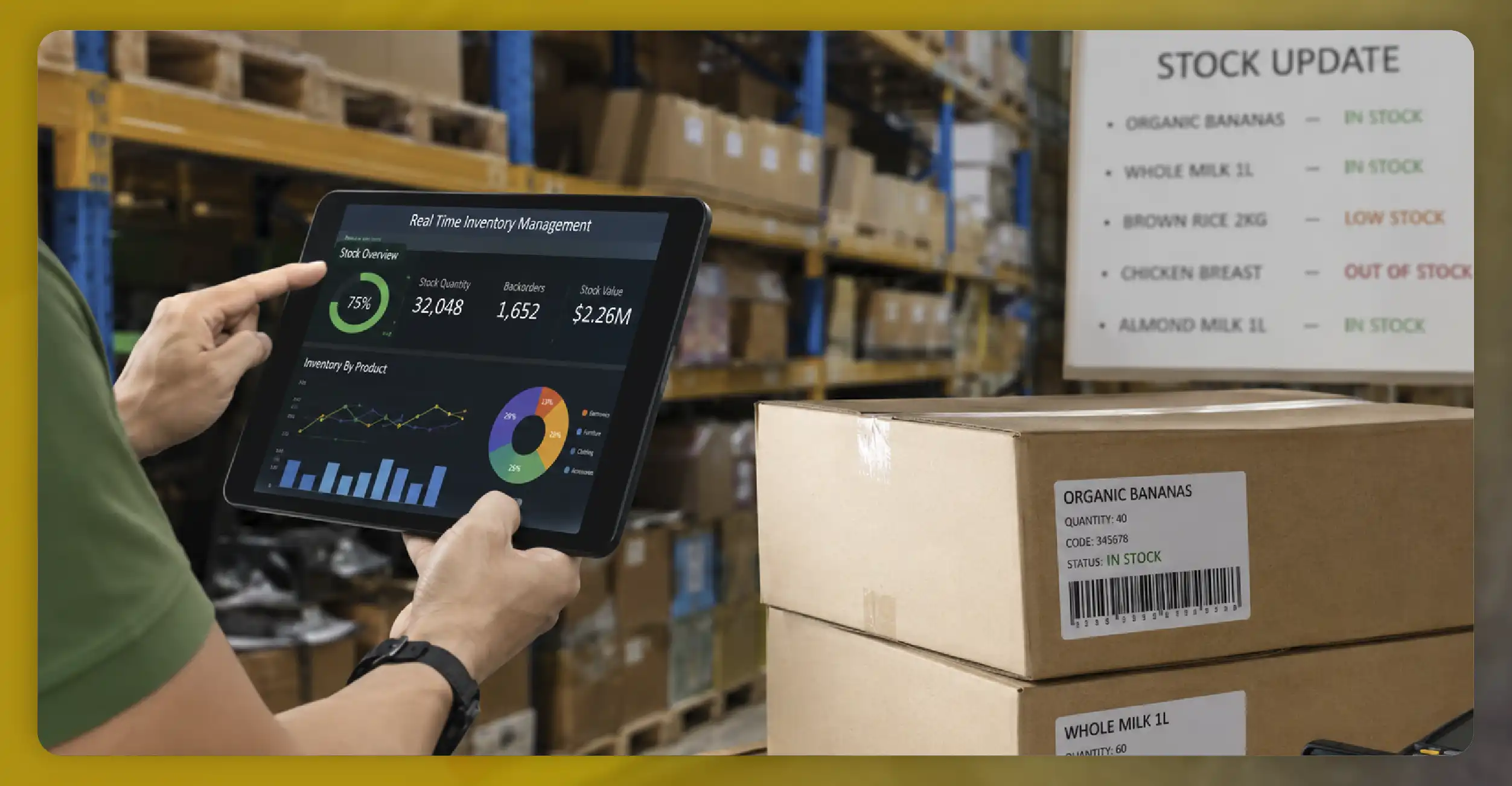
One of the most valuable applications of grocery scraping is inventory visibility. Businesses increasingly seek to Extract real-time Ocado stock availability for identifying demand spikes and supply chain disruptions.
Stock availability monitoring provides insights into:
During peak shopping seasons, inventory intelligence becomes essential for retailers attempting to maintain optimal stock levels while minimizing lost sales opportunities.
For FMCG manufacturers, stock monitoring also reveals how effectively their products are distributed and replenished across online grocery platforms.
A comprehensive grocery scraping framework usually captures multiple structured data points from product listings. These include:
| Data Attribute | Description |
|---|---|
| Product Name | Complete product title |
| Brand | Manufacturer or label |
| SKU ID | Unique product identifier |
| Price | Current listed price |
| Discount | Promotional savings |
| Pack Size | Product quantity or volume |
| Availability | In-stock or out-of-stock status |
| Product Category | Grocery segment classification |
| Ratings | Customer review scores |
| Delivery Slot Data | Availability of delivery windows |
These datasets help analysts build accurate grocery intelligence models and reporting systems.
Businesses from multiple industries leverage grocery scraping technologies for strategic decision-making.
Retail Intelligence
Retail chains analyze product assortment and
pricing behavior to improve competitiveness. Real-time grocery intelligence allows retailers to
adapt quickly to market changes and promotional activities.
Consumer Behavior Analysis
Researchers study purchasing trends,
product popularity, and seasonal shopping habits using extracted grocery data. This helps brands
understand evolving consumer preferences.
Price Elasticity Modeling
Data scientists evaluate how consumers
respond to pricing adjustments. Historical grocery pricing data assists in building elasticity
models for forecasting demand.
Market Basket Analysis
Retailers identify commonly purchased
product combinations and optimize cross-selling strategies through transaction-level grocery
datasets.
Supply Chain Optimization
Inventory and stock monitoring help
distributors improve logistics planning and reduce stockout situations.
Organizations increasingly depend on clean and scalable Ocado Grocery Datasets to power AI models, BI dashboards, and predictive analytics platforms.
Structured grocery datasets support:
These datasets are often integrated into enterprise data warehouses and cloud analytics systems for large-scale business intelligence operations.
Modern grocery scraping systems use advanced automation technologies for faster and more accurate data collection. AI-powered extraction tools can identify layout changes, classify products intelligently, and validate data quality automatically.
Machine learning algorithms also help:
Automated pipelines reduce manual intervention while improving extraction scalability across thousands of grocery listings.
Although grocery scraping delivers enormous business value, several technical challenges must be managed carefully.
Overcoming these challenges requires robust engineering infrastructure and scalable scraping architectures.
Companies now develop enterprise-grade grocery analytics systems using extracted online supermarket data. These platforms combine pricing intelligence, availability tracking, and promotional monitoring into unified dashboards.
Professional Ocado Grocery and Supermarket Data Extraction Services enable organizations to automate large-scale grocery intelligence collection without investing heavily in internal scraping infrastructure.
These services typically provide:
Such systems empower retailers to make faster and more data-driven decisions.
Organizations rarely monitor only one grocery retailer. Most enterprise analytics projects aggregate data across multiple supermarkets simultaneously.
Integrated Grocery and Supermarket Store Datasets allow businesses to compare :
Cross-platform grocery intelligence offers a broader market perspective and enhances competitive benchmarking accuracy.
Businesses implementing grocery scraping strategies must ensure compliance with applicable laws, platform terms, and responsible data usage standards.
Ethical scraping practices generally involve:
Responsible data extraction frameworks help organizations maintain sustainable and compliant analytics operations.
Transform grocery market data into actionable business intelligence with our scalable data scraping and real-time analytics solutions.
Future of Grocery Data Intelligence
The grocery industry is moving toward hyper-personalized commerce, AI-driven recommendations, and predictive supply chain management. Real-time grocery intelligence will continue becoming more critical for retailers seeking operational efficiency and customer retention.
Future grocery analytics systems are expected to incorporate:
As online grocery competition intensifies, businesses with stronger data intelligence capabilities will gain significant strategic advantages.
Real-Time Market Monitoring
Our data scraping services help businesses monitor changing product prices, stock levels, promotions, and category trends across online grocery platforms. This enables faster decisions, better pricing strategies, and improved responsiveness to market fluctuations while maintaining strong competitive positioning in dynamic retail environments.
Competitor Intelligence Support
We collect structured competitor data including pricing patterns, product assortment, discount campaigns, and inventory availability. These insights help businesses benchmark competitors accurately, identify market opportunities, optimize promotional planning, and strengthen business strategies using reliable and continuously updated market intelligence datasets.
Automated Data Collection
Our automated extraction systems eliminate manual research efforts by collecting large-scale grocery and supermarket data efficiently. Businesses receive accurate, organized, and regularly updated datasets that support reporting, forecasting, analytics, and operational planning without spending excessive time or internal technical resources manually gathering information.
Inventory and Availability Tracking
We help businesses track stock availability, replenishment trends, and product demand movements in real time. This visibility supports supply chain optimization, prevents missed sales opportunities, improves inventory forecasting accuracy, and enables companies to react quickly during seasonal demand spikes or product shortages.
Custom Analytics and Integration
Our solutions deliver customized datasets and API-ready outputs that integrate seamlessly with dashboards, BI tools, and analytics platforms. Businesses can use extracted data for pricing analysis, forecasting models, customer behavior studies, and performance tracking to improve operational efficiency and long-term strategic planning.
Online grocery data has become one of the most valuable resources for retailers, FMCG brands, logistics providers, and market intelligence firms. Extracting structured grocery information from platforms like Ocado enables businesses to optimize pricing strategies, improve inventory planning, monitor competitor activity, and strengthen customer engagement initiatives.
Modern enterprises increasingly rely on Grocery & Supermarket Data Extraction Services to automate large-scale grocery intelligence workflows and generate actionable insights from dynamic e-commerce ecosystems. Advanced Web Scraping Services now help organizations collect accurate product, pricing, stock, and promotional data efficiently across multiple online supermarket platforms. Scalable Web Scraping API Services further simplify real-time data integration into analytics dashboards, AI systems, and enterprise reporting frameworks, enabling faster and smarter business decisions in the rapidly evolving grocery retail landscape.
Experience top-notch web scraping service and mobile app scraping solutions with iWeb Data Scraping. Our skilled team excels in extracting various data sets, including retail store locations and beyond. Connect with us today to learn how our customized services can address your unique project needs, delivering the highest efficiency and dependability for all your data requirements.
Companies monitor online grocery platforms to analyze pricing trends, track product availability, understand customer demand, and improve competitive market strategies across digital retail channels.
Businesses can collect product names, prices, discounts, stock status, ratings, delivery availability, category details, and promotional offers for analytics and reporting purposes.
Real-time pricing intelligence helps retailers adjust pricing strategies quickly, identify market trends, optimize promotions, and respond effectively to competitor price changes.
Retail chains, FMCG brands, logistics providers, market research firms, e-commerce businesses, and data analytics companies commonly use grocery analytics solutions for decision-making.
Automated data collection improves operational efficiency, reduces manual work, provides accurate market insights, supports forecasting models, and enables faster business intelligence reporting.