
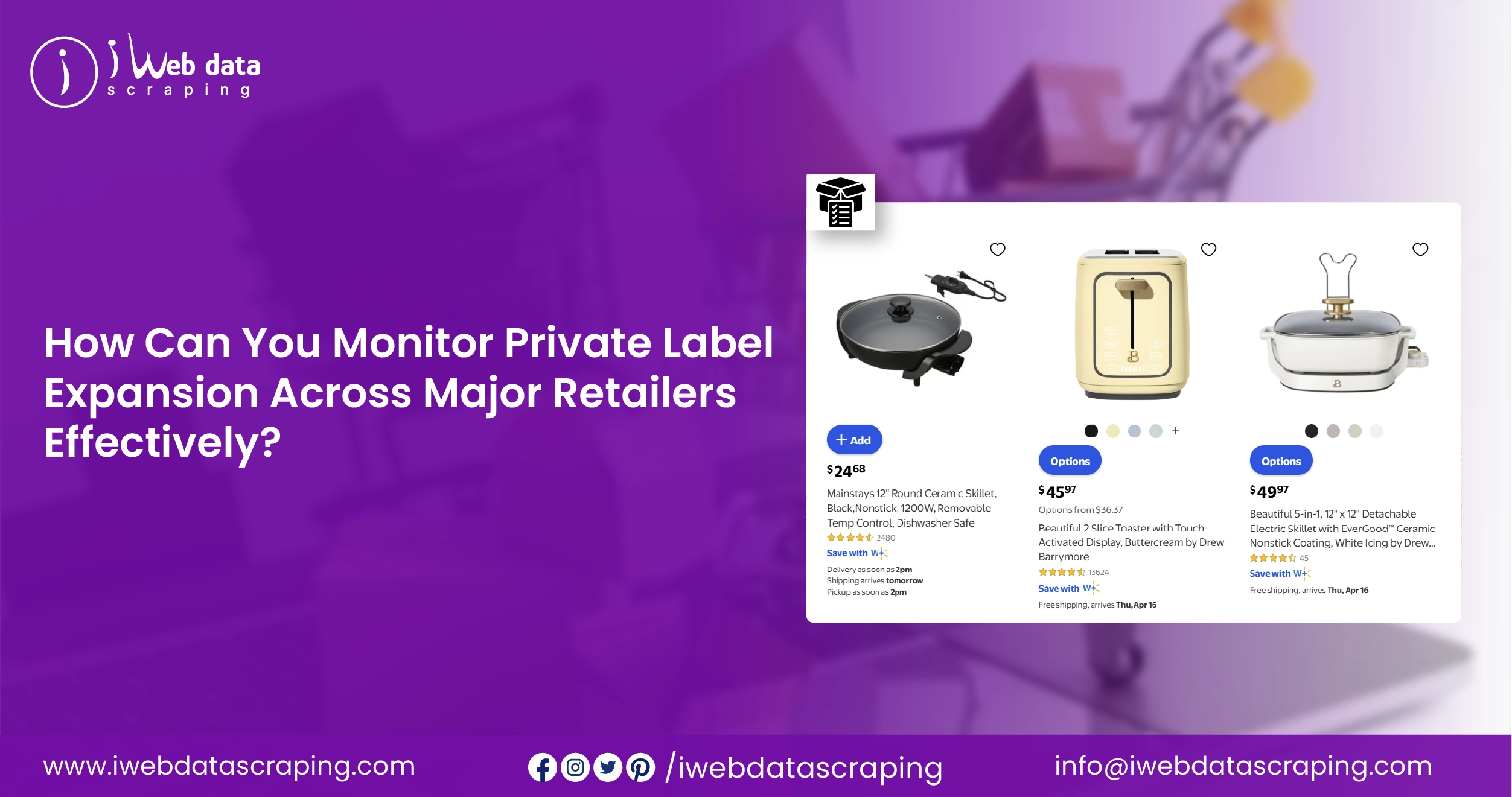
Private label brands are rapidly transforming the global retail landscape, with major retailers aggressively expanding their store-brand portfolios to improve margins and strengthen customer loyalty. Understanding this shift requires continuous digital tracking and structured data analysis across multiple platforms.
In this context, Monitor Private Label Expansion has become a critical capability for retailers, analysts, and CPG brands aiming to stay competitive in a fast-changing ecosystem.
To accurately evaluate market shifts, organizations increasingly rely on method to Extract private label product data for competitive benchmarking, enabling them to compare pricing strategies, assortment depth, and brand positioning across competitors.
Another essential capability is Monitor store brand SKU growth using retail product data extraction, which helps businesses identify how quickly private label assortments are scaling across different categories and regions.
Together, these approaches provide a structured way to observe how Walmart, Kroger, and Target are reshaping their private label ecosystems using data-driven intelligence.
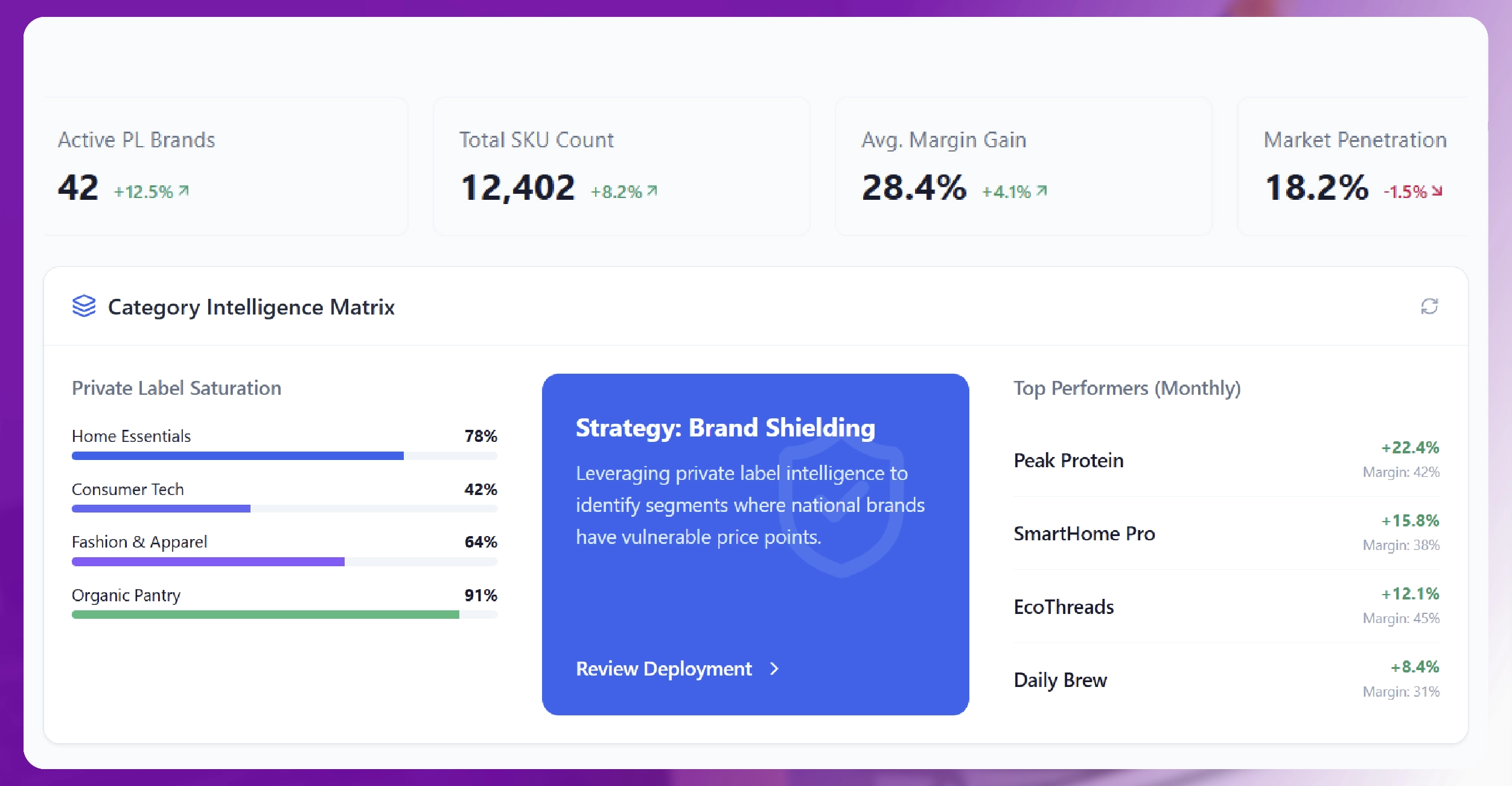
Private labels are no longer just budget alternatives; they are strategic growth engines. Retail giants are investing heavily in exclusive brands to capture higher margins and reduce dependency on national brands. However, tracking these expansions manually is impossible due to the scale and frequency of product updates.
This is where digital data extraction becomes essential. By collecting structured product data from ecommerce platforms, analysts can observe SKU additions, pricing shifts, and category-level expansion trends in near real time.
Retail intelligence teams now rely on automated pipelines that continuously track assortment updates, enabling faster decisions and more accurate forecasting.
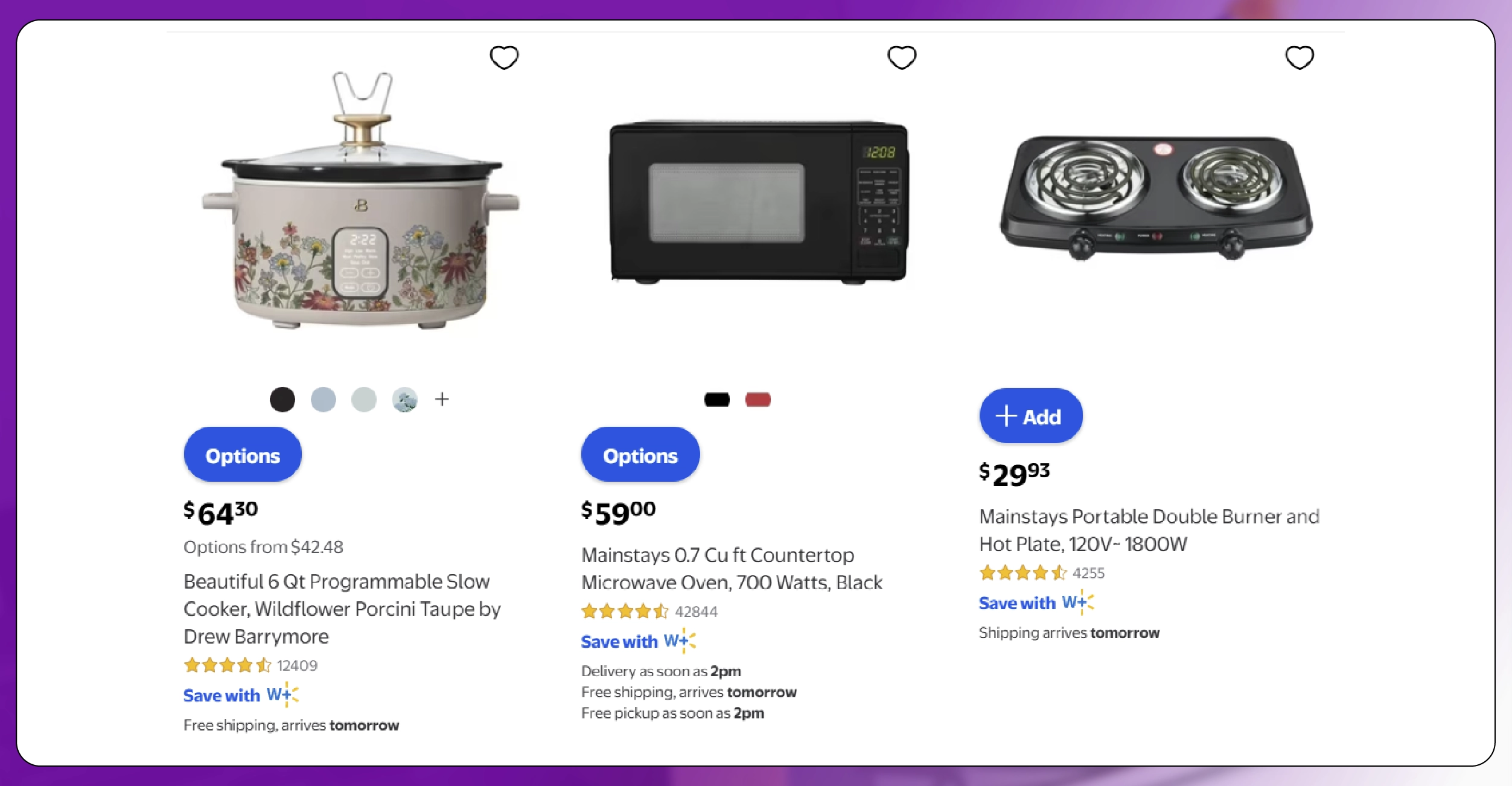
Walmart is one of the most aggressive players in the private label space, with brands spanning grocery, household goods, apparel, and health categories. Monitoring its expansion requires deep product-level visibility.
Private Label Product Data Scraping From Walmart, Kroger & Target enables analysts to compare how each retailer structures its private label ecosystem across categories.
A key component of this analysis is Walmart private label product data scraping, which helps extract structured information about Walmart’s store brands such as Great Value, Equate, and Mainstays.
To support this process at scale, companies often rely on Walmart Data Scraping Services, which provide automated extraction pipelines for continuously updated product listings.
Additionally, Walmart Product Datasets allow analysts to study historical trends, category penetration, and pricing evolution over time.
By combining these datasets, businesses can identify which product categories Walmart is prioritizing for private label expansion and how aggressively it is positioning against national brands.
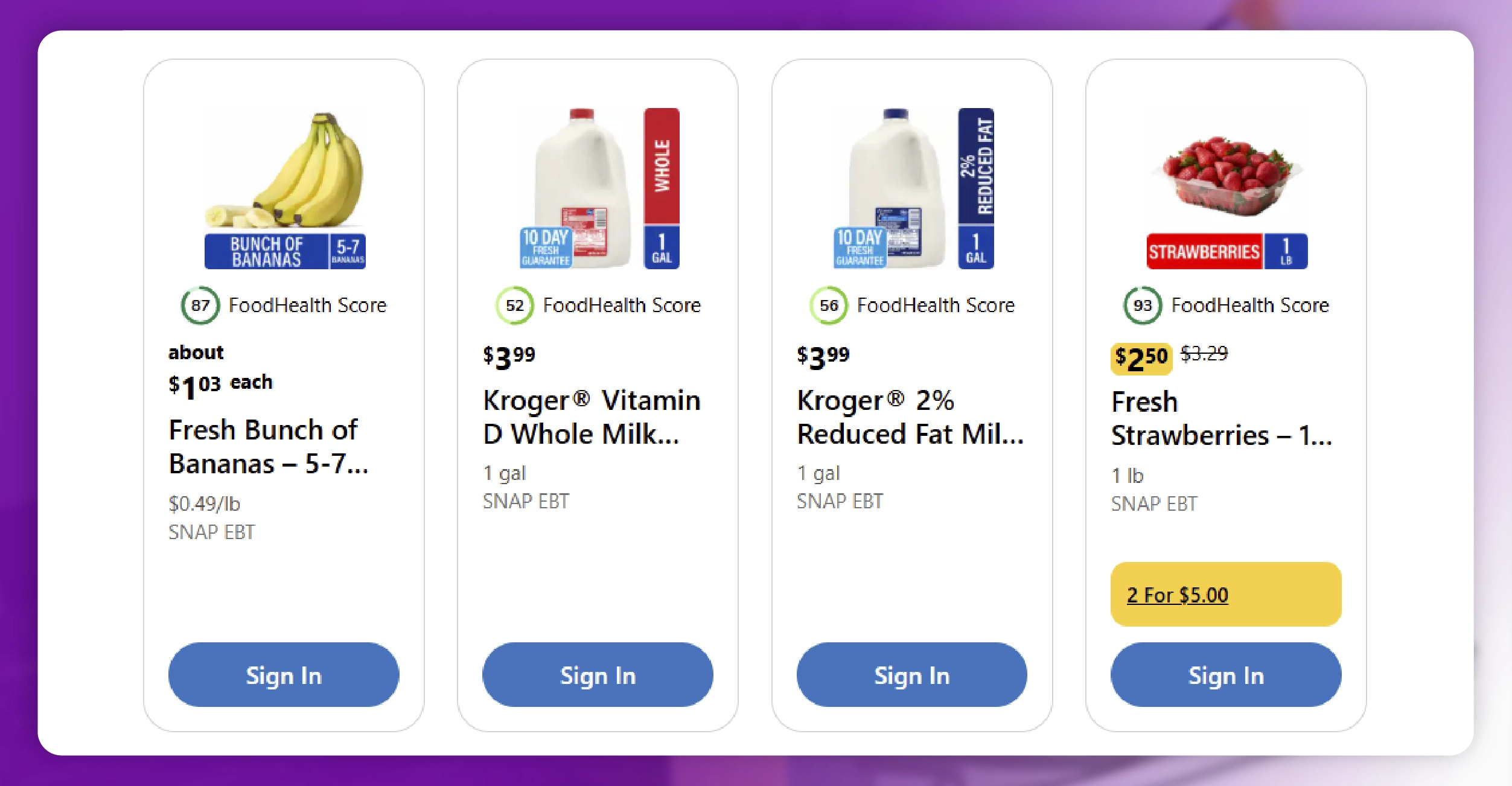
Kroger has built a strong private label ecosystem through brands like Simple Truth and Private Selection, focusing heavily on organic, premium, and health-oriented products.
To analyze this expansion, Scrape Kroger store brand product data to capture SKU-level insights across grocery, frozen foods, and packaged goods.
Retail intelligence teams also depend on Kroger.com data extraction services, which help gather structured product information directly from Kroger’s digital storefronts.
This enables detailed tracking of assortment changes, pricing strategies, and category expansion patterns.
With these insights, analysts can measure how Kroger is differentiating its private labels from competitors by emphasizing organic certifications, sustainability claims, and premium positioning.
Target has established a strong identity in private labels through brands like Good & Gather, Up & Up, and Cat & Jack, focusing on design, affordability, and lifestyle appeal.
Target private label product data extraction plays a crucial role in understanding how Target expands its store brand portfolio across food, apparel, and home goods.
In addition, Target Product Datasets provide structured insights into product attributes, pricing tiers, and category-level performance.
To operationalize continuous tracking, businesses rely on Target data extraction services, which automate the collection of SKU updates, availability changes, and product metadata across Target’s digital ecosystem.
This allows analysts to evaluate how Target positions its private labels against both premium and discount competitors in the retail landscape.
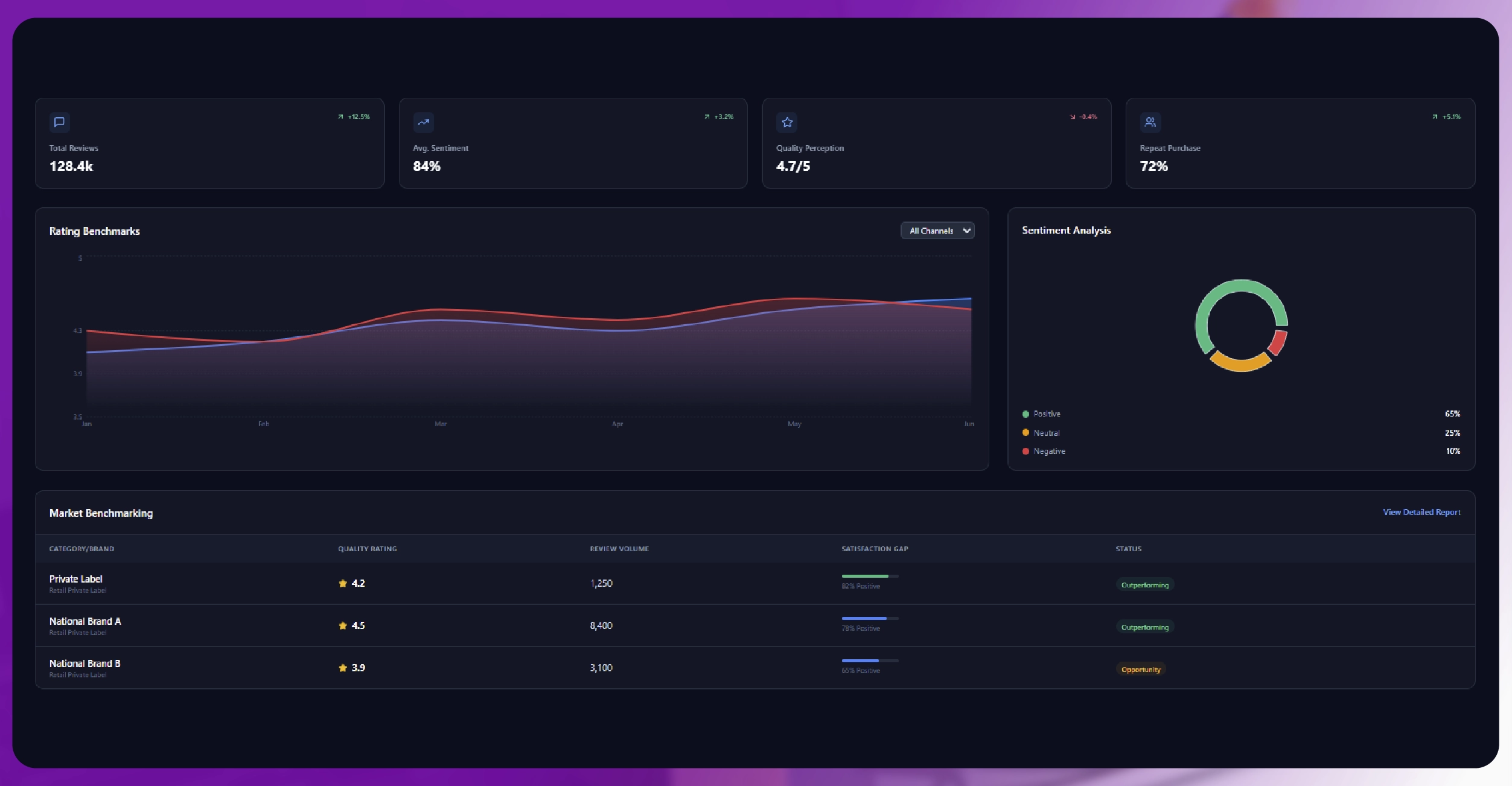
Beyond basic product tracking, modern retail intelligence requires enriched datasets that combine pricing, reviews, and customer sentiment.
Ecommerce Product Ratings and Review Dataset plays a key role in understanding how consumers perceive private label products compared to national brands. Ratings and reviews help identify quality perception gaps and product improvement opportunities.
By combining product listings with review data, businesses can gain a 360-degree view of consumer behavior, including satisfaction levels, repeat purchase intent, and product reliability.
This enriched intelligence is especially useful for benchmarking private labels across Walmart, Kroger, and Target, as customer sentiment often determines long-term brand success.
Unlock powerful retail insights today with our advanced data scraping solutions to stay ahead of every market move and competitor shift.
When analyzed together, Walmart, Kroger, and Target reveal distinct private label strategies. Walmart focuses on scale and affordability, Kroger emphasizes health and premium organic positioning, while Target blends affordability with lifestyle-driven branding.
Retailers and CPG companies can use these insights to identify gaps in the market, optimize product launches, and refine pricing strategies.
Data-driven monitoring also enables predictive forecasting of category expansion, helping businesses anticipate where each retailer is likely to invest next.
As private labels continue to grow, real-time data intelligence becomes a key competitive advantage in retail strategy development.
1. Comprehensive Retail Tracking
Our data scraping services help you continuously track retail catalogs across Walmart, Kroger, and Target, capturing every product update, SKU change, and category shift for complete market awareness.
2. Private Label Growth Monitoring
We enable detailed monitoring of private label expansion by extracting store-brand listings, helping you understand how retailers scale their own products across categories and respond to market demand.
3. Structured Data for Analytics
Our services convert raw ecommerce pages into structured datasets, making it easy to analyze pricing trends, product performance, and assortment strategies using BI tools and advanced analytics platforms.
4. Multi-Retailer Data Integration
We combine data from multiple retailers into unified datasets, allowing you to compare Walmart, Kroger, and Target side-by-side for stronger insights into competitive positioning and product strategy differences.
5. Actionable Business Intelligence
Our scraping solutions deliver actionable intelligence that supports merchandising, pricing strategy, and demand forecasting, helping businesses respond quickly to market changes and optimize retail performance effectively.
The expansion of private labels across major retailers is accelerating, making structured data monitoring essential for competitive intelligence. Businesses that leverage automated data pipelines can stay ahead of market shifts and identify opportunities faster than traditional research methods.
Modern retail analytics is increasingly powered by scalable data infrastructure and automation tools that simplify large-scale tracking.
In this evolving ecosystem, eCommerce Data Scraping Services enabled provide the foundation for real-time retail intelligence across multiple platforms.
Advanced organizations also rely on Web Scraping API Services to streamline data collection, improve scalability, and ensure consistent access to structured datasets.
Ultimately, the broader adoption of Web Scraping Services is transforming how retailers and analysts understand private label growth, enabling smarter decisions, faster insights, and more competitive positioning in an increasingly data-driven retail landscape.
Experience top-notch web scraping service and mobile app scraping solutions with iWeb Data Scraping. Our skilled team excels in extracting various data sets, including retail store locations and beyond. Connect with us today to learn how our customized services can address your unique project needs, delivering the highest efficiency and dependability for all your data requirements.
Private label product data scraping is the process of extracting structured product information such as pricing, SKU details, availability, and descriptions from retail websites like Walmart, Kroger, and Target to analyze store-brand growth and market trends.
Monitoring private label expansion helps businesses understand how retailers are growing their in-house brands, identify competitive pricing strategies, and track category-level SKU growth to make better product and marketing decisions.
Data scraping collects real-time product data from these retailers, enabling analysts to compare private label assortments, track new product launches, and evaluate pricing and positioning strategies across different categories.
Ecommerce product datasets provide insights into pricing trends, customer ratings, product availability, category performance, and consumer sentiment, helping businesses understand demand and competitor strategies more effectively.
Yes, retail product data scraping is highly useful for competitive benchmarking as it allows businesses to compare private label growth, product assortments, and pricing strategies across multiple retailers in a structured and data-driven way.