
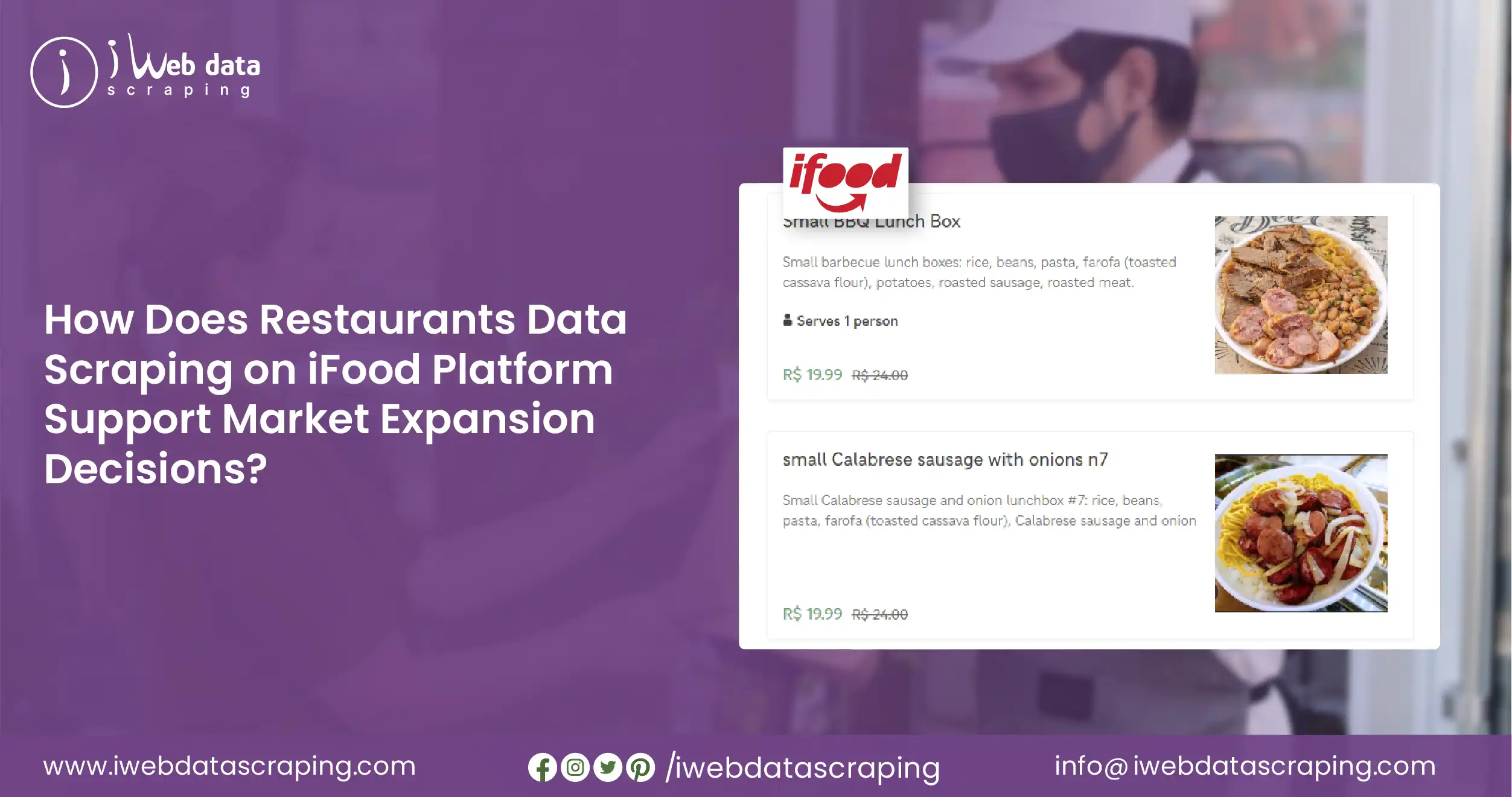
The global food delivery ecosystem has transformed how consumers discover, compare, and order meals. Among leading delivery marketplaces, iFood has emerged as a dominant digital platform connecting restaurants with millions of users. As competition intensifies, structured data from delivery apps becomes a strategic resource for restaurants, aggregators, analytics firms, and investors. In this evolving environment, Restaurants Data Scraping on iFood Platform plays a critical role in enabling data-driven decisions across pricing, promotions, and operational strategy.
Businesses increasingly rely on iFood Restaurant Menu Scraping to capture real-time menu listings, cuisine categories, item descriptions, and availability updates. This structured approach supports deeper market analysis and accurate performance benchmarking. At the same time, iFood Restaurant Menu and Price Data Extraction empowers organizations to monitor pricing patterns, dynamic discounts, and category-level variations across cities and regions.
By transforming raw app listings into structured datasets, companies gain clarity on demand trends, consumer preferences, and competitive positioning in the rapidly growing digital food delivery market.
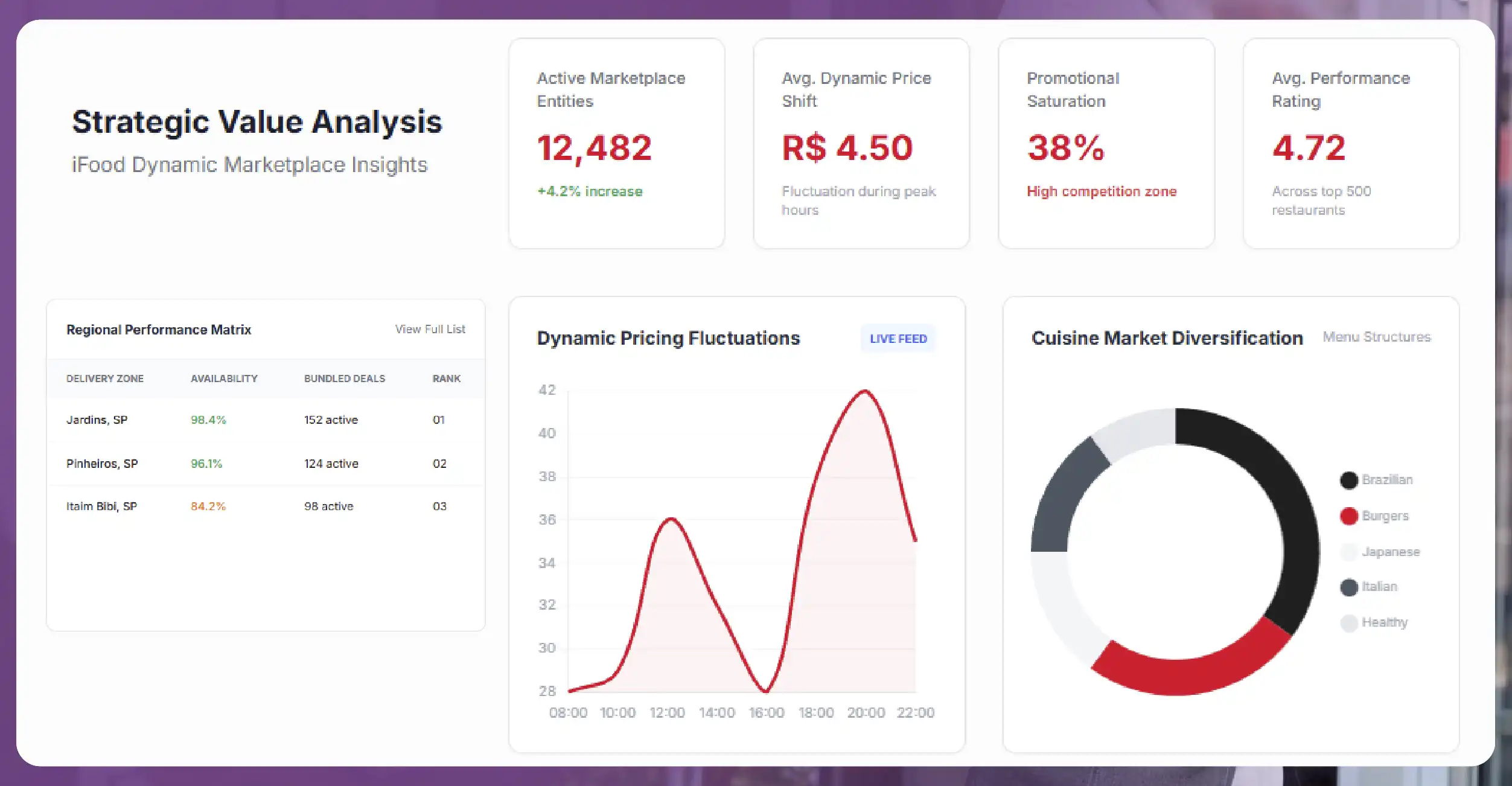
Food delivery platforms contain far more than menu listings. They represent a live marketplace where pricing, promotions, availability, and ratings change dynamically based on demand, competition, and operational constraints. Scraping structured data from iFood enables stakeholders to track:
This information, when analyzed over time, reveals patterns that are otherwise invisible through manual observation. For example, consistent price adjustments during peak hours may signal dynamic pricing strategies. Frequent promotional campaigns might indicate aggressive competition within specific neighborhoods.
The ability to systematically collect and analyze such insights helps businesses move beyond reactive decisions and toward predictive planning.
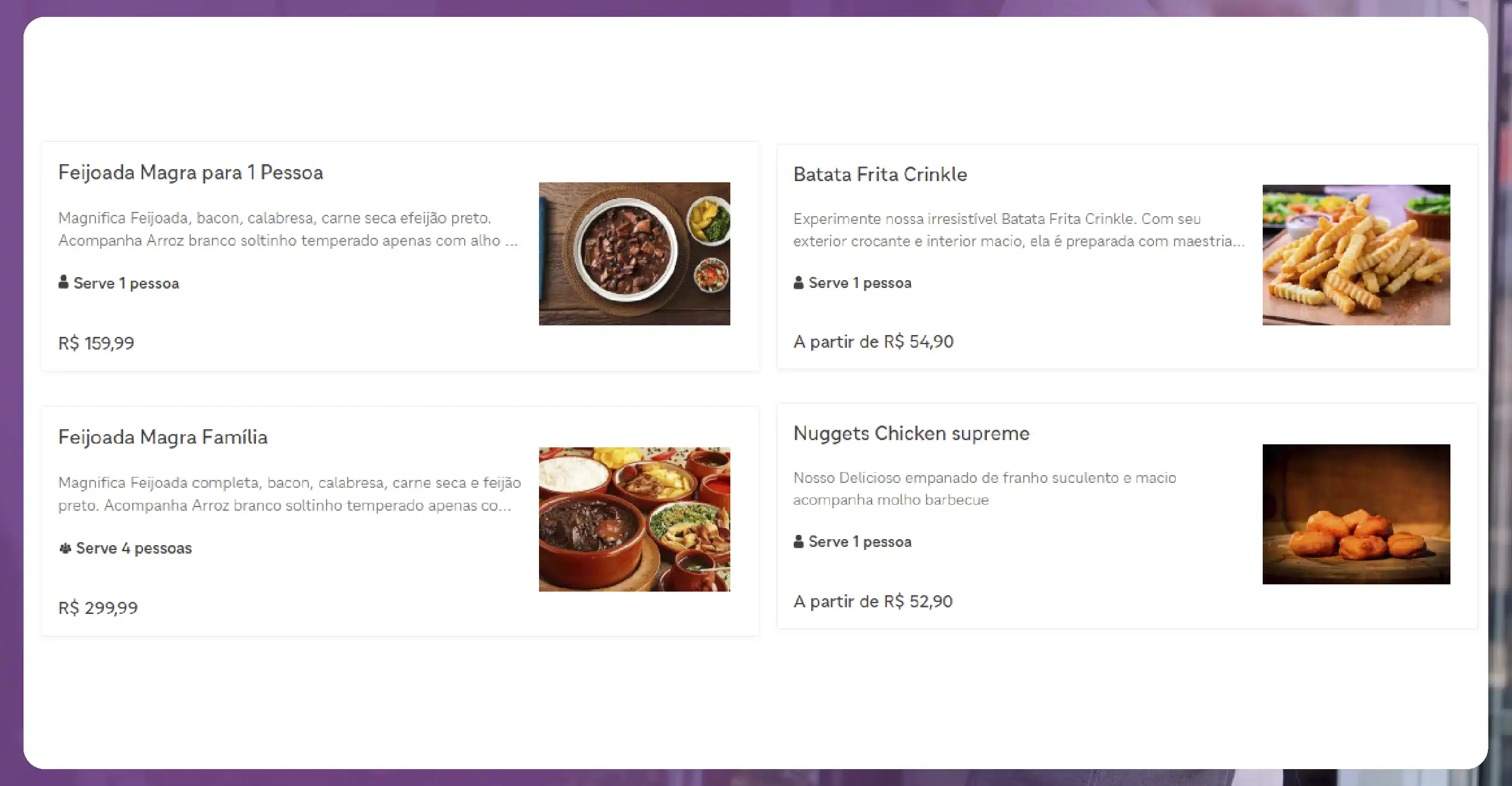
Menu data forms the foundation of delivery platform analytics. Through advanced scraping systems, organizations can map item-level details including category segmentation, ingredient descriptions, portion sizes, and add-on options. This granular visibility enables restaurants to refine menu engineering strategies and identify high-margin products.
Additionally, by monitoring changes in menu availability, businesses can detect seasonal product launches, limited-time offerings, or discontinued items. When aggregated across multiple restaurants, these patterns reveal cuisine trends and emerging consumer preferences.
For example, a noticeable increase in plant-based items across urban areas may indicate rising demand for vegetarian alternatives. Similarly, price clustering within specific cuisine categories can signal competitive saturation.
The structured extraction of menu and pricing information supports the creation of an iFood Restaurant Pricing Dataset, enabling detailed analysis at item, category, and restaurant levels.
Promotional campaigns are central to food delivery platform competitiveness. Discounts, bundle deals, cashback offers, and first-time user incentives significantly influence ordering behavior. Leveraging iFood Restaurant Discount Data Scraping allows businesses to track:
Monitoring these variables over time helps restaurants evaluate the sustainability of discount-driven growth strategies. Excessive promotional dependency may increase short-term orders but erode long-term profitability.
For analytics firms and investors, discount intelligence offers insights into competitive aggression, customer acquisition strategies, and market penetration tactics.
Delivery platforms are inherently location-driven. Restaurant visibility, pricing strategies, and menu offerings often vary depending on geographic demand. Through iFood Restaurant Location Data Extraction, organizations can map delivery coverage zones, identify high-density restaurant clusters, and assess cuisine distribution by city or neighborhood.
Location intelligence enables:
By overlaying location data with pricing and promotional insights, businesses gain a multi-dimensional view of market opportunity.
In highly competitive digital marketplaces, data transparency drives performance. Using iFood Restaurant Competitive Intelligence, companies can benchmark themselves against rivals across multiple parameters, including menu breadth, pricing tiers, discount frequency, and customer ratings.
Competitive analysis enables restaurants to identify strengths and weaknesses relative to peers. For example, if competing restaurants consistently offer deeper discounts during weekends, adjusting promotional timing may improve order volume. Similarly, analyzing price differences for identical dishes can reveal positioning strategies—premium, mid-range, or value-focused.
Data-driven benchmarking supports smarter investment, targeted marketing, and optimized customer acquisition strategies.
The true power of scraping lies in transforming raw listings into structured intelligence. Professional ifood Food Data Scraping Services provide scalable, automated extraction that ensures consistent data formatting and reliability. Clean datasets allow seamless integration with business intelligence tools and analytics dashboards.
Structured datasets enable trend forecasting, price elasticity analysis, cuisine popularity tracking, and customer sentiment correlation. Over time, these insights evolve into actionable Restaurant Data Intelligence, guiding expansion decisions, pricing adjustments, and promotional optimization.
When integrated with historical records, scraped data supports predictive modeling, enabling businesses to anticipate demand spikes during holidays or seasonal shifts.
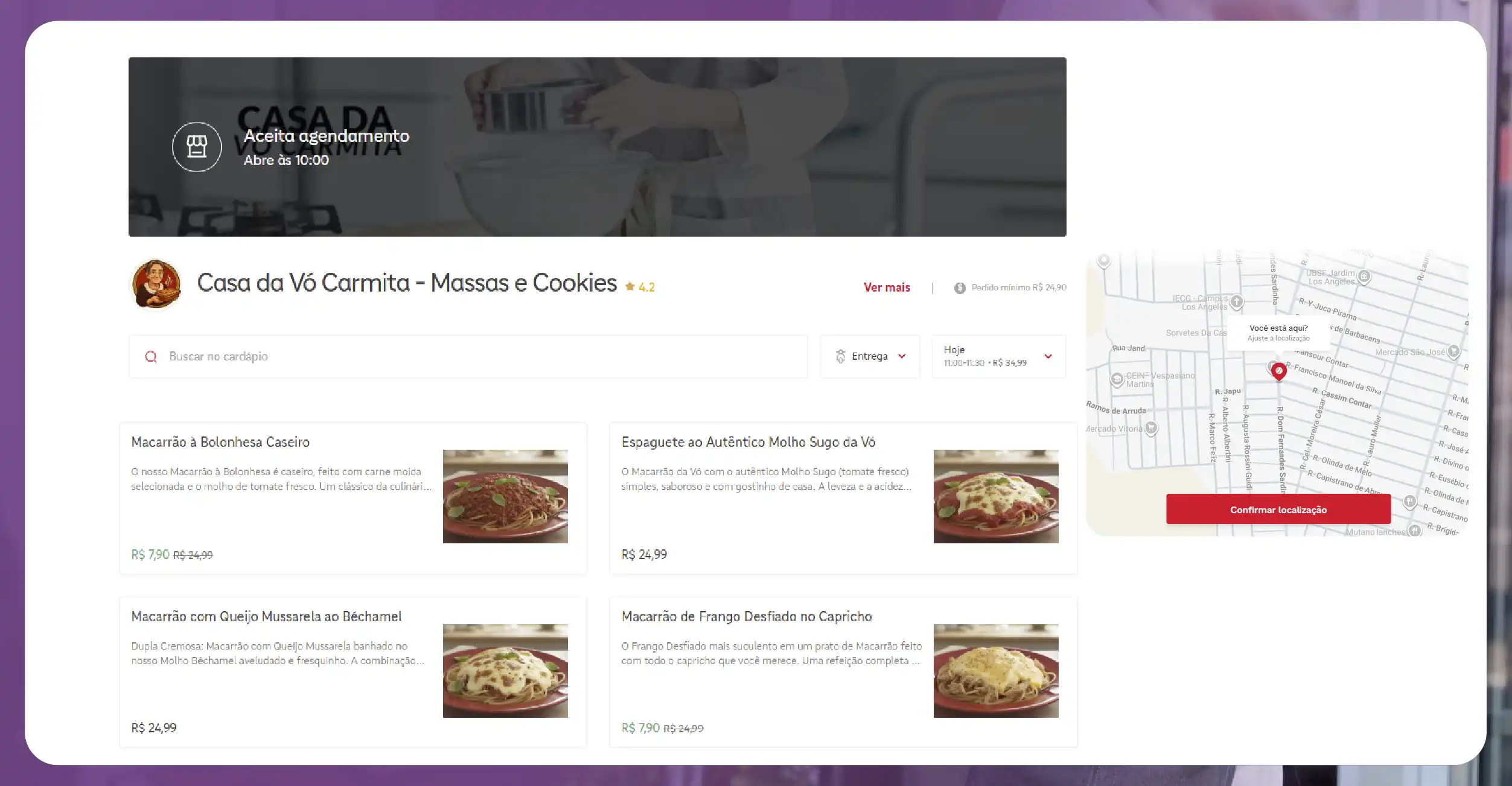
Restaurants operating on delivery platforms face operational challenges such as fluctuating demand, inventory management, and pricing pressure. By leveraging structured data insights, businesses can optimize:
A comprehensive Restaurant Data Scraping Service supports these objectives by ensuring continuous monitoring and actionable reporting.
The ability to compare dine-in pricing with delivery app pricing also helps restaurants maintain margin consistency and avoid cross-channel pricing conflicts.
Food delivery data extends beyond individual restaurant performance. Aggregated insights support ecosystem-level growth strategies for investors, consultants, and technology providers. Food Delivery Data Scraping Services allow stakeholders to analyze:
These insights inform mergers, acquisitions, investment decisions, and SaaS product development.
As digital ordering continues to grow, structured scraping APIs will become foundational infrastructure for food-tech analytics.
While data scraping delivers powerful insights, responsible practices are essential. Ethical extraction involves respecting platform guidelines, ensuring data privacy compliance, and avoiding server overload. Professional services implement controlled scraping intervals, structured extraction frameworks, and secure data storage protocols to maintain compliance and reliability.
Organizations must prioritize transparency and legal alignment to ensure sustainable data-driven strategies.
Turn food delivery data into strategic advantage—partner with us for powerful, scalable restaurant data scraping solutions today.
The evolution of AI and machine learning will amplify the value of structured delivery platform data. Predictive analytics models will use historical menu, pricing, and promotional data to forecast demand shifts and recommend optimized pricing structures.
As digital ordering ecosystems expand, real-time dashboards will become standard tools for restaurant chains and investors. Automated alerts for competitor price changes, new menu launches, or aggressive promotions will enhance strategic agility.
The integration of scraped data with customer feedback analysis will further strengthen performance optimization strategies, bridging operational insights with consumer sentiment.
1. Real-Time Data Monitoring
We track live menus, prices, discounts, and availability to help you respond quickly to market changes.
2. Competitive Benchmarking
Our datasets reveal competitor pricing, promotions, and positioning, enabling smarter strategic planning and differentiation.
3. Location Intelligence
We provide geo-based insights to identify high-demand zones, expansion opportunities, and underserved markets.
4. Automated & Scalable Extraction
Our systems ensure continuous, large-scale data collection with accuracy, reliability, and minimal manual effort.
5. Analytics-Ready Integration
Structured data formats seamlessly integrate with BI tools for forecasting, reporting, and advanced performance analysis.
Restaurants operating on iFood must compete in a dynamic and data-intensive environment. Structured scraping transforms platform listings into actionable intelligence that drives smarter pricing, better promotions, and stronger competitive positioning.
By leveraging professional Restaurant Data Scraping Service solutions, businesses gain real-time visibility into menus, discounts, locations, and pricing strategies. When combined with advanced Food Delivery App Menu Datasets, organizations can develop comprehensive analytics frameworks that integrate item-level insights with broader market trends.
Integrated Price Monitoring Services help maintain competitive pricing while safeguarding margins, and specialized Pricing & Promotions Services empower restaurants to design strategic campaigns that maximize revenue and customer retention.
In a rapidly evolving digital food marketplace, data is no longer optional—it is essential. Restaurants, analytics firms, and investors who harness structured iFood data will lead the next wave of innovation, efficiency, and competitive excellence in the global food delivery industry.
Experience top-notch web scraping service and mobile app scraping solutions with iWeb Data Scraping. Our skilled team excels in extracting various data sets, including retail store locations and beyond. Connect with us today to learn how our customized services can address your unique project needs, delivering the highest efficiency and dependability for all your data requirements.
It is the process of extracting structured restaurant listings, menus, prices, discounts, and location data from iFood for analytics and intelligence.
Menu data helps analyze pricing trends, popular items, competitor offerings, and customer demand patterns for smarter decision-making.
Yes, it enables restaurants and analysts to compare pricing, promotions, ratings, and positioning against competitors in specific regions.
Absolutely. It allows businesses to track price changes, discount frequency, and promotional campaigns to maintain competitive advantage.
Restaurant chains, food-tech startups, investors, market research firms, and analytics providers benefit from structured delivery platform insights.