
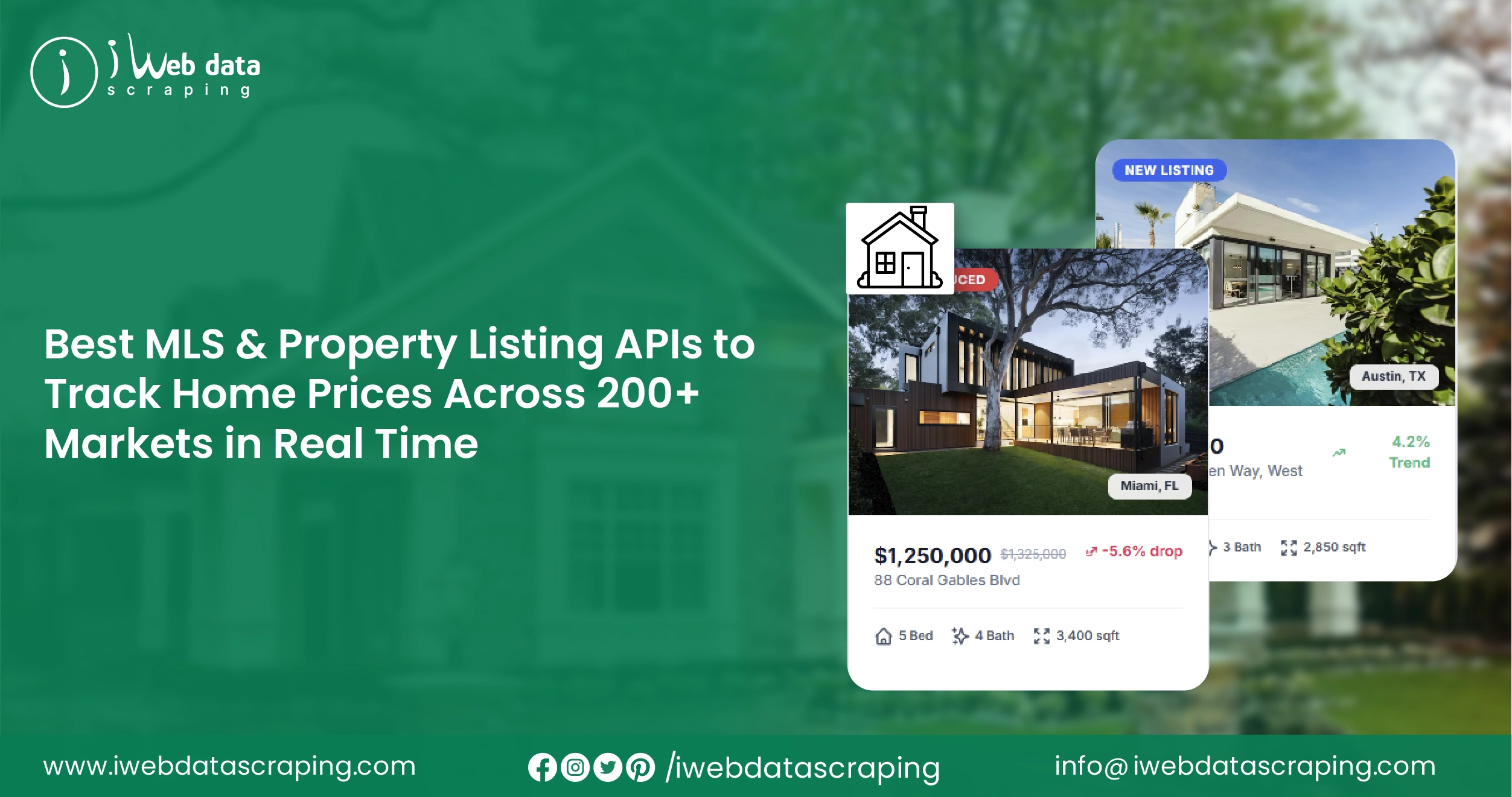
The real estate industry is rapidly moving toward automated pricing intelligence and live property monitoring systems. Businesses now depend on Best MLS & Property Listing APIs to analyze housing trends, monitor listing activity, and improve valuation accuracy across regional markets.
Modern PropTech platforms increasingly use MLS data APIs for property listings to collect continuously updated information related to active homes, sold properties, rental units, ownership records, tax assessments, and neighborhood activity. These solutions help investors, brokerages, lenders, and analytics firms improve market visibility and decision-making speed.
Organizations aiming to Track Home Prices Across Markets in Real Time now prioritize scalable API ecosystems capable of delivering fast, structured, and highly reliable property intelligence. As housing markets become more competitive, access to live data has become essential for pricing optimization and investment forecasting.
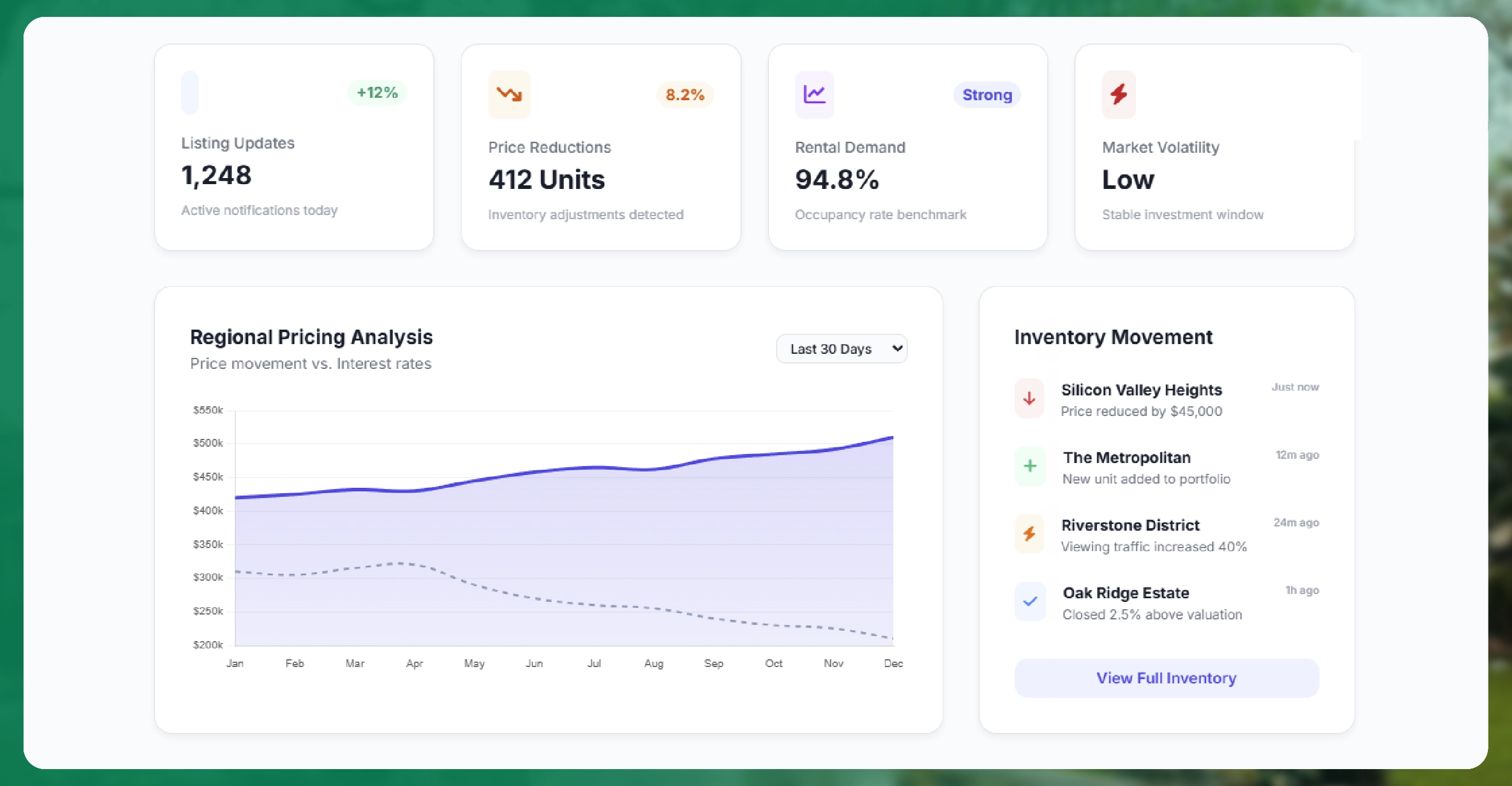
Real estate prices are constantly changing because of mortgage fluctuations, economic conditions, migration patterns, inventory shortages, and buyer demand. Delayed data often leads to missed opportunities and inaccurate market analysis.
Real-time property intelligence helps businesses monitor:
These insights improve valuation systems, investment planning, and regional pricing analysis.

The property market remains fragmented because regional listing systems operate independently across different geographic areas. This creates significant challenges for organizations attempting to build nationwide pricing intelligence platforms.
To solve this issue, businesses increasingly adopt MLS & property listing APIs to track home prices across markets through centralized aggregation frameworks. These systems standardize listing formats and normalize property attributes to improve consistency across markets.
Such integrations support:
Property intelligence platforms are now expected to deliver far more than simple listing access. Companies require scalable infrastructure capable of supporting analytics, forecasting, and automation.
Residential property APIs provide large-scale access to active listings, sold homes, ownership records, tax history, and neighborhood insights. These systems are commonly used by:
Such APIs help businesses improve search functionality, pricing analysis, and customer experiences.
Commercial real estate analytics require deeper ownership intelligence and portfolio-level visibility. Commercial property APIs help organizations evaluate:
Rental intelligence platforms help organizations monitor occupancy trends, rental estimates, and tenant demand across metropolitan markets.
These APIs support:
Rental market visibility has become increasingly important because of rising housing demand and urban migration trends.
Although API infrastructure has improved significantly, nationwide property data access still presents operational and compliance challenges.
Several common obstacles include:
To improve coverage and analytical depth, many organizations combine official integrations with MLS and Property Listing APIs For Pricing Data Extraction across broader market ecosystems.
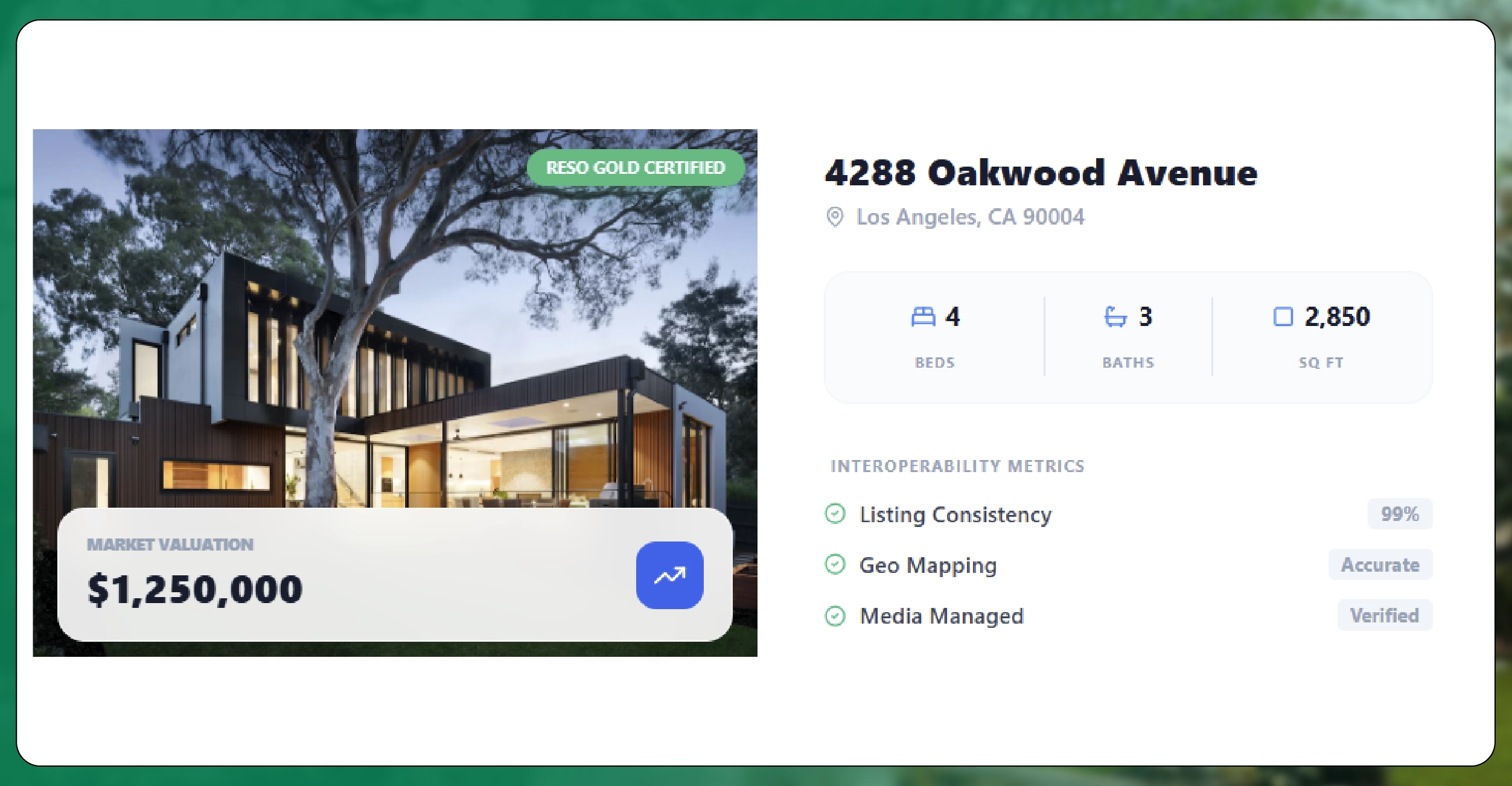
Standardized real estate frameworks are becoming increasingly important for improving interoperability between listing systems and analytics platforms.
Standardization improves:
This approach reduces infrastructure complexity for companies building nationwide property intelligence systems.
Artificial intelligence is transforming how businesses evaluate housing markets. Modern AI systems combine live property activity with historical transaction intelligence to generate advanced market predictions.
Analytics platforms now evaluate:
These capabilities are increasingly important for investment firms, lenders, and analytics providers operating in competitive markets.

Many organizations now prefer aggregated property intelligence systems instead of managing separate regional integrations independently. Aggregation frameworks combine multiple datasets into unified APIs that simplify operational workflows.
This approach improves:
Aggregation systems are becoming essential for companies handling large-scale real estate analytics.
The next generation of real estate APIs will likely focus on:
These innovations will continue reshaping how businesses analyze and operate within the housing market.
The future of housing analytics depends heavily on scalable data infrastructure and intelligent market forecasting systems. Businesses increasingly rely on Real-time property listing data APIs to improve pricing visibility, valuation accuracy, and operational efficiency across competitive markets.
Demand for advanced Real Estate Property Data Extraction solutions continues to grow as organizations expand their analytics capabilities across residential and commercial property sectors. Companies also depend on continuously refreshed Real Estate Property Datasets to strengthen forecasting models and improve market intelligence systems.
At the same time, enterprise-grade Web Scraping API Services are helping businesses monitor publicly available listing ecosystems more efficiently. Large-scale Web Scraping Services also support supplemental property intelligence collection for organizations operating across rapidly changing housing markets.
Experience top-notch web scraping service and mobile app scraping solutions with iWeb Data Scraping. Our skilled team excels in extracting various data sets, including retail store locations and beyond. Connect with us today to learn how our customized services can address your unique project needs, delivering the highest efficiency and dependability for all your data requirements.
They help organizations monitor pricing changes, inventory movement, and buyer activity across multiple housing markets.
They improve listing accuracy, update frequency, and regional market visibility for analytics platforms.
Yes. Investors use property intelligence systems to evaluate pricing trends, rental performance, and acquisition opportunities.
Normalization improves consistency between markets and simplifies cross-region comparisons.
AI systems analyze live and historical market activity to improve pricing predictions and investment risk analysis.